
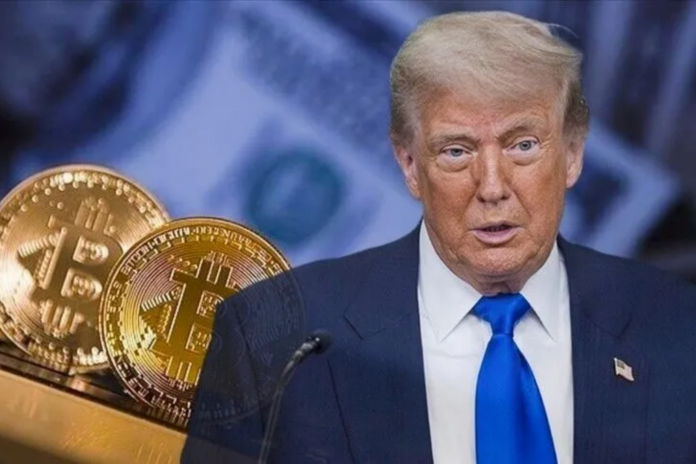
Maintaining its strong momentum into August, the cryptocurrency market experienced a massive rally last week, driven by cooling macroeconomic data in the U.S. and a high-profile meeting between U.S. President Donald Trump and crypto industry representatives.
As softening employment and inflation data in the U.S. reduced expectations for Federal Reserve interest rate hikes, investments shifted toward risk assets. Additionally, the U.S. Treasury’s decision to increase the scale of its long-term bond buyback operations helped alleviate selling pressure in the bond market, positively impacting the broader crypto ecosystem.
Trump’s Support Boosts Confidence
The most significant development of the week was U.S. President Donald Trump’s meeting at the White House with representatives from major crypto companies, including Coinbase, Ripple, and Gemini.
Vowing strong support for the sector to ensure the U.S. does not fall behind China in global geopolitical competition, Trump called on Congress to swiftly approve the “Clarity Act,” a legislative proposal designed to establish a comprehensive legal framework for digital assets.
Following these developments, the total cryptocurrency market capitalization surged by more than $500 billion over the week, reaching $2.668 trillion.
Bitcoin climbed to $79,500—its highest level since May 15—before stabilizing around $78,300, marking a 24% weekly increase. Ethereum reached $2,546, its highest point since January 30, and settled at $2,519, representing a 33% weekly gain.
“A Strong Relief Rally Following a Prolonged Period of Pressure”
Speaking to Anadolu Agency (AA), Blockchain and Crypto Asset Strategist Mete Ali Başkaya noted that the sharp rally should not be attributed to a single factor. “A combination of factors played a role simultaneously: Bitcoin technically breaking upward from a strong zone, renewed inflows into spot Bitcoin and Ether ETFs, improving expectations regarding digital asset regulations in the U.S., and a recovery in global risk appetite,” he said.
Highlighting that ETF inflows indicate institutional demand has re-engaged rather than the rally being driven solely by retail investor excitement, Başkaya emphasized that this upward movement should not be immediately classified as the start of a “new bull market,” but rather as a strong relief and repricing process following a prolonged period of pressure.
Stating that for the rally to become permanent, ETF inflows must continue, regulatory uncertainties in the U.S. must ease, and pressure from bond yields and the dollar must subside, Başkaya concluded: “In short, the current picture is positive, but since the crypto market remains highly sensitive to liquidity conditions and news flow, it is safer to view this movement within a framework of controlled optimism.”

