
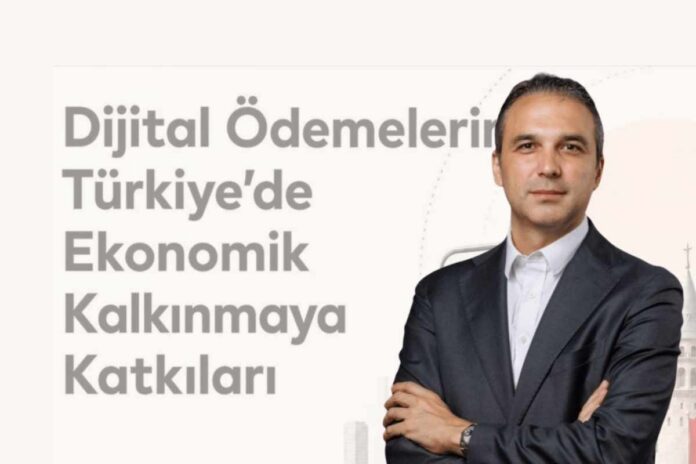
Mastercard has published its report titled “The Economic Contributions of Digital Payments to Development in Türkiye,” presenting data on the contribution digital payments make to the Turkish economy. According to European Central Bank (ECB) data as of the end of June 2025, Türkiye overtook Spain in the number of credit cards, becoming Europe’s largest market.
According to the report, Türkiye has 142 million credit cards and 319 million debit cards, including prepaid cards, while annual card payments reached 24.1 trillion lira in 2025.
Prepared by Mastercard Türkiye Consulting Services, the report examines three main areas: rising tax revenues driven by a decline in informality, contributions to household consumption, and service exports supporting tourism revenues.
The study also examines the cost of cash usage to the public sector, banks, companies and consumers.
While digital payment penetration in Türkiye stands at 69 percent, closing in on the 95 percent level seen in mature markets holds the potential to further increase the economic contribution — an outcome for which cooperation across the entire ecosystem, including the public sector, banks, payment institutions, payment schemes and fintechs, is important.
As digital payments support household consumption through a fast and alternative payment experience, calculations adapted to Turkish data show they created an impact of approximately 1.5 trillion lira on household consumption in 2025.
The highest contribution was seen in travel, at 546 billion lira, while the restaurant sector ranked second with 427 billion lira. Furniture and electronics, clothing, and accommodation were also among the areas where digital payments made a notable contribution.
The share of card payments in household payments reached 54 percent for personal cards in 2025, rising to 69 percent when commercial cards are included.
The increasingly widespread card payment infrastructure in Türkiye is making it easier for foreign tourists to spend money, making the country more attractive to tourists.
Tourism revenues rose from $7.6 billion in 2000 to nearly $65 billion in 2025 — an increase of roughly 8.5 times — while the share of card payments in tourism revenues rose from 15 percent to approximately 38 percent.
As a result, digital payments contributed 388 billion lira, or $9.8 billion, to tourism revenues in 2025.
“Over the past 30 years, Türkiye has undergone a transformation in digital payments held up as a global example”
The report, which also calculates the costs cash usage imposes on the economy, estimates that the direct cost of banknote printing to the Central Bank of the Republic of Türkiye (CBRT) was 4.4 billion lira in 2025, while the cost of cash circulation to banks exceeded 65 billion lira.
The cash handling cost for companies approached 34 billion lira, while the total cost passed on to consumers is estimated to have exceeded 8.1 billion lira.
By ensuring sales are recorded, digital payments increase transparency and also support tax collection.
The total contribution of these payments to Value Added Tax (VAT), Special Consumption Tax (SCT), Corporate Tax and Income Tax items reached 574 billion lira in 2025, an amount corresponding to approximately 5 percent of Türkiye’s total tax revenues.
The impact on reducing informality is particularly notable among micro, small and medium-sized enterprises, with card payments made at these businesses accounting for approximately 40 percent of total card payments in Türkiye.
Highlighting AI-assisted commerce as one of the new areas of transformation in the payments ecosystem, the report reveals that AI agents carrying out product search, comparison, purchasing and post-purchase processes are adding a new decision-making layer to commerce.
Through solutions that bring together tokenization, trusted agent verification mechanisms and AI platforms, Mastercard aims to enable these transactions to take place securely and at scale.
The company, which is developing AI-powered shopping assistant solutions together with financial institutions in Türkiye, views Türkiye as a strategic priority in this area.
Mastercard has been supporting this transformation in Türkiye for 30 years with a portfolio spanning card products, digital payment solutions and value-added services.
Masterpass has reached 45 million users in Türkiye, while the company’s card products along with the Priceless and MTR platforms offer benefits and experiences for cardholders.
Tap on Phone, meanwhile, facilitates more than 10 million transactions per month through over 200,000 terminals across Türkiye, while the company contributes to the secure and sustainable growth of the payments ecosystem through MasterKOBİ, contactless and mobile payment infrastructure in public transportation, Mastercard Send, and cybersecurity solutions.
Commenting in the statement, Mastercard Türkiye and Azerbaijan General Manager Onur Faydacı said the company was proud to contribute to the development of the ecosystem through secure, innovative and inclusive solutions.
Faydacı emphasized that the company will continue working to make the digital payments ecosystem more inclusive going forward and to strengthen Türkiye’s leading position in next-generation areas such as AI-assisted commerce, adding:
“Over the past 30 years, Türkiye has undergone a transformation in digital payments that is held up as a global example. The report shows that digital payments are not just a payment method — they are an important driver of development, from economic growth to a stronger registered economy, from tourism revenues to business efficiency.”

