Home Blog Page 12

Revolut launches AI assistant AIR in Ireland and Europe

Revolut has launched AIR, an in-app artificial intelligence assistant, in Ireland and across Europe. The tool is designed to let customers manage financial tasks through conversational interaction rather than navigating multiple app menus and tabs.

Customers can access AIR by swiping down from the middle of their phone screen, or by navigating to the ‘profile’ section, selecting ‘chats’, and then choosing ‘AIR’. Once opened, users can pose natural-language questions, such as requests for a breakdown of spending on a specific category over a given period, and receive corresponding insights drawn from their account activity.

Beyond spending analysis, AIR supports a range of account management functions, including subscription management and card freezing. The assistant also provides updates on the status of users’ investments held through the platform. On the travel side, AIR can build multi-day itineraries and retrieve a user’s past booking and spending history, positioning it as a planning tool that spans both financial and travel-related use cases. It can additionally advise customers on how to earn and redeem Revolut’s RevPoints loyalty currency.

Data handling and privacy

Revolut said the assistant has been built with data protection measures, stating that customer data is not stored by third-party AI partners nor used to train external models. This distinction is notable given the growing scrutiny that financial institutions face when integrating generative AI tools that rely on external model providers, as banks and fintechs must balance functionality with compliance obligations around data residency and customer consent.

The company described AIR as part of a shift away from traditional multi-step app navigation towards a more consolidated, conversational approach to money management, positioning it as a tool intended to simplify everyday financial tasks and travel planning while keeping customers in control of their data.

Coinbase launches regulated crypto derivatives in Canada

Coinbase has launched regulated crypto derivatives trading in Canada, offering eligible traders leverage of up to tenfold. The products are offered through Coinbase Financial Markets, a futures commission merchant registered with the US Commodity Futures Trading Commission (CFTC), which operates in Canada under foreign dealer and futures commission merchant exemptions. The offering comprises 23 crypto perpetual and dated futures contracts, five commodity futures, and the Coinbase 50 Index.

According to the announcement, the access is limited to eligible Canadian clients, including those holding at least USD 5 million in net financial assets, as well as registered investment advisers and dealers. The contracts are structured as nano-sized positions and carry leverage of up to tenfold.

US platforms expand crypto access in Canada

The launch coincides with a broader expansion of crypto services by US trading platforms in the Canadian market. Earlier in the week, Webull, a US-based online brokerage, extended crypto trading to Canadian customers using Coinbase’s infrastructure for trading and custody, adding digital assets to its existing stock, exchange-traded fund, and options offerings. Webull cited rising adoption as a factor behind the move, noting that crypto ownership in Canada increased to 25% this year from 10% in 2023, according to research from the Ontario Securities Commission.

Robinhood entered the Canadian market in June 2026 through its USD 180 million acquisition of WonderFi, a Canada-based crypto company, gaining control of the Bitbuy and Coinsquare exchanges. The transaction also brought around 300.000 funded customers, along with WonderFi’s Canadian licences and regulatory approvals, under Robinhood.

Regulatory context

The expansion of crypto trading platforms in Canada comes as domestic authorities tighten oversight of other parts of the crypto market. In April 2026, Ottawa proposed banning crypto ATMs over concerns about scams and money laundering, while lawmakers advanced legislation that would prohibit cryptocurrency donations to political parties and candidates. The combination of expanding institutional access and tightening consumer-facing rules illustrates the divergent regulatory approach Canada is taking toward different segments of the crypto sector.

Nexi partners with JCB and UnionPay to expand Campania transport

Nexi has partnered with JCB and UnionPay International to enable contactless transport payments across Campania’s Unico Campania network. According to the official press release, the agreements are being implemented through Unico Campania, the consortium that manages integrated ticketing across the region’s public transport operators.

Under the partnerships, holders of JCB and UnionPay cards will be able to use the Tap & Go service, which allows passengers to access public transport and buy tickets by tapping a contactless card or smartphone at gates and ticket validators. The service is intended to cover metro lines, funiculars and buses across the Campania region. According to the companies, the arrangement is expected to be used mainly by tourists, particularly travellers from Asia, given the international card base of JCB and UnionPay.

Beyond the Tap & Go rollout, JCB and UnionPay cards will also be accepted more broadly across the Unico Campania ecosystem, including at physical ticket offices. Nexi said the service removes the need to purchase tickets in advance and includes automatic fare calculation based on journeys made within a 24-hour period.

Part of a wider rollout that began in Rome

The Campania agreements extend a payment model that Nexi, JCB, and UnionPay International first introduced in Europe in May 2024, when the three companies launched a similar contactless ticketing scheme for public transport in Rome. The Campania rollout marks a further step in applying that model to another Italian region with high volumes of international visitors, including areas such as Pompeii.

Filippo Maria Signoretti, Merchant Solutions Director at Nexi, said that the partnerships reflect the company’s ability to combine its payment infrastructure with agreements involving international card schemes to support local transport operators. Hiroyuki Katano, Executive Vice President, JCB International, said the scheme is intended to make it easier for JCB cardholders, particularly those travelling from Asia, to use transport services without needing to buy tickets beforehand. James Yang, Executive Vice President of European Region, UnionPay international, said the initiative is aimed at supporting demand from international travellers while making urban mobility more accessible for local communities.

Spark Connect expands its structure combining mobility services on a single platform

Founded by Çağan Koyun as a KOBIL Group company, Spark Connect announced its platform infrastructure, which gathers mobility services beyond electric vehicle charging into a single application using a MiniApp model. The structure developed by Spark Connect aims to reduce the need for users to switch between different applications for their mobility needs.

During its initial period, the company developed its product and security infrastructure with the technological support of KOBIL Group, while today it has shifted its focus to expanding service diversity and user experience on the platform. One of the company’s main goals for the upcoming period is to carry this distribution model, which it developed for electric vehicle charging, into other areas of mobility.

With this model, Spark Connect aims to transform from a mobility app solely targeted at end-users into an open platform structure where different companies and services can come together. Spark Connect aims to make the mobility experience more integrated in the future by bringing companies operating in the automotive, energy, insurance, finance, travel, and technology sectors onto the same digital distribution layer.

Plena Pro: The local startup accelerating recruitment processes with artificial intelligence

As the integration of artificial intelligence into company operations accelerates, one of the areas where the effects of this transformation are increasingly felt is human resources. Operating in the field of human resources technologies, the local startup Plena Pro utilizes its AI-powered infrastructure to handle everything from job posting creation to social security institution (SGK) onboarding.

According to data shared by the company, the system reduces onboarding preparations—which can take 3 to 5 business days using traditional methods—to under 15 minutes, while increasing the candidate capacity that the same HR team can manage by up to 3 times.

60% of HR Teams’ Time Goes to Routine Tasks

  • This transformation also shapes recruitment technologies as one of its application areas.
  • Artificial intelligence is utilized from CV evaluation to video interviews.
  • In the system developed by Plena Pro, the recruitment process starts with the creation of the job posting.
  • Afterwards, voice calls via IVR, video interviews, case studies, and offer processes can be advanced through the same system.
  • One of the notable aspects of the system is that the digital process does not end with the acceptance of the job offer.
  • The collected employee data can then be transferred to other human resources systems such as payroll and leave management. Thus, it aims to reduce the need for HR teams to create separate records for each employee and manually track missing documents.
  • Candidate evaluation time can drop from 5 days to 1-2 hours.
  • The impact of artificial intelligence is more pronounced in high-recruitment industries.

The company also shares that the document completion rate exceeds 95% from day one, and routine HR requests can be reduced by up to 40% thanks to mobile and self-service solutions. This transformation is stated to create an average of 8-10 hours of extra focus time per month for each HR professional.

Artificial Intelligence May Change the Role of HR Teams

The Plena Pro example demonstrates that the use of artificial intelligence in the business world is not limited to content generation or data analysis; it also marks the redesign of recruitment and employee management processes, which are among companies’ most fundamental operations.

Hubx becomes Turkey’s first “Unicorn” in the mobile application field

The Ministry of Commerce announced that the Hubx brand, supported within the scope of the e-Turquality Program, has exceeded a valuation of $1 billion, becoming Turkey’s first “unicorn” in the mobile application sector. In the statement made by the Ministry, it was stated that high value-added service sectors are supported and service exports in the informatics sector are increasing day by day.

Emphasizing that the e-Turquality Program is carried out effectively to encourage innovation and create regional and global brands capable of competing in international markets, the statement included the following remarks:

“The Hubx brand, supported within the scope of the e-Turquality Program, reached a valuation of $1 billion 275 million with an investment of $75 million, becoming Turkey’s first unicorn company in the mobile application field. While our service exports in the informatics sector—one of the fastest-growing sectors in the world—stood at $432 million in 2012, they rose to $5.5 billion in 2025.”

The statement noted that the informatics sector, positioned among high value-added sectors, is treated with importance due to both its transformative effect on all other sectors and its great potential for service exports, adding that supports provided for service exports since 2012 have played a significant role in the global success of service sectors.

Exports in Informatics Services Increased More Than 10-Fold

Underlining that exports in the field of informatics services have increased more than 10-fold since 2012, when support programs began, the statement recorded the following:

“Exporters in the software, mobile application, and digital gaming sectors—one of the most important components of our informatics sector—have also achieved great success recently. A Turkish technology company supported by our Ministry reaching unicorn status is evaluated as a significant success in terms of the global competitiveness of our informatics and software sector, high value-added service exports, and the goal of creating world-class technology brands from Turkey.”

Garanti BBVA launches “Financial Security Guide” series for safe steps in the digital world

To raise awareness about potential fraud attempts on digital channels and help users recognize suspicious directions and take the right steps, Garanti BBVA is presenting its nine-part video series on its YouTube channel. The series explains risk signs and precautions through various scenarios that may be encountered in daily life in a clear and understandable language.

As digital channels become an integral part of daily life, fraud methods are also diversifying. Garanti BBVA prepared the “Financial Security Guide” video series to help customers recognize these methods and act more securely in suspicious situations. Narrated by digital content creator Ozan Sihay, the series illustrates how malicious individuals direct users to perform transactions or share information through different scenarios, drawing attention to warning signs that should raise suspicion and control steps that can be applied.

Nine Different Scenarios Covered

The series covers topics such as obtaining transaction approvals by prompting phone button presses, requesting personal and financial information under the promise of card fee or insurance premium refunds, fraud attempts targeting corporate salary payments, phishing attempts via QR codes, fake campaigns and raffles, malware, misuse of donation and charity appeals, account leasing offers, and obtaining mobile approvals under the pretext of transaction cancellations.

Steps to Follow Against Suspicious Directions

The videos emphasize the importance of terminating suspicious phone calls, verifying information through the bank’s official channels, and refusing to press buttons based on prompts over the phone. It is recommended to check the reliability of the source for refunds, campaigns, raffles, and donation requests, and never share card details, passwords, or SMS verification codes.

The series also highlights precautions such as avoiding scanning QR codes from unknown sources, refraining from clicking untrusted links, and downloading applications exclusively from official app stores. It warns against the risks of opening bank accounts for others’ use under the promise of easy earnings or extra income, and reminds users not to accept mobile approval requests made under the guise of transaction cancellations without verification.

The nine videos of the “Financial Security Guide” series can be accessed on Garanti BBVA’s YouTube channel. Garanti BBVA continues to share content that supports digital security awareness with its customers across various channels.

Büşra Durceylan heads the Product and Business Development Department at Pluxee Türkiye

Having worked at Pluxee Türkiye for over five years, Büşra Durceylan was appointed as the Chief Product & Business Development Officer as of September. In her new role, Durceylan manages the end-to-end product roadmap, strategic direction, and revenue management processes across B2B and B2C platforms.

Durceylan began her career at Pluxee Türkiye in 2021 as Strategy and New Business Development Director, during which she developed new revenue channels and strategic collaborations. Transitioning to Strategy and Data Director in 2024, Durceylan managed strategy and data analytics processes company-wide and developed an award-winning predictive customer churn model. In January 2026, she assumed the role of Strategy, Product Management, and Data Director.

Arz Portföy-backed fintech Fasset becomes a unicorn with a $1 billion valuation

Global financial technology company Fasset, backed by Arz Portföy, achieved unicorn status by reaching a $1 billion valuation following a $68 million Series C investment round led by SBI Group.

Reaching this valuation just 90 days after completing a $51 million Series B investment round in May 2026, Fasset secured a total of $119 million in investments throughout 2026 with its latest Series C round.

Operating in 25 countries, serving over a thousand corporate clients, and reaching an annualized transaction volume of over $40 billion, Fasset is expanding its infrastructure—which provides individual and corporate users with access to digital assets and next-generation financial services—across various markets. With the new investment, the company aims to develop its artificial intelligence infrastructure and cross-border financial solutions.

Operating with the vision of a more inclusive financial system where access to financial services is not determined by geographical borders, Fasset continues its growth in different markets while strengthening its technology infrastructure.

This development also stands as an important milestone in terms of Arz Portföy’s investment strategy in global technology and financial innovation. Arz Portföy continues to support companies with high growth potential through venture capital investments and strengthens its presence in the global investment ecosystem.

“We Care About Investing in Companies That Have the Potential to Create Value”

Arz Portföy Chairman İbrahim Eren stated that Fasset reaching a $1 billion valuation represents an important first for Arz Portföy and a valuable milestone in its investment journey.

Eren noted: “We care about investing in companies that can grow on a global scale, combine technology with a strong business model, and have the potential to create lasting value in different markets. We find the scale Fasset has reached today meaningful in terms of this long-term approach of ours. In line with our vision of becoming a participation-based global investment institution, we will continue to accompany startups on their international growth journeys.”

Arz Portföy Managing Partner Murat Onuk expressed that Fasset reaching a $1 billion valuation is an important indicator of the company’s growth demonstrated on a global scale and its strong business model.

Onuk evaluated: “For us, the decisive factor is the scalable structure and cross-border growth capacity behind this valuation. We will continue to support companies with global growth potential in future strategic areas such as financial technologies, digital assets, and next-generation financial infrastructures.”

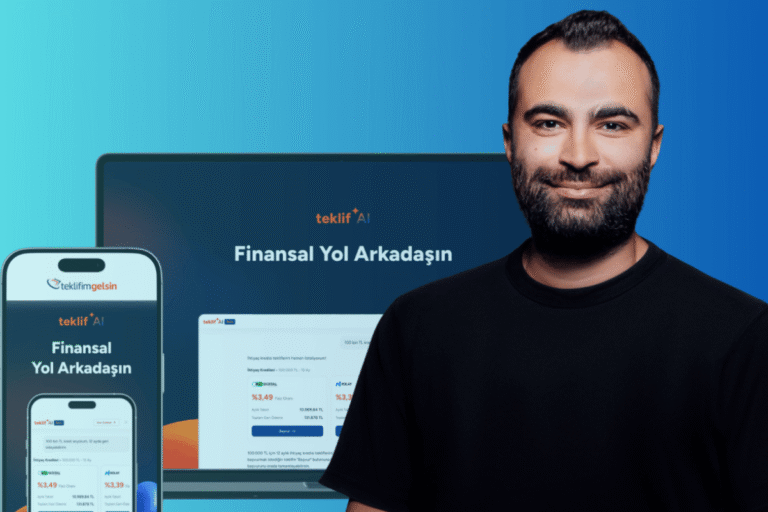
TeklifimGelsin announces its financial assistant, TeklifAI

Personalized financial platform TeklifimGelsin has launched TeklifAI, which understands users’ needs in just a few sentences and presents them with suitable financial offers within a chat. Powered by artificial intelligence, the financial assistant TeklifAI allows users to discover loan and credit card options tailored to their needs and apply for offers through a single chat interface.

Financial decisions are an important part of daily life, but users can get lost among numerous options and different sources. Understanding the repayment plan of a loan, comparing credit card advantages, or learning how to evaluate savings often requires reviewing multiple pages. As a result, users either settle for the most familiar option or abandon their research altogether.

Operating with the mission of making financial products transparent and comparable for everyone, TeklifimGelsin has launched its AI-powered financial assistant TeklifAI to simplify this experience. TeklifAI aims to answer the fundamental question of “which product should I use?” before the question of “which bank has the lowest interest rate?” Users describe their needs in their own words, and TeklifAI presents matching loan and credit card options on the chat screen. Users can examine the details of the offers and apply for their preferred option.

A Personal Financial Companion That Understands Needs TeklifAI is envisioned to evolve into a personal financial companion that not only finds the product specified by the user but also understands the intent behind their need. For instance, a user who travels frequently can be recommended credit cards that earn miles, while someone with high grocery expenses can be suggested cards offering discounts at supermarkets. Similarly, a user looking for a loan to renovate their home can be directed toward longer-term options when saying “I want my monthly installment to be low,” or shorter-term options when stating “I want to pay off my loan as soon as possible.” Thus, users will not need to know in advance which financial product to search for; expressing their goal in their own words will suffice.

Personalization Will Deepen with the Credit Scorecard TeklifAI is also planned to integrate with the TeklifimGelsin Credit Scorecard. Consequently, the assistant will know not only what the user wants, but also what they are eligible for. Instead of allowing ineligible users to make applications that will not yield positive results, TeklifAI aims to direct them toward realistic alternatives. In this context, options such as low-limit entry-level products, ways to restructure existing debt at a lower cost, and a step-by-step roadmap to improve credit ratings are planned to be offered.

“We Want Everyone to Express Their Needs in Their Own Words and Reach the Right Offer” Stating that TeklifAI was developed to ensure users can more easily access options matching their financial needs, TeklifimGelsin CEO İhsan Cem Zararsız said, “The real difficulty when making a financial decision is finding the one that fits your need among countless options. We developed TeklifAI precisely for this purpose, especially for users who are distant from the language of the financial world and do not know where to start. We want everyone to be able to express their needs in their own words and easily reach the offers suited to them.”

No Membership or Login Required Users do not need to register or log in to benefit from TeklifAI; simply typing their needs into the chat area is sufficient.