Home Blog

TeklifimGelsin Ranks Among Turkey’s Top 5 Fastest-Growing Financial Mobile Apps for Second Year Running

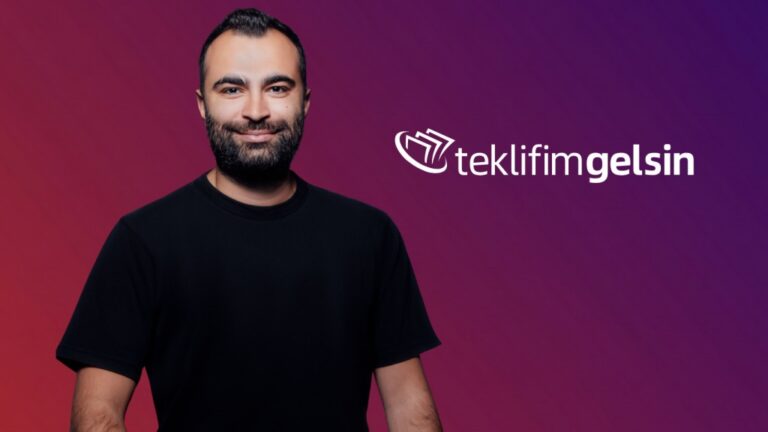
Financial technology platform TeklifimGelsin has ranked among the top 5 fastest-growing apps in Turkey’s financial mobile app download category in Sensor Tower’s State of Mobile 2026 report, earning a spot on the list for the second consecutive year.

In the report, published by mobile app analytics firm Sensor Tower, TeklifimGelsin ranked among the top 5 companies nationwide in the “Growth in Downloads” category for financial mobile apps in Turkey. With this achievement for the second year running, the platform has demonstrated its steady growth in the fintech space through an independently prepared, internationally recognized study.

Published annually, the State of Mobile report analyzes App Store and Google Play data to reveal global trends in the mobile app ecosystem, as well as standout apps by country. TeklifimGelsin’s placement in the top 5 of Turkey’s finance app category for two consecutive years shows that the platform is attracting growing interest from users and strengthening its position within the fintech ecosystem.

Having reached more than 2.2 million registered users to date, with its mobile app downloaded over 3.2 million times and having facilitated more than 120 billion TRY in personal loan applications through its platform, TeklifimGelsin continues to sustain its user-focused growth.

“We see technology as a tool that simplifies our users’ financial decisions”

TeklifimGelsin CEO İhsan Cem Zararsız commented on the achievement, saying:

“The list we are featured on, published globally each year by Sensor Tower, includes all financial apps operating in Turkey. Among them are not only our competitors, but dozens of banks, financial companies, and startups whose capital and marketing power far exceed our own. Ranking in the top five in this category last year did not surprise us, but seeing that we made it sustainable made us very happy. This repeated achievement was the best fifth-anniversary gift our users could have given us.

“From day one, we have seen technology as a tool that simplifies our users’ financial decisions. In this spirit, it is extremely valuable to us that the solutions we develop are reaching more users and being recognized in independently prepared, internationally conducted research. In the period ahead, we will continue to improve the user experience, invest in AI-powered technologies, and make financial processes more accessible.”

Offering personalized comparisons of dozens of different financial offers on a single platform — most notably its Credit Score product, built on financial and user data — TeklifimGelsin enables users to quickly and easily access the offers best suited to their needs. Continuously improving the digital finance experience through its AI-powered infrastructure and user-focused approach, the platform aims to introduce further innovations in its products and user experience in the period ahead, both to better serve its existing users and to reach new ones.
Garanti BBVA Kripto Launches OTC Platform

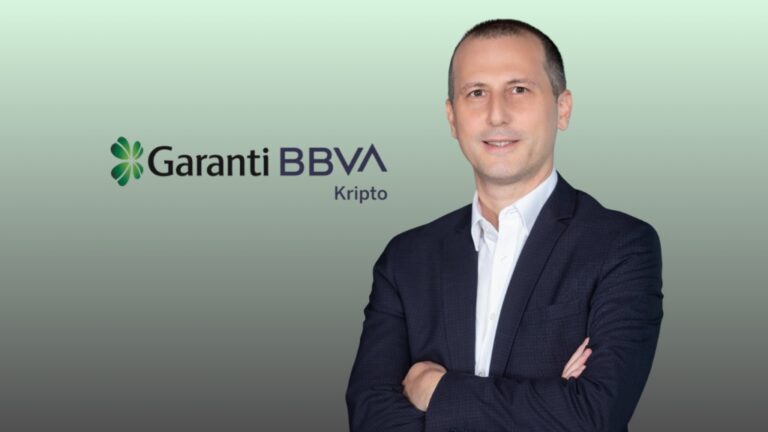
Garanti BBVA Kripto has launched its new OTC platform, developed for customers who prefer to buy and sell high-volume crypto assets quickly and easily. Offering a fully digital, self-service experience, Garanti BBVA Kripto OTC allows users to trade 24/7 at the price they see instantly on screen, without having to wait for a price quote.

Continuing to offer secure and innovative solutions in the crypto asset ecosystem, Garanti BBVA Kripto has rolled out its new OTC (Over-the-Counter) platform, which allows high-volume transactions to be carried out securely, independent of the order book.

Offered in addition to the existing “Simple Buy-Sell” and “Advanced Buy-Sell” features in the Garanti BBVA Kripto mobile app, the OTC trading model allows investors to easily carry out large-value transactions directly through the digital platform.

Zero Commission and Trading at Real-Time Prices

Designed for high-volume traders, the Garanti BBVA Kripto OTC trading model offers a fully digital, self-service experience, 24/7 access, real-time price display, and instant execution. Prices are published on the platform in real time, and users can complete transactions directly at the price they see. By allowing transactions to take place without entering the order book, the model provides a more controlled trading experience for high-value transactions and offers a structure that eliminates the risk of price slippage.

Onur Güven: “High-volume trading is now as easy as a standard buy-sell transaction”

Garanti BBVA Kripto CEO Onur Güven commented on the new Garanti BBVA Kripto OTC Platform, saying:

“In crypto asset markets, high-volume transactions often turn into a time-consuming or negative experience due to phone calls, messaging, waiting for price quotes, and manual approval processes. We aimed to digitize this experience end-to-end and offer our customers a faster, easier, and more accessible trading model. With our new OTC service, our users can trade 24/7 at the prices they see instantly on the platform. This allows us to provide a more controlled, practical, and uninterrupted experience for high-volume transactions, independent of the order book. While our strong technological infrastructure makes the OTC experience as easy as standard buy-sell transactions, we continue to offer user-focused and innovative solutions in the crypto asset ecosystem.”

Garanti BBVA Kripto OTC Platform Launch Celebrated with a Private Event

Garanti BBVA Kripto celebrated the launch of its OTC platform with an invitation-only event attended by select customers. At the event, held at Rixos Tersane Istanbul, attendees learned about the advantages offered by Garanti BBVA Kripto’s OTC platform and had the opportunity to be among the first customers to experience the service. Hosted by Garanti BBVA Kripto CEO Onur Güven, the evening featured discussions of the company’s growth vision, corporate goals, and the value the OTC platform will bring to investors. Enriched with exclusive experiences and networking opportunities, the event was a strong reflection of the importance Garanti BBVA Kripto places on customer experience and the close relationships it builds with its investors.

Garanti BBVA Kripto OTC initially launched with USD-based trading pairs. The platform offers BTC/USD, ETH/USD, SOL/USD, XRP/USD, USDC/USD, AVAX/USD, and USDT/USD trading pairs, while TRY-based trading pairs became available as of July 2. The OTC service has been positioned as a third trading area on the Garanti BBVA Kripto platform’s Buy-Sell screen, alongside the Simple Buy/Sell and Advanced Buy/Sell sections. Access to the OTC platform will be enabled for customers who request it, following the necessary evaluations.

Yapı Kredi Launches FRWRD AI Academy Program

Developed in partnership with the International Training, Research and Application Center for Executives and Leaders (CIFAL Istanbul) — affiliated with the United Nations Institute for Training and Research (UNITAR) — and Bahçeşehir University, the program will see high school students take part in a comprehensive learning process spanning artificial intelligence, entrepreneurship, and innovation.

Running for eight weeks in a hybrid format, the program will give students the opportunity to closely engage with the technology and entrepreneurship ecosystem through training sessions, hands-on workshops, mentoring meetings, teamwork, and meetings organized with industry professionals. Throughout the program, students will also be supported by peer mentors, ensuring young people are introduced early on to a culture of teamwork, shared experience, and collaborative creation.

Students who successfully complete the program will be entitled to receive a certificate approved by the United Nations Institute for Training and Research. Students will also benefit from advanced learning opportunities, digital internship possibilities, and experiences that allow them to make direct contact with the entrepreneurship ecosystem.

“We support young people staying one step ahead with technology”

Yapı Kredi Deputy CEO Yakup Doğan noted that in the age of artificial intelligence, it is important for young people to grow not merely as users of technology, but as individuals who understand it, develop it, and are able to harness it to generate social benefit.

Stating that the program was designed to support young people in becoming competent individuals in the field of technology, Doğan pointed out that the transformation taking place in AI, entrepreneurship, and innovation is reshaping every area of life — from the business world to education, and from the finance sector to daily life.

Emphasizing that they view preparing young people for the world of the future as a strategic investment in the country’s future, Doğan stated:

“We believe that the knowledge and experience our students will gain through this program will make a significant difference in both their academic and professional lives. We are also aware of how valuable the strong collaboration between the International Training, Research and Application Center for Executives and Leaders, affiliated with the United Nations Institute for Training and Research, and Bahçeşehir University is for our young people. We aim for this journey, which begins with a pilot phase, to reach wider audiences in the coming years and for many more young people to engage with the technologies that are shaping the future.”

ISX Financial and Mastercard partner on cross-border A2A payments

ISX Financial, part of the Xryma Plc group, has partnered with Mastercard to extend account-to-account (A2A) payments across borders through PaidBy, its A2A payment platform. The partnership was first announced at Money20/20 Europe in the Netherlands, and Mastercard’s Open Finance capabilities are being integrated directly into PaidBy. Consumers will be able to pay merchants from their bank accounts in their domestic currency. Merchants in more than 60 countries will receive settlement in their preferred local currency, with simplified reconciliation and next-business-day settlement.

Open Banking was introduced across the UK and the EU under payment services regulation in 2018. It allows a licensed payment provider to initiate a payment from a customer’s bank account, which the customer authorises inside their own banking app. No card details are entered or stored, and funds settle in real time as a credit transfer, which gives merchants a cash flow advantage over card processing. However, A2A payments still largely stop at national borders. Merchants expanding internationally continue to deal with fragmented integrations, multiple providers, and complex settlement arrangements.

How the partnership divides responsibilities

Mastercard provides global connectivity, scheme-level trust, and scale. PaidBy contributes its orchestration layer, cross-border settlement infrastructure, dynamic currency capabilities, and merchant payout network. PaidBy operates under ISX Financial’s authorisation from the Central Bank of Cyprus as a European Economic Area (EEA) Electronic Money Institution (EMI), and its UK activity is conducted under Financial Conduct Authority (FCA) authorisation. Funds are received in a dedicated merchant account, and API notifications alert merchants when the money arrives rather than when the payment instruction is sent. Finance teams can therefore release goods or close ledgers once funds are confirmed.

PaidBy also offers automated refund management, business intelligence dashboards, fraud prevention tools, and integration with enterprise resource planning (ERP) systems. ISX Financial has developed the infrastructure in-house over more than a decade and holds patents in Europe, the US, Canada, and APAC. Nikogiannis Karantzis, Group Managing Director and CEO of Xryma Plc Group, said geography has limited Open Banking’s potential. In his view, what has been missing is conversion, settlement, reconciliation, and refunds working as one system across several countries.

Ant International secures UAE payment and SVF licences

Ant International, a provider of digital payments and financial technology, has obtained a Retail Payment Services and Card Schemes (Category II) (RPSCS) licence and a Stored Value Facilities (SVF) licence from the Central Bank of the UAE (CBUAE). The licences align with the UAE’s broader agenda for innovation and digital transformation in the financial sector, including the country’s 2031 digitalisation and fintech strategy.

The RPSCS licence is a step towards Antom, Ant International’s merchant payment and digitisation services provider, offering merchant acquiring in the UAE. Antom supports more than 300 payment methods, allowing merchants to reach consumers in over 200 markets and transact in more than 140 currencies. It also offers digitisation tools designed to support user engagement. Once launched in the UAE, its AI-integrated services will help local merchants serve both local and international consumers, in-store and online.

WorldFirst accounts and existing Alipay+ operations

The SVF licence allows WorldFirst, Ant International’s global account service provider, to offer cross-border financial services in the UAE. Local merchants can already accept cross-border payments from digital wallet users through Alipay+, Ant International’s unified wallet gateway. That service will continue to operate through established partnerships with locally licensed banks and acquirers, independently of the new licences.

Leiming Chen, Chief Sustainability Officer and Senior Vice President of Ant International, said the licences support the company’s efforts in the UAE fintech ecosystem in line with the national strategy. He added that, in accordance with the applicable CBUAE framework, the company plans to launch AI-powered payment and account solutions to make cross-border payments and financial management more accessible.

Agentic payments and global scale

Ant International processes an average of 20 million transactions a day globally. Across Asia, Europe, and the Americas, it provides payments and account services, embedded credit, and treasury management. The company is also developing agentic payment and account solutions to prepare its partners for AI-driven commerce. The new licences give Ant International a directly regulated presence in the UAE, alongside the partnership-based model it already uses for Alipay+.

Wiremind raises €35m in first funding round to expand sales and AI development

The investment marks a shift away from a decade of self-funding and comes as the profitable passenger-transit software vendor works to hire its first regional directors outside Europe and North America.


Wiremind, a Paris-based company that provides revenue management software to the passenger transport and events industries, has closed its first institutional funding round at €35 million with support from new investors Seaya Andromeda, Bpifrance Investissement, and IronWave (formerly Wendel Growth).

This is the first time Wiremind has raised from external investors. The company is profitable and has been bootstrapped since being created by CEO Colin Girault-Matz and CTO Charles Pierre in 2014.

The funding round comes after Wiremind increased its revenue by 67% in 2025. Its flagship revenue management system Cayzn grew its annual recurring revenue by 81% during the same period.

Unit21 and Corelation partner on fraud and AML for credit unions

Unit21 and Corelation have linked fraud detection and AML monitoring with KeyStone, letting credit unions investigate and act in one system.

Unit21, an AI risk infrastructure platform for fraud prevention and anti-money laundering (AML) monitoring, has formed a partnership with US-based Corelation, the core processor behind KeyStone, which serves more than 300 credit union clients. The two-way integration sends member, account, card, and transaction data from KeyStone into Unit21 for detection and investigation. Analysts can then take action back in KeyStone through Corelation’s KeyBridge API, blocking cards, stopping payments, and placing holds without leaving the case. As a result, credit unions on KeyStone can detect, investigate, act on, and report fraud and AML risk within a single system.

Closing the gap between detection and action

Until now, an analyst could spot fraud in one system but had to log in to the core separately to stop it, look up the member again, and re-enter the account details. With the integration, the evidence, decision, and action sit on the same record, and the audit trail is created the moment the analyst acts. Credit unions using Corelation gain access to fraud prevention, AML transaction monitoring, case management, and regulatory filing on a data feed that Corelation builds and supports. Unit21’s credit union customers on KeyStone can send card blocks, card activations, stop payments, and cheque holds to the core from within a case, with each action logged alongside its supporting evidence, creating a single workflow from a suspicious transaction to a filed Suspicious Activity Report (SAR) or Currency Transaction Report (CTR).

Tyler Allen, CEO of Unit21, stated that fraud moves at the speed of real-time payments, and that credit unions cannot fight it with next-day files and a second login. According to Allen, the partnership allows credit unions to detect fraud, stop it in the core, and file reports from a single case, reducing financial losses and harm to members.

How the integration works

Corelation provides a dedicated Unit21 AML extract, configured in each credit union’s KeyStone environment by its own administrator or data team. After an initial historical load, the extract sends incremental changes to entities, joint account holders, accounts, cards, and transactions about every five minutes, giving Unit21 a near real-time view of member activity. Unit21 runs the credit union’s own rules and AI agents on this data and sends any required actions back to KeyStone through the KeyBridge API. Credit unions can also connect their digital banking platforms to Unit21 for real-time decisions on logins, profile changes, and payments.

UK banks expect higher sector taxes in Budget

UK Chancellor John Healey is reportedly planning to increase taxes on the bank sector in the upcoming Budget, according to senior banking executives. The chancellor has described banks as among the most valuable parts of the UK economy, but sector leaders expect the industry to be among the areas targeted for additional revenue. The four largest UK banks together made a profit of approximately GBP 15 billion in the first six months of 2026, and trade unions have called for them to face additional taxes. UK Finance, the trade body for the banking sector, has warned that further tax increases would weaken competitiveness, discourage investment and job creation, and work against the government’s growth objectives.

How UK banks are currently taxed

The largest UK banks and building societies currently pay a 3% surcharge on top of the baseline corporation tax rate of 25%. They are also subject to a bank levy, which is calculated on the size of their balance sheets rather than on profits. The levy applies a rate of 0.1% to outstanding short-term loans and 0.05% to longer-dated loans, with mortgages excluded from the calculation. In 2025, the bank levy generated GBP 1.4 billion, while the surcharge raised a further GBP 1.2 billion. When income tax paid by employees is included, the sector contributed nearly GBP 40 billion to the Treasury over the year. The Chancellor has several ways to raise additional revenue from the sector. The surcharge was reduced from 8% to 3% under Rishi Sunak, at the same time as corporation tax increased from 19% to 25%. Returning the surcharge to its former level could raise around GBP 2 billion a year.

Treasury officials have also discussed a different option: restricting banks’ ability to offset past losses against current profits. Lloyds has been a notable beneficiary of this rule, using financial-crisis losses to lower its tax bills. Some analysts and bank executives have proposed a temporary moratorium on the practice, which would generate an estimated GBP 1 billion a year. According to one bank executive, the sector would find this easier to absorb than other measures, and it would also spare foreign banks an additional charge.

Competitiveness concerns and calls for higher contributions

Sir Philip Augar, an author and former banker in the City of London, has reportedly said there is room for a moderate increase that could raise up to GBP 3 billion a year. He pointed to higher interest rates, which have widened the margin between what banks charge borrowers and what they pay savers. Paul Nowak, General Secretary of the Trades Union Congress (TUC), said that most bank workers are not high earners and that the TUC supports a successful UK financial services industry. He added that asking banks to contribute a fairer share of tax in the Budget would be the right decision.

EBA classifies Circle’s USDC as first significant e-money token in EU

The European Banking Authority (EBA) has classified USDC, issued in the EU by Circle Internet Financial Europe SAS, as a significant e-money token (EMT) under the Markets in Crypto-Assets Regulation (MiCA). The decision follows the authority’s assessment of the significance criteria set out in the regulation. Of the 45 EMTs currently notified under MiCA in the EU, USDC is the first to receive this classification.

Supervision split between the EBA and the ACPR

From 12 November 2026, USDC will fall under the dual supervisory model that MiCA applies to significant EMTs. Direct supervisory responsibility for own funds, reserve of assets, liquidity requirements, and recovery and redemption plans will move from the Autorité de Contrôle Prudentiel et de Résolution (ACPR) to the EBA. The ACPR will keep responsibility for governance, qualifying holdings, fit and proper assessments, outsourcing, and conflicts of interest.

This division moves the prudential areas most closely tied to a token’s backing and redeemability to EU level: the reserve of assets, liquidity, and the plans for recovery and redemption. Organisational and conduct-related matters stay with the national competent authority. The two authorities have said they will work closely together to manage the transition and coordinate their supervisory work.

USDC is issued in the EU by Circle Internet Financial Europe SAS and in the US by Circle Internet Financial, LLC. To support its supervision of cross-border stablecoin activities, the EBA has signed a Memorandum of Understanding with the New York State Department of Financial Services (NYDFS). The agreement is intended to make cooperation and information exchange between the two authorities easier.

Legal basis for the classification

Under MiCA Articles 43 and 56, the EBA is responsible for classifying asset-referenced tokens (ARTs) and EMTs as significant. Each year, it assesses whether tokens should be considered significant or whether they continue to meet the applicable criteria. Commission Delegated Regulation (EU) 2024/1506 specifies the indicators used in this assessment, and the procedure is set out in EBA Decision EBA/DC/558.

MiCA treats the two token types differently once they are deemed significant. Issuers of significant ARTs come under EBA supervision. Issuers of significant EMTs are subject to dual supervision by the EBA and the relevant national competent authority, as set out in Article 117. The EBA exercises these powers in close cooperation with other competent authorities under Articles 117(5) and 128, and through the supervisory colleges established under Article 119.

Bybit adds US equities to its multi-asset platform

Bybit, a UAE-based crypto exchange that reports more than 80 million users, has launched stock trading for eligible users. The service gives access to more than 1,000 US-listed stocks and exchange-traded funds (ETFs), including Apple, NVIDIA, Tesla, Micron Technology, and the Invesco QQQ ETF. The service is available to users in permitted jurisdictions who have completed know your customer (KYC) verification. Trades are funded in USDC, so users can buy and sell equities within the same environment they use for digital assets. According to Bybit, the launch is part of its strategy to connect financial markets that have traditionally been split across separate products and platforms.

Execution and custody through Alpaca

Orders are routed through Bybit’s regulated brokerage infrastructure and executed by Alpaca, a US self-clearing broker-dealer. Alpaca also holds the underlying securities in custody. Unlike price derivatives or synthetic instruments, the service gives users an economic interest in the securities they buy. Yoshi Yokokawa, Co-founder and CEO of Alpaca, said the partnership extends a broader multi-asset trading offering to Bybit’s international user base. At launch, the service supports fractional shares for eligible securities and charges no trading commissions on eligible stock purchases and sales. Trading runs 24 hours a day, five days a week, covering US pre-market, regular, and after-hours sessions, subject to product availability. Users can also manage eligible crypto and equity positions within the same Bybit account.

The platform supports corporate actions for holders of eligible securities. Cash dividends are converted from USD into USDC and credited to the user’s Unified Trading Account (UTA). Stock dividends are reflected directly in the user’s position, and stock splits are applied to holdings in line with the relevant corporate action. Bybit plans to introduce voting rights in a future phase.

Narrowing the gap between crypto and traditional markets

The launch adds to Bybit’s existing range of traditional market products. Alongside crypto spot and derivatives trading, the exchange already offers access to traditional markets through its MT5 platform, tokenized equities, and TradFi perpetuals.

Ben Zhou, Co-founder and CEO of Bybit, said the company sees the separation between crypto and traditional markets narrowing, and that real-world asset tokenization is already part of its current offering. The move reflects a wider trend of crypto platforms adding traditional asset classes, which lets users manage equity and digital asset exposure in one account. By using a US broker-dealer for execution and custody, Bybit can offer direct ownership of the underlying securities rather than synthetic exposure.

IMF and World Bank release fraud framework for digital finance

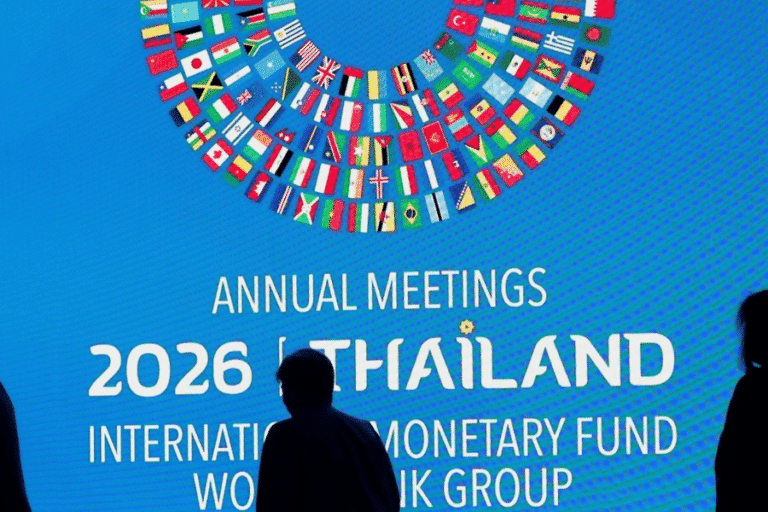
The International Monetary Fund (IMF) and the World Bank Group have released the Bangkok Blueprint, a framework designed to help countries prevent, detect, and respond to cyber-enabled fraud in digital financial services. It was developed in coordination with the Bank of Thailand during the institutions’ annual meetings in Thailand, according to a joint statement. The framework sets out 12 key considerations to help countries identify vulnerabilities and build coordinated responses to fraud. According to the institutions, fraud has grown in speed, scale, and sophistication as digital finance has expanded. Citing INTERPOL, the statement noted that cyber-enabled fraud is increasingly linked to transnational organised crime and ranks among the most serious global crime threats, alongside drug trafficking and money laundering.

Five pillars for prevention and cooperation

The Bangkok Blueprint is built on five pillars. The first focuses on establishing strategic and legal foundations. The second covers strengthening fraud prevention, detection, and response, and the third draws on existing risk mitigation and enforcement frameworks. The remaining two pillars address expanding domestic and cross-border cooperation and promoting consumer protection and resilience.

The framework also highlights the role that social media, digital platforms, ecommerce, and telecommunications networks play in fraud schemes. It calls for clear accountability and timely cooperation between public and private institutions. Rather than prescribing a single model, the blueprint encourages countries to adapt its recommendations to their own legal, institutional, and market conditions.

Trust in digital finance at the centre

Kristalina Georgieva, Managing Director of the IMF, said international cooperation against fraud is essential to preserving confidence in financial technologies that support growth and inclusion. Anshula Kant, Managing Director and Chief Financial Officer of the World Bank Group, said stronger protection would allow people to use digital financial services with confidence and benefit from the economic opportunities and jobs they create. Thai officials also stressed the cross-border nature of the problem. Vitai Ratanakorn, Governor of the Bank of Thailand, said no single country or institution can address the challenge alone. Ekniti Nitithanprapas, Thailand’s Deputy Prime Minister and Finance Minister, called for a more connected response as digital finance becomes increasingly interlinked across markets.

Payoneer launches Checkout in Singapore with Stripe infrastructure

Payoneer has made Payoneer Checkout, powered by Stripe, available to eligible Singapore-registered businesses. The launch gives Singapore merchants who run their own online stores a way to accept payments from customers in other countries. Payoneer has built the solution on Stripe’s cross-border financial infrastructure, and it supports several payment methods, including cards and digital wallets. Businesses can then manage the proceeds across markets through Payoneer’s financial platform, which allows them to handle funds in multiple currencies.

Marketplace sellers moving towards direct channels

The launch is aimed at a specific group within Singapore’s merchant base: established brands that already sell through marketplaces such as Shopee, Lazada, and Amazon, and that are now investing in direct-to-consumer (DTC) channels. Running their own storefronts lets these businesses shape the customer experience and build direct relationships with buyers. Additionally, it makes the merchant responsible for payments.

Businesses selling abroad must account for local payment preferences, multiple currencies, and various payment methods. A failed or abandoned transaction at checkout can cancel out the marketing and acquisition spending that brought the customer to the site.

According to the e-Conomy SEA 2025 Singapore report, digital payments account for more than 60% of transactions in Southeast Asia, and three in five consumers in the region shop online.

Nagesh Devata, SVP of APAC at Payoneer, said Singapore businesses have become more sophisticated in reaching international buyers, and many now combine a marketplace presence with their own DTC channels. Devata added that, as merchants take more control of the customer journey, they need a payment provider that can manage the complexity of operating across markets, currencies, and payment behaviours.

ON Digital celebrates its 5th anniversary

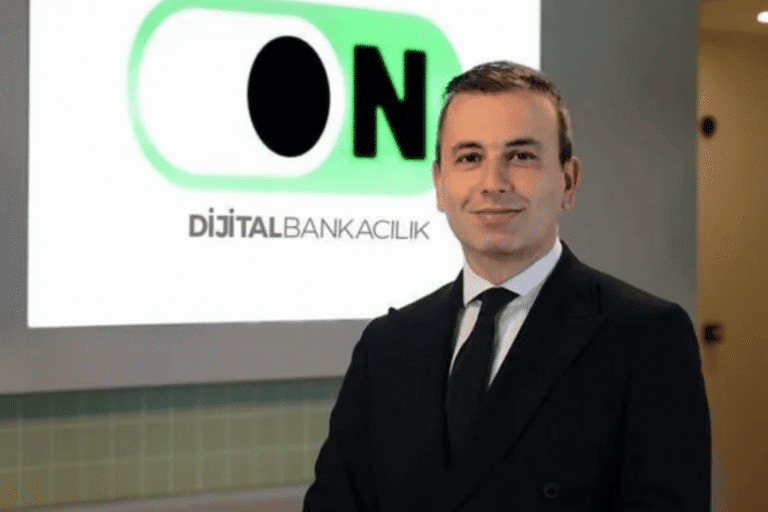
Burgan Bank’s digital banking brand, ON Digital, has reached approximately 2 million customers in its 5th year and is celebrating its new milestone with special advantageous campaigns for its customers.

Continuing its fee-free banking approach by not charging any fees or commissions on more than 28 million banking transactions to date, ON Digital continues to develop its products and services tailored to the changing financial needs of its customers.

Having started offering privileged banking services this year as well, ON Digital allows approximately 300 banking transactions to be carried out through its sleek and user-friendly interface.

While enhancing its personalized banking experience, ON Digital offers different opportunities with its campaigns special to October for customers who want to evaluate their savings, meet their financing needs, gain advantages on their spending, or access cash whenever they need it.

ON Digital aims to provide products, services, and privileges suited to the financial needs and habits of its customers through its new segmentation structure consisting of ON Active, ON Plus, ON Prime, and ON Prestige segments. With this structure, it aims to strengthen the personalized banking experience.

Combining the speed and convenience provided by digital banking with financial advantages across different product groups, ON Digital offers privileges that add value to its customers’ daily lives, alongside solutions for loans, credit cards, deposits, and daily cash needs.

ON Prestige customers can benefit from advantages offered in various areas such as restaurants, hotels, fuel, parking, and duty-free.

Within the scope of the “Turning Spending into an Opportunity Mode: ON!” campaign, ON Digital offers a 500 lira cashback opportunity on the first spending with the Maximum-featured ON Credit Card.

Providing new advantages to its customers in their shopping with the Maximum feature added to the free ON Credit Card, ON Digital is also expanding the opportunities offered by the card.

ON Digital offers new and existing customers who apply for the ON Credit Card and get their card by October 31 a 500 lira cashback on their first spending of 5,000 liras and above in all sectors in October by joining the campaign.

Advantageous solutions for financing and cash needs

ON Digital offers advantageous solutions for its customers’ financing and daily cash needs through Super Extra Account and loan campaigns. Within the scope of the “Advantageous Loan Mode: ON!” campaign valid until October 18, customers can use a loan up to 250,000 liras with a monthly interest rate of 2.99 percent and maturity options of 6 to 24 months.

While the monthly interest rate of 2.99 percent offered in the campaign applies to loans up to 250,000 liras with maturities up to 24 months, the annual cost rate for a 10,000 lira loan with a 24-month maturity is calculated as 59.0557 percent.

The “Fast Cash Mode: ON!” campaign offers a monthly interest advantage of 2.99 percent on the Super Extra Account exclusively for new customers. New and existing customers who did not previously have a Time Deposit Account/Overdraft Account can also benefit from the monthly interest rate of 2.99 percent until November 2 minutes/days upon opening a Super Extra Account.

ON Digital also offers special opportunities for new customers who want to evaluate their savings. Within the scope of the “Profitable Savings Mode: ON!” campaign, an annual interest advantage of up to 38 percent is provided on Time Deposit Accounts in liras until October 31.

Enhancing its services in the investment field, ON Digital offers its customers different investment alternatives with opportunities for participating in initial public offerings (IPOs), stock transactions, and investments in international markets.

In addition, with its free international foreign exchange transfer service to more than 30 countries, it allows customers to carry out their overseas money transfers cost-free.

“The strong bond we have established with our customers is our greatest motivation for the future”

Burgan Bank Digital Banking Executive Vice President Murat Bozkurt stated that lasting success in digital banking comes from accurately understanding customer expectations and responding to these expectations in a timely manner.

Bozkurt conveyed that when setting out five years ago, they aimed to move the relationship people build with banking to a simpler, more accessible, and trust-based ground, emphasizing that at the point they have reached, the issue that makes them happiest is that their customers have embraced ON Digital as a natural part of their lives.

Stating that they listened to their customers throughout this process, observed how habits changed, and fed on these experiences at every step they took, Bozkurt noted the following:

“We believe that institutions that know their customer well, can take action while expectations are still forming, and make life easier will stand out in the future of banking. The experience we have gained in five years and the trust our customers place in us are the strongest sources of motivation for our future journey. In the upcoming period, we will continue to add value to our lives of our customers by bringing technology together with our human-centric approach.”