Home Blog Page 3

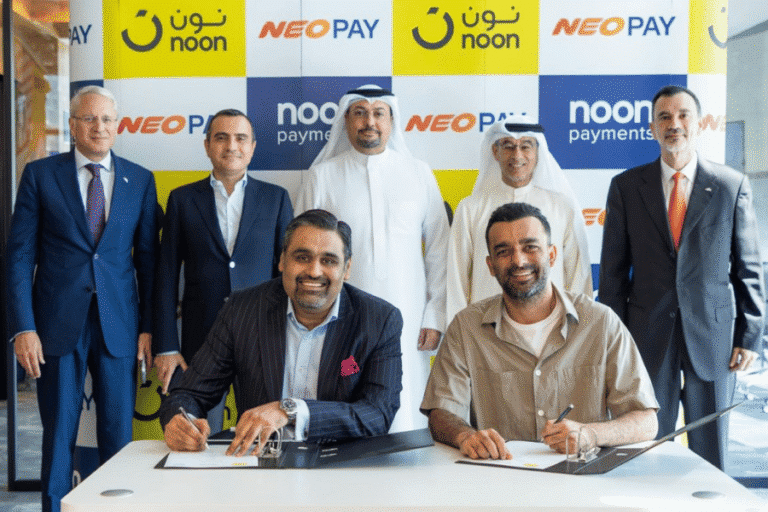
NEOPAY acquires 65% stake in noon payments

UAE-based payment software company Neopay has inked an agreement to acquire a controlling 65% stake in online payment gateway Noon Payments. Neopay is aiming to expand into Saudi Arabia and Egypt with the purchase. A statement confirms that the agreement is now pending regulatory approval. A timeline for completion and financial terms have not been disclosed.

Noon Payments was built in 2016 as the in-house payment infrastructure of Saudi online marketplace Noon. The parent e-commerce group is owned by the Kingdom’s Public Investment Fund (PIF) and Emirati businessman Mohamed Alabbar as its two main investors. The core e-commerce and retail operations of Noon will remain unaffected by the transaction.

It’s understood that the remaining 35% stake in Noon Payments will remain with its original parent company.

Once approved, the plan is to integrate Noon Payments’ embedded payments platform, e-commerce gateway, and merchant network into Neopay. This includes existing payment flows in the UAE, Saudi Arabia, and Egypt.

Merchant partners will be able to handle both in-store card transactions and online checkouts as a result of bringing the two technologies together. Multi-market retailers will be able to use this single system for cross-border settlement and merchant onboarding.

This is the first major acquisition made by Neopay since Mashreq Bank sold a majority stake in the business in January 2025 to an investment consortium comprising Arcapita Group and fintech firm Dgpays for $385 million.

Fiserv digital asset platform goes live with Bank of North Dakota

Fiserv has gone live with its digital asset platform via Bank of North Dakota’s Roughrider Coin, supported by VersaBank, Fireblocks, and Solana.

The first live deployment is Roughrider Coin, a stablecoin backed by the US dollar and created for the Bank of North Dakota to support money movement across the state’s interbank network. VersaBank acts as issuer, Fireblocks provides digital asset infrastructure and tokenisation services, and transactions are processed on the Solana blockchain.

How Roughrider Coin works

Bank of North Dakota is drawing on the platform’s issuance, reserve, custody, and settlement infrastructure to introduce the stablecoin into banking and payment workflows throughout the state. More than 90 participating banks and credit unions in North Dakota can use the token for bank-to-bank transactions. The bank also intends the stablecoin to serve as a base for further digital money use cases.

Participating institutions access Roughrider Coin through Commercial Center, Fiserv’s commercial online banking system. Because these institutions already use the platform for traditional interbank transfers, stablecoin transactions run through the same system as their conventional money movement.

According to Don Morgan, chief executive officer of Bank of North Dakota, the launch gives partner community banks and credit unions a new tool for moving money across North Dakota’s interbank network. He presented it as a continuation of the bank’s work with financial partners to support agriculture, commerce, and industry in the state.

VersaBank’s responsibilities include minting, burning, custody, and reserve asset management. The company identifies these as the core functions that allow financial institutions to operate stablecoins within a nationally regulated framework. David Taylor, Founder and President of VersaBank, said that combining Fiserv’s scale with VersaBank’s regulated digital asset capabilities provides a basis for bringing stablecoins into established banking and payment systems.

Caliza and Yala partner on cross-border trade in Africa

Caliza, a US-based cross-border payments and treasury platform, has partnered with Yala, a platform serving manufacturers, service businesses, and distributors expanding across Africa. Under the agreement, Yala will use Caliza’s infrastructure to support settlements with international suppliers across multiple payment corridors. Yala helps companies collect local-currency payments, manage distributor relationships, and access market intelligence, while the new arrangement adds infrastructure for international supplier payments.

Infrastructure supports international supplier payments

Caliza will provide dedicated USD virtual accounts and a dashboard for managing and monitoring transactions. Its infrastructure will handle international settlement, with stablecoin-to-fiat conversion incorporated into the processing flow. Payments supported through the arrangement can reach suppliers in China, the US, India, South Korea, the UAE, and France. Automated ledger processes will provide Yala with greater control and visibility over payment activity, while allowing the company to focus on connecting manufacturers and suppliers with distributors.

Africa’s merchandise trade increased by approximately 14% in 2024 to reach USD 1.5 trillion. The World Bank has projected that full implementation of the African Continental Free Trade Area could increase exports by up to 81% by 2035. Small and medium-sized enterprises account for around 80% of businesses across the continent and contribute approximately half of its GDP, highlighting their role in future trade flows.

Stablecoins form part of the settlement process

For Yala, the integration provides infrastructure to support cross-border transactions across additional markets without requiring the company to build every connection itself. Ezra Kebrab, CEO of Caliza, said the collaboration will help address barriers African businesses face when accessing dollars for global trade. Babatunde Adebajo, co-founder and CEO of Yala, said the infrastructure will support the company’s expansion across additional markets.

Latvijas Banka grants Noah LV SIA crypto-asset and payment licences

Latvijas Banka has granted Noah LV SIA two authorisations: a MiCA crypto-asset licence and a payment institution licence.

The permissions bring digital asset and payment services under one licensed entity. Each falls under its own regulatory regime, and the company now holds approval under both.

Licences scope

The crypto-asset licence was issued under the requirements of the Markets in Crypto-Assets Regulation (MiCA). It covers four activities: Noah LV SIA may hold digital assets in custody and administer them for clients, exchange them for funds, execute orders on customers’ behalf, and provide transfer services.

These approvals cover the main stages of a client’s asset activity: safekeeping, conversion into funds, order execution, and movement of assets. That range lets the company act as a custodian and as an intermediary for its customers.

The second permission allows Noah LV SIA to operate as a payment institution, covering the execution of payment transactions, credit transfers, and standing orders. With both licences, the company can manage crypto-assets alongside the execution of fund-based payments.

MiCA passporting and Latvia’s licensed market

According to Latvijas Banka, it has issued permissions to 12 companies under the requirements of MiCA. Separately, 13 companies in Latvia hold a payment institution licence.

MiCA’s cross-border framework gives the Latvian authorisation reach beyond the domestic market. A crypto-asset service provider certified in one EU member state under MiCA can operate throughout the EU using the cross-border notification mechanism. A licence granted by Latvijas Banka can therefore serve as the basis for Noah LV SIA to offer its authorised crypto-asset activities in other EU markets once that notification process is complete.

Alongside the announcement, Latvijas Banka pointed applicants to its licensing guides. The guides set out the licensing process and requirements, including the documents applicants must prepare and submit, and the deadlines for reviewing applications.

Furthermore, the central bank also

Mastercard launches AI-powered B2B analytics platform for issuers

Mastercard has launched Advanced B2B Analytics, an AI-powered supplier analytics platform, with Absa Group and Emirates NBD as early adopters.

The new Mastercard platform focuses on card acceptance analytics and is aimed at card issuers and their corporate clients. It draws on accounts payable data to produce supplier payment insights within minutes. Issuers can use the information to determine which suppliers could move to commercial card payments and to plan their outreach accordingly. The company’s goal is to help issuers grow commercial card spend, generate additional revenue, and support corporate clients in managing working capital.

Addressing friction in supplier payments

Supplier payments remain a recurring problem for banks and corporates. Mastercard notes that issuers and corporate buyers often have no structured, data-led way to identify and prioritise suppliers that may accept cards. Fragmented data and manual processes slow down conversion and keep companies dependent on less efficient payment methods. Supplier expectations, meanwhile, are changing. Nearly half of suppliers expect buyers to ask to pay by card more often in the coming years.

Marc Pettican, global head of Corporate Solutions at Mastercard, said businesses hold large volumes of payment data that often stay fragmented and underused. He added that the platform combines these insights with the company’s commercial payments experience. The aim is to help issuers see where card acceptance can create value, engage suppliers more effectively, and achieve measurable growth.

How the platform works

The platform is built around acceptance propensity scoring. This feature runs on an underlying AI-powered infrastructure and ranks suppliers by how likely they are to accept card payments. Interactive dashboards and analytics turn accounts payable data into usable information. Greater visibility into payment flows is intended to support working capital decisions.

Users can also draw on the Mastercard Advisors & Transformation team for recommendations on supplier prioritisation and growth strategies. Mastercard says that pairing analytics with consulting is meant to streamline procurement processes, reduce costs, and accelerate commercial card acceptance.

Walletdoc brings Visa Payment Passkeys to South Africa

Walletdoc has launched Visa Payment Passkeys in South Africa, enabling biometric authentication for online Visa card payments.

Walletdoc has launched Visa Payment Passkeys for merchants in South Africa, allowing Visa cardholders to authenticate online purchases using a fingerprint, facial recognition, or device PIN. The service replaces one-time PINs and bank-app redirects with authentication through the customer’s device. The passkeys are designed for online card payments and use device-based credentials to authenticate transactions.

Visa Payment Passkeys change checkout authentication

Customers can enrol a card for a passkey with a few steps. Once registered, the passkey remains on the customer’s device and can be used to approve subsequent purchases made with that card on the same device.

The authentication process does not require customers to enter a one-time code or leave the merchant’s checkout to approve the transaction through their bank. Biometric information remains on the device rather than being shared with the merchant or payment provider. Walletdoc said the rollout builds on its existing 3-D Secure capabilities, under which customers may be redirected to their bank or asked to provide an additional authentication code before returning to the merchant’s website.

Passkeys extend Walletdoc’s payment options

Visa Payment Passkeys are available to merchants using the Walletdoc platform. The company said merchants can integrate the functionality without developing a separate passkey solution themselves. The technology is also intended to complement Walletdoc’s existing support for digital wallets, including Apple Pay, Samsung Pay, and Google Pay. Payment Passkeys enable eligible Visa card payments to be authenticated directly within the merchant’s online checkout. Visa states that Payment Passkeys uses device-based authentication designed to resist phishing and can support Strong Customer Authentication requirements where applicable.

The rollout adds another passkey-based authentication option for online card payments, allowing merchants to offer device-based verification alongside existing authentication methods. The technology uses FIDO-based authentication and links the payment credential to the customer’s trusted device. Visa Payment Passkeys can also work with EMV 3-D Secure, allowing merchants to use passkey authentication within existing payment security infrastructure

Monzo explores private equity stake sale after Nubank talks end

Monzo has held early talks with CVC and Advent International on a stake sale following the collapse of takeover negotiations with Nubank.

According to people familiar with the matter, a sale to a private equity fund has become Monzo’s preferred route, and its advisers plan to approach additional fund managers. The discussions follow the end of negotiations with Brazil-based Nubank, which confirmed that it would not pursue a transaction. The two sides reportedly failed to agree on a price, with Monzo seeking a valuation of up to EUR 11.8 billion. Nubank, which is listed in New York and has a market capitalisation of approximately EUR 58 billion, will instead concentrate on Brazil and the US, where it recently obtained a banking licence.

Monzo could still raise capital through a conventional venture capital round. However, a person familiar with the board’s thinking indicated that a private equity deal is favoured, as it would likely involve a larger investment and provide more capital for growth.

The search for funding follows a turbulent year marked by disputes between the board and investors over international expansion and the timing of an initial public offering. Since February 2026, Monzo has closed its US offices and redirected expansion towards Europe, opening offices in Spain and securing a European banking licence from Irish authorities.

Strategic rationale and valuation concerns

For Nubank, which launched in 2013 and serves 140 million customers mainly in Latin America, Monzo represented a potential entry point into Europe. Industry observers link the interest to competition with Revolut, which has 80 million customers and a valuation of approximately EUR 102 billion, compared with the 15 million customers Monzo reported in 2026. Both Nubank and Revolut have secured US banking licences in recent months, while Revolut has also expanded in Colombia, Mexico, and Argentina. John Cronin, an independent banking analyst, said Nubank’s options in Europe were limited to acquisition or slower organic growth.

David Vélez, co-founder of Nubank, said that UK growth would be costly, citing access and cost challenges as well as limited availability of credit products.

The proposed price also drew scepticism. In a note to clients, equity research firm Autonomous described the deal as financially questionable, noting that a valuation of EUR 9.4 billion to EUR 11.8 billion would equal seven times Monzo’s tangible book value, well above competitors. It added that Monzo generates approximately EUR 8 per customer each month, half the average for Nubank’s Brazilian customers, and that monetising customers in the mature UK market would be difficult.

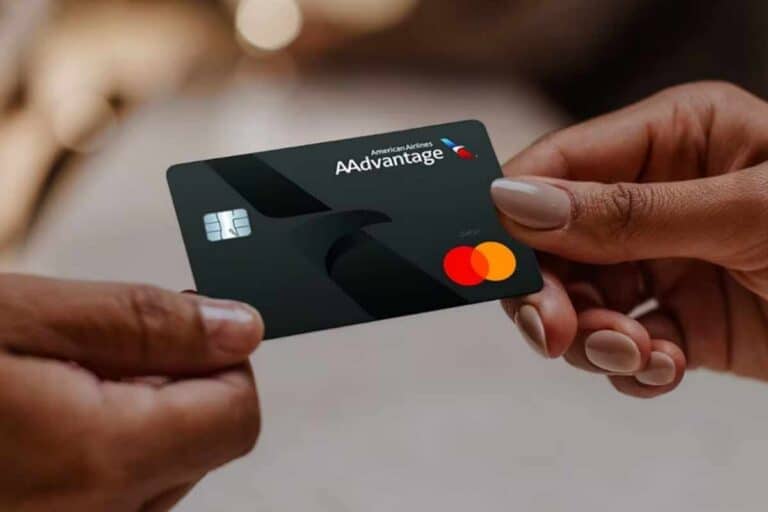
American Airlines launches AAdvantage debit cards in the UK

American Airlines has launched two AAdvantage debit cards in the UK with Currensea and Mastercard, allowing customers to earn miles.

American Airlines has launched the AAdvantage Platinum Debit Card and AAdvantage Black Debit Card in partnership with Currensea and Mastercard. The cards are the first AAdvantage-branded debit cards available to customers in the UK and allow cardholders to earn AAdvantage miles and Loyalty Points through eligible spending. The cards connect to customers existing UK bank accounts and can be used wherever Mastercard is accepted. Transactions are funded through the linked bank account, without requiring customers to open a separate account or preload a prepaid card.

AAdvantage cards offer different earning rates

The Platinum and Black cards have different mileage earning rates based on where customers spend. Platinum cardholders earn 0.5 miles per GBP 1 in the UK and Europe and one mile per GBP 1 elsewhere. Black cardholders earn 0.667 miles per GBP 1 in the UK and Europe and 1.334 miles per GBP 1 elsewhere. Black cardholders can also activate Turbo Miles in the app, increasing the rate to two miles per GBP 1 on foreign-currency spending, with a 2.95% foreign exchange fee applying when the feature is active.

Cards include travel-related benefits

The Platinum card carries an annual fee of GBP 75, while the Black card costs GBP 195 annually. Both cards offer renewal bonuses when customers meet specified spending thresholds. Under an additional offer, Platinum cardholders can receive 2,000 bonus miles and Black cardholders can receive 5,000 after meeting the qualifying American Airlines spending requirement during the first 12 months, subject to the applicable terms.

Black cardholders also receive unlimited priority check-in at London Heathrow and Preferred Group 5 boarding on American Airlines flights, subject to the stated conditions. Currensea provides the payment service connecting the cards to customers’ existing UK bank accounts, while Mastercard provides the card network. The launch adds debit-card spending to the AAdvantage programme for UK customers, with the Platinum and Black cards offering different fees, earning rates, and benefits.

Istanbul Fintech Week 2026 opens its doors

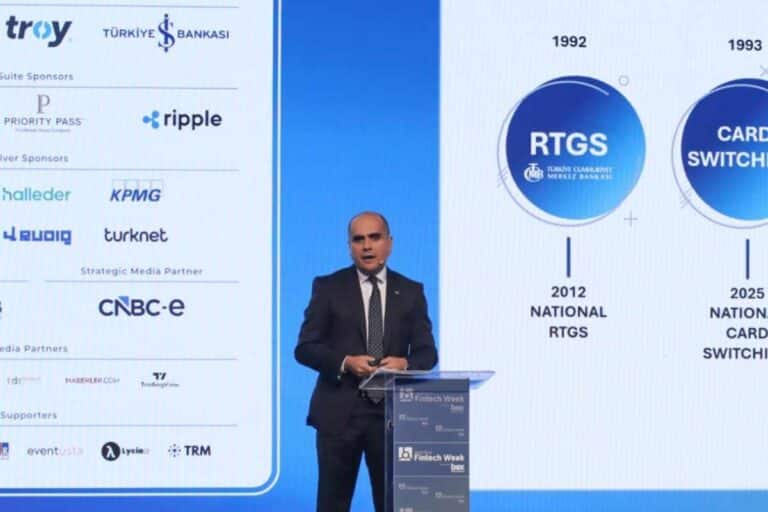
The main summit programme of Istanbul Fintech Week 2026, supported by Bex Digital Wallet, has begun. The opening address was delivered by Central Bank of the Republic of Turkey (TCMB) Deputy Governor Prof. Dr. Hatice Karahan. Nobel Prize-winning economist Prof. Dr. Daron Acemoğlu is set to take the main stage today, October 6. The event, which opened on October 5 with the Sustainable Finance Summit, will cover payments, artificial intelligence, autonomous finance, digital banking, and tokenization.

Istanbul Fintech Week (IFW) 2026, supported by Bex Digital Wallet, is bringing together global and local leaders of the financial technology ecosystem at Hilton Istanbul Maslak from October 5 to 7. Under the theme “Smart, Embedded and Tokenized,” the Sustainable Finance Summit on October 5 is followed by the Payments, AI in Finance, Digital Banking, and Digital Assets summits on October 6 and 7.

AI and secure settlement in focus

In her opening address, TCMB Deputy Governor Prof. Dr. Hatice Karahan said: “For many years, one of the core objectives in payments was to make them faster and more secure. While these goals remain important, there is a dimension that is increasingly being added to them: making payments smarter. We can already see this development taking shape around instant payment infrastructures. Smart payments are also evolving in other ways — payments are increasingly being executed based on pre-defined conditions, interacting with digital identities and assets, and becoming part of broader automated processes.”

Karahan continued: “The next development in payments is the use of artificial intelligence, which is bringing the historical journey of payments toward agent-based payments. AI is creating opportunities to coordinate processes connected to payments. At the same time, agent-based payments bring their own challenges. For central banks, therefore, the future of payments is not simply a matter of adopting new technologies. It also requires understanding how higher levels of automation interact with the underlying monetary structure and payment infrastructure, and ensuring that innovation develops alongside clearly defined mandates and trusted settlement.”

International regulatory perspectives on the future of payments

Representatives of the Central Bank of the Republic of Turkey, the Bank of Slovenia, and the National Bank of Georgia will come together in a panel examining the interconnection of instant payment systems. The event creates space for cross-border dialogue and cooperation while bringing together fintech development and the regulatory agenda.

Five summits on the transformation of finance

The programme consists of the Sustainable Finance, Payments, AI in Finance, Digital Banking, and Digital Assets summits, with closed roundtable sessions accompanying the main stage sessions. Invest in Türkiye and the Payment and Electronic Money Institutions Association of Turkey (TÖDEB) are among the event’s strategic partners. Sponsors include GarantiBBVA Payment Systems, Akbank LAB, TROY — the national payment brand of the Interbank Card Center (BKM) — Türkiye İş Bankası, Blue Python, Collinson, and Ripple.

At the Payments Summit, BKM General Manager Ozan Deniz will deliver a keynote titled “Beyond Cash: Shaping the Future of Payments.” GarantiBBVA Payment Systems General Manager Kerem Orbay will participate in a conversation on the embedding of payments into commerce: “Orchestration and Embedded Payments: The Future of Commerce.”

Is AI a reinvention or a disruption for banking? This question will be explored on October 7 at the Digital Banking Summit in the panel “The Intelligent Bank: Reinvention or Disruption?” featuring Akbank Deputy General Manager of Digital Solutions and Strategy Şebnem Dağ Güven and bunq Head of Global Operations Hüseyin Demirhisar. Ripple’s General Manager for Middle East and Africa, Reece Merrick, will discuss the new infrastructures of cross-border finance on the same day in the panel “Beyond Borders: Building the New Infrastructure of Global Finance.”

Remitly CEO Sebastian J. Gunningham will take part on October 6 in the conversation “The Intelligent Money Movement: How AI Is Rewiring Global Payments.” Cognitive Finance Group CEO Clara Durodié will address AI-powered fraud prevention in a keynote session. BRIDGE API CEO Anna Maj will speak on October 7 on the shift toward modular architectures in banking in “Redefining the Bank: The Rise of Composable Banking and Open Architectures.”

Since 2019, Istanbul Fintech Week has brought together more than 17,000 participants from over 60 countries, with more than 630 speakers having taken the stage to date. The “Pioneers of Digital Finance 2026” awards programme, organised in collaboration with KPMG Turkey and Istanbul Fintech Week, is also part of this year’s event, with the awards ceremony taking place on October 6.

Pazarama and Turkish Airlines announce partnership

Pazarama, a wholly owned subsidiary of Türkiye İş Bankası, has entered into a new partnership with Turkish Airlines. Under the collaboration, Miles&Smiles members can convert their Miles into Pazarama Points via Shop&Miles, adding a new alternative to the payment options available to Pazarama users.

Miles can be instantly converted to Pazarama Points

Pazarama members can convert their Miles into Pazarama Points through the “My Points” section of their accounts. Converted points can be used across Pazarama’s selection of more than 50 million products, offering users a flexible shopping experience. Miles&Smiles members can see the Pazarama Point equivalent of the Miles they wish to convert before completing the transaction. Once the transaction is finalized, the Miles are converted into Pazarama Points and can be used together with the user’s existing Pazarama Points at any time. Purchases can also be completed by combining Pazarama Points with credit or debit card payments.

Pazarama General Manager Mehmet Bülent Kutacun commented on the partnership: “At Pazarama, we approach e-commerce not merely as a marketplace where products are bought and sold, but as a broad digital ecosystem where we offer end-to-end solutions for the diverse needs of our users. Through this partnership with Turkish Airlines, we are providing Shop&Miles members with a new way to use the Miles they have accumulated within the Pazarama ecosystem. By enabling Miles to be easily converted into Pazarama Points, we are giving our users more options and flexibility in their payment processes while offering a shopping experience with a wide range of choices. We will continue to enrich the Pazarama ecosystem with new partnerships and services in the period ahead.”

Turkish Airlines Deputy General Manager (Commercial) Harun Baştürk said: “At Turkish Airlines, our goal is not only to help Miles&Smiles members earn Miles, but to offer them a rich ecosystem where they can use their accumulated Miles across different areas of their daily lives. This partnership with Pazarama is an important reflection of that approach. The ability for our members to convert their Miles into Pazarama Points via Shop&Miles and use them within Pazarama’s broad product range extends our Miles redemption channels to a wide variety of areas. We are delighted to offer our members more options to use their Miles according to their own needs and preferences, and to enrich the Miles&Smiles experience through strong partnerships across different sectors. We will continue to develop new use cases and partnerships that add value to our members’ lives in the period ahead.”