Home Blog Page 4

TCMB grants operating license to NXT Elektronik Para ve Ödeme Hizmetleri A.Ş.

The Central Bank of the Republic of Turkey (TCMB) has granted an operating license to NXT Elektronik Para ve Ödeme Hizmetleri A.Ş. (Onspay) as an electronic money institution. The communiqué prepared by the CBRT was published in the Official Gazette.

The published decision included the following statement:

“As a result of the assessment conducted under Articles 14, 15, 18, and 19 of the Law on Payment and Securities Settlement Systems, Payment Services and Electronic Money Institutions numbered 6493 and dated 20/06/2013; it has been decided to grant NXT Elektronik Para ve Ödeme Hizmetleri A.Ş. an operating license as an electronic money institution to provide the payment services specified in subparagraphs (a), (b), (c), (ç) and (e) of the first paragraph of Article 12 of the Law, as well as the electronic money issuance service specified in the second paragraph of Article 18 of the Law.”

Payten Payment Orchestration data: transaction volume in education sector up 97% in 2026

Data from Payten Payment Orchestration shows that digital collection traffic in the education sector has recorded strong growth. In an analysis comparing 2026 card payment data with 2025, total transaction volume in the education sector increased 97.33% while total transaction count grew 35.83%. Successful transaction volume rose 93.58%, and the number of successful transactions climbed 53.13%.

The increase in successful transaction count reflects the platform’s error code-based routing capability, through which transactions that cannot be completed on the first attempt due to virtual POS outages or specific error codes are redirected to alternative POS providers and converted into successful transactions. Payment orchestration thus emerges not only as a tool for managing growing transaction traffic, but as a performance layer that extracts higher transaction success rates from existing traffic.

Peak registration periods make payment infrastructure a strategic priority

Among the key dynamics shaping digital collection growth in the education sector are the shift of payment processes to digital channels, high-value education payments, the management of diverse payment preferences, and transaction traffic that concentrates within short time windows during registration periods. For institutions, the critical challenge during these periods is not only meeting higher transaction volumes, but managing that traffic without interruption and preventing technically failed payment attempts from turning into collection losses.

Payten Payment Orchestration consolidates multiple bank and payment institution infrastructures on a single platform while supporting both collection continuity and transaction performance through smart routing capabilities. Virtual POS and payment institution backup features allow institutions to keep payment operations running without dependence on a single provider, with alternative payment channels activable within seconds under the same orchestration framework.

Flexible collection scenarios and AI-assisted integration

The platform also supports more flexible collection models beyond standard card payments. Through a link-based payment feature, institutions can collect payments remotely from students and parents. A split and multi-card payment capability allows a single payment to be completed across more than one card, adapting to users’ different financial preferences.

On the integration side, Payten Pia — an AI-powered technical advisor developed at Payten’s R&D center at ITU ARI Technopark — helps technical teams access the information they need during Payment Orchestration integration more quickly. The tool makes technical knowledge ranging from API documentation and code samples to Postman requests and error resolution accessible through natural language, enabling integrations to proceed faster and with less dependency on technical support queues.

“Payment performance is becoming part of institutions’ growth capacity”

Payten Turkey Country Leader Burak Kutlu commented: “The education sector is becoming one of the areas where the business value created by digital payment technologies is most visible. When we look at our 2025 and 2026 data together, we do not read the picture solely through the rise in transaction volumes. What matters to us is the new requirements this growth creates in the financial operations of educational institutions. As payment traffic scales, managing collections becomes a strategic capability that safeguards the continuity of revenue streams.

Particularly in sectors like education, where high transaction volumes concentrate in specific periods, the real value of a technology investment emerges at the busiest moment. A transaction that cannot be completed for a technical reason means not only an operational problem, but a revenue loss for the institution and a negative experience for the student or parent. That is why I believe the payment infrastructures of the future will go beyond carrying transactions — they will become intelligent systems capable of reading real-time conditions, making the right decisions automatically, and sustaining the continuity of financial flows.

As AI’s contribution reaches higher levels in the period ahead, we will enter a new phase in payment technologies — moving toward a more autonomous payment world where systems not only manage transactions as they happen, but continuously improve performance by learning from data. At Payten, with 27 years of R&D experience, our focus is not only on meeting today’s collection needs, but on building the infrastructures that prepare institutions for the next standard in payment technologies.”

Morph Payments adds Solana and TRON support

Morph Payments has added Solana and TRON support, allowing customers to make stablecoin payments from crypto exchanges without connecting a wallet. Morph Payments has expanded the networks available through its payment platform by adding support for USDC and USDT on Solana and USDT on TRON. Customers can transfer these stablecoins from a compatible crypto exchange account or wallet to a Morph Payments account using the payment address or QR code provided. The transfer does not require the payer to connect a wallet to the platform. Morph Payments is a non-custodial service for businesses, freelancers, and globally distributed organisations to manage stablecoin transactions.

Transfers from exchanges without wallet connections

Businesses are using stablecoins for a broader range of payment activities, including supplier payments and receiving funds from customers internationally. Supporting these use cases requires infrastructure that extends beyond basic on-chain transactions.

The updated payment process allows a customer to copy the payment address provided by Morph Payments and send the required amount through a standard transfer. Customers holding USDC or USDT on a crypto exchange do not need to move their funds to a separate self-custodial wallet before making a payment. The same process is available to customers using compatible wallets. Merchants can continue to monitor payment activity through the Morph Payments dashboard.

Renna Ba, Head of Ecosystem at Morph, said the update is intended to reduce the steps required for customers who already hold stablecoins on exchanges. She added that the platform now supports stablecoins and networks already used by customers, while providing merchants with tools to manage payment activity after transactions.

Help Centre provides information on platform features

Morph Payments has also updated its Help Centre with information for businesses, payers, and other users. It explains the platform’s features and provides guidance on using its payment functionality, including making and receiving stablecoin payments.

IBM links Digital Asset Haven to Swift ledger, adds on-premises beta

US-based IBM has connected Digital Asset Haven to Swift’s shared ledger in beta and added an on-premises deployment option.

Digital Asset Haven is IBM’s platform for managing and securing digital assets for banks, governments, and other regulated organisations. In a beta offering, clients can now connect to permissioned blockchain networks, including Swift’s blockchain-based shared ledger. The company is also extending the platform to an on-premises beta deployment, so institutions can run digital asset operations entirely within their own data centres.

The move comes as banks reassess how they move money across borders and handle a wider range of digital assets. According to a J.P. Morgan Payments research, 93% of financial institutions are modernising their payments ecosystem. IBM notes that this is adding to demand for systems that support new transaction types while meeting security, compliance, and operational requirements.

Tokenised deposits through ISO 20022 messaging

The Swift connection relies on the beta release of the IBM Digital Asset Haven ISO 20022 Messaging Adapter. With it, institutions can instruct tokenised deposit transactions on Swift’s shared ledger using standard ISO 20022 messages instead of blockchain-specific workflows. Banks can therefore build on the message formats and operational processes they already use.

The ledger supports bank-issued tokenised deposits. Participating IBM clients can move digital assets 24/7 ahead of final settlement through existing systems. They continue to apply established Swift standards and their own compliance processes. Swift connects 12,500 financial institutions across more than 200 markets.

Swift announced the ledger at Sibos 2025 and designed it with more than 40 financial institutions. It moved from concept to activation in nine months, and 17 institutions are now using it to pilot tokenised deposit transactions. According to IBM, institutions in the programme have already tested tokenised deposits on the ledger using Digital Asset Haven.

Nubank stock dips amid up to 10 billion Monzo talks

Nu Holdings, the parent of Brazilian digital bank Nubank, has held talks to acquire UK digital bank Monzo. A deal could value Monzo at around 8 billion to 10 billion ($10.6 billion to $13.3 billion), according to people familiar with the matter. Monzo is also weighing other options, including a new funding round. Nu Holdings shares were down 2.72% in premarket.

Monzo was last valued at about 4.5 billion through a 2024 secondary share sale. It now has more than 16 million customers, and it reported 1.7 billion of revenue in fiscal 2026, with deposits up 55% to 25.7 billion. It has hired Morgan Stanley (MS) and Slaughter & May to explore the potential deal. Nubank said it doesn’t comment on “rumors or speculation,” and Monzo declined to comment.

For Nubank, which has 135 million customers across Latin America and no presence in the UK or Europe, Monzo would be a direct entry point and would put it in head-to-head competition with Revolut. A sale would also deal another blow to the London Stock Exchange, as Monzo had been exploring an initial public offering.

Meta partners with Shopify to bring Shop Pay checkout to Muse AI

Meta Platforms has partnered with Shopify to integrate Shop Pay’s agentic checkout into its Muse artificial intelligence assistant. Under the agreement, users of Muse will be able to complete purchases through Shop Pay’s agentic checkout across stores that run on Shopify’s platform, allowing the AI agent to assist with a larger share of the shopping and payment process.

Muse’s position in the AI assistant market

Meta launched Muse in September 2026 as a mobile-based personal AI agent. The Shopify partnership extends Muse’s functionality beyond conversational tasks into transactional commerce, positioning the assistant to handle purchases directly rather than only providing product information or recommendations.

The agreement illustrates differing responses among major ecommerce companies to the emergence of agentic AI shopping tools. Shopify has opted to open its merchant ecosystem to Muse through Shop Pay, while Amazon has taken the opposite approach, blocking Meta’s Muse agent from accessing its retail website. The contrast points to a broader divide forming between platforms willing to integrate third-party AI agents into their checkout flows and those seeking to limit external agents’ access to their retail infrastructure.

Industry context and implications

Agentic AI, in which software performs tasks on a user’s behalf rather than simply responding to queries, is increasingly being explored by technology and ecommerce companies. Shopping has emerged as one of the more visible use cases, with AI agents positioned to assist consumers in discovering products, comparing options, and completing transactions without switching between separate apps or websites.

For Meta, the integration of Shopify and Shop Pay could reinforce Muse’s role as an assistant capable of handling real-world commerce tasks rather than functioning solely as a conversational tool. Moreover, for Shopify, the partnership provides an additional distribution channel through which its merchants can reach consumers as adoption of AI-driven shopping tools continues to grow. Neither company has disclosed financial terms of the partnership or a timeline for when Shop Pay’s agentic checkout will be available to all Muse users.

Bullish, Alpaca, Apex Fintech form issuer-backed tokenised stock group

Bullish, Equiniti, Alpaca, Apex Fintech Solutions, and DriveWealth have formed a coalition to set standards for issuer-sponsored tokenised securities. The group, named the Issuer Sponsored Token Coalition, was announced in September 2026 and convened by Bullish and Equiniti. Equiniti, a shareholder services and market infrastructure provider, is being acquired by Bullish, a crypto platform and the parent company of CoinDesk. The deal, announced in May 2026 and valued at USD 4.25 billion, is aimed at building infrastructure for tokenised securities. Alpaca, Apex Fintech Solutions, and DriveWealth complete the initial membership.

The coalition’s work will cover technical standards, settlement, custody, and mechanisms for moving securities between traditional market infrastructure and blockchain networks.

Linking tokens to the shareholder register

The coalition’s central focus is issuer-sponsored tokenisation. In this model, a tokenised share is linked to the issuing company’s official shareholder register. The structure is intended to preserve the rights attached to registered ownership, including voting, dividend entitlements, and participation in corporate actions.

The distinction has become more prominent as firms introduce products that offer exposure to equities without always granting holders direct ownership of the underlying shares. In September 2026, a dispute between AMC Entertainment’s chief executive and Robinhood brought the issue into focus. The disagreement centred on whether synthetic or tokenised products can leave investors with economic exposure to a stock but without the legal rights held by registered shareholders. Robinhood’s chief executive argued that companies should not have a veto over stock tokens. Issuer-sponsored models seek to narrow that gap by tying the token directly to the issuer’s records.

Tom Farley, CEO of Bullish, said the architecture established at this stage matters, which is why the company has brought the group together to set its direction.

Tencent launches TenPayGo payment app for foreign visitors to China

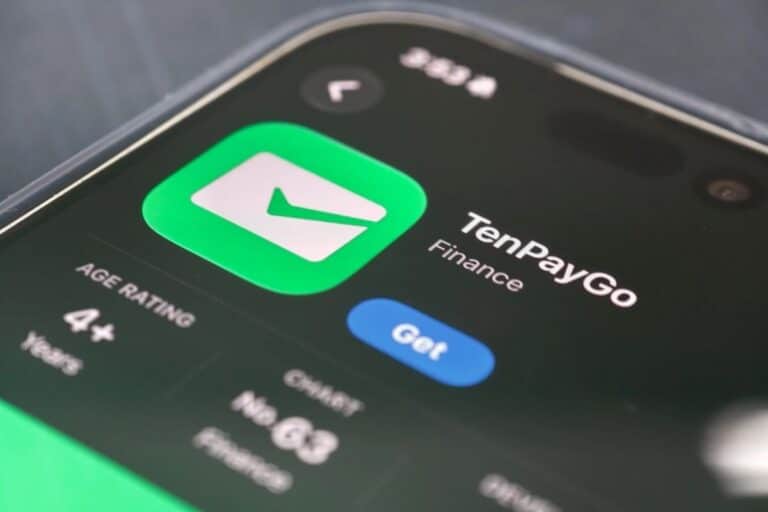
Tencent has launched TenPayGo, a WeChat Pay-developed app letting foreign visitors to China pay with international cards and wallets.

The app enables overseas travellers to pay at tens of millions of restaurants and shops across Tencent’s payments network using Visa, Mastercard, and Apple Pay. The app puts Tencent in direct competition with Alipay, operated by China-based Ant Group.

Services beyond payments

TenPayGo does more than accept payments. Visitors can use it to order food deliveries and book ride-hailing services, and it includes tools for identifying objects and translating menus. Together, these features are meant to help tourists use the wide range of digital services that underpin daily life in China.

That range is largely organised around ‘super apps’ such as Tencent’s WeChat. These cover restaurant bookings, food deliveries, taxis, and retail discounts. Foreign visitors have often struggled to use some of these services without a Chinese phone number or a locally issued payment method.

Competing with an established platform

Tencent is entering a segment where Ant Group has a significant head start. Ant opened its payment platform to foreigners in 2019. At the time, tourists were finding it increasingly difficult to use cash or foreign cards as China moved rapidly towards mobile payments. Since then, Alipay has become the default option for many international visitors in the country’s largely cashless economy.

TenPayGo accepts major international card schemes and Apple Pay. This gives travellers a way into Tencent’s merchant network without first getting local credentials, which has long been the main obstacle for foreign users of China’s domestic payment systems.

UK banks complete first interbank tokenised deposit transactions

Lloyds, NatWest, and Barclays have carried out two remortgage transactions using tokenised deposits. Separately, three banks, including HSBC, ran a P2P payment that simulated an online marketplace purchase. Reuters reports that these are the first transactions in which banks have used tokenised deposits to move money between themselves. UK Finance, the industry association for the UK banking sector, confirmed the details.

The trials form part of the Great British Tokenised Deposit project, run by UK Finance. The participating banks committed to the initiative through a pilot launched in 2025.

Addressing fragmentation across bank ledgers

Banks and other financial institutions have been exploring ways to integrate blockchain into their IT systems for more than a decade. This work has involved creating tokens that represent assets such as deposits, stocks, bonds, and currencies. Because each lender built its own blockchain-based system, however, institutions could not transact with one another. The interbank transfers completed under the UK Finance project are designed to address this limitation.

In the simulated marketplace purchase, programmable deposits set funds aside in the buyer’s account. The money was released to the seller only after the goods had been received. According to Jana Mackintosh, UK Finance‘s managing director for Payments and Innovation, the test showed that the technology could lower fraud risk. Money moved between accounts, but no real goods changed hands.

In the two remortgage transactions, locked funds were released automatically once the property transaction had been completed.

Regulatory backdrop and the stablecoin debate

Banks argue that moving tokenised assets could be cheaper and more efficient than existing systems. The Bank of England has said it would prefer banks to develop tokenised deposits rather than stablecoins, which are crypto tokens pegged to USD or other currencies.

The distinction is partly legal and partly structural. Tokenised deposits have the same legal status as money held in a bank account. Stablecoins, by contrast, are typically issued by private companies and draw money out of the banking system. This has raised concerns about the cost of credit and monetary sovereignty.

Bybit launches 24/7 options on TradFi contracts

Bybit has launched Perp Options, allowing users to trade options on TradFi perpetual contracts around the clock, starting with SpaceX and Nvidia. Bybit, a cryptocurrency exchange platform, has launched Perp Options based on its TradFi perpetual contracts. The product enables users to trade options linked to traditional financial assets through their Bybit accounts. The first phase launched on 17 September 2026 with contracts linked to SpaceX and Nvidia. These are settled in USDT and are integrated with Bybit’s Unified Trading Account (UTA), allowing users to manage Spot, Futures, and Options positions within the same account.

Perp Options support multiple trading strategies

The product supports buying and selling calls and puts, as well as strategies including spreads, straddles, covered calls, and protective puts. Perp Options use a contract multiplier of one, allowing fractional lot sizes rather than the standard 100-share contract structure used in traditional equity options. Bybit also supports Cross Margin and Portfolio Margin for Perp Options. Portfolio margin allows related positions to be considered together when calculating margin requirements and can be used to hedge positions across the platform.

Bybit offers several expiry cycles for Perp Options, including next-day, three-day, four-day, current-week, next-week, tri-weekly, and monthly contracts. Expiries that fall on weekends or public holidays of the underlying market are skipped. At expiry, the settlement price is calculated using the 30-minute time-weighted average price of the underlying index immediately before the contract expires.

More underlying assets planned for Perp Options

Bybit has indicated that it plans to add further underlying TradFi perpetual contracts, including Tesla, QQQ, SOXL, and Micron. The company said new expiries will also be added regularly following the initial launch. Perp Options are available through the latest version of the Bybit app. The contracts are European-style and cash-settled in USDT at expiry, with no physical delivery of the underlying asset.

Bybit also outlines how Perp Options will be handled during corporate actions. Mergers, delistings, and company name changes can trigger adjustments or early settlement, with the applicable treatment depending on the type of action.