Home Blog Page 11

Use of TROY to be expanded under New Medium-Term Program (OVP)

Under the new Medium-Term Program (OVP), an Investor Risk Center will be established for the detection of systemic risks in capital markets and for early warning purposes, while efforts will be carried out to expand the use of TROY, Türkiye’s domestic and national card scheme.

In addition, capital markets will be deepened through updates and development work in equity markets. The regulatory framework governing investment services and activities, the establishment and operating principles of investment institutions, the capital and capital adequacy requirements of brokerage firms, and margin trading, short selling, and securities lending and borrowing transactions involving capital market instruments will be comprehensively reviewed.

Turkish lira savings and investment instruments to be diversified

An “Investor Risk Center” will be established, along with an “Investor Risk Monitoring System,” for the comprehensive monitoring of risks originating from investors and investment institutions in capital markets and for the detection of systemic risks and early warning.

Meanwhile, capital markets will be deepened by diversifying Turkish lira savings and investment instruments.

Regulations will be introduced to enable companies to benefit more from the opportunities offered by capital markets, and an increase in qualified public offerings will be supported.

Legislative, systems, operational and market compliance work aimed at shortening the settlement period in the equity market will be completed. In addition, market classification criteria in the equity market will be updated to more effectively reflect liquidity and volatility characteristics.

To increase the effectiveness of the rating and independent audit sectors, the relevant legislation will be improved in line with international practices.

Efforts to expand financial technologies will continue

Under the OVP, in order to expand financial technologies, the regulatory infrastructure for these technologies will be developed, and their scale, effectiveness and security will be enhanced to support their wider adoption.

Infrastructure work will be completed to introduce and expand the use of the digital Turkish lira, addressing its economic, legal and security dimensions. Efforts will be carried out to support the wider use of data-sharing services in payment services through the Instant and Continuous Transfer of Funds (FAST) system and FAST layered services.

Cyber resilience of payment and e-money institutions to be strengthened

Efforts will be carried out to expand the use of TROY, Türkiye’s domestic and national card scheme, in card payments. Regulations will be implemented to strengthen the cyber security resilience of payment and e-money institutions.

Regulatory work will continue to strengthen the payment services ecosystem, in which innovative financial services are offered and high-value-added applications and initiatives emerge.

Meanwhile, procedures and principles will be determined regarding the issuance of capital market instruments as crypto assets and their tracking in registered form.

Türkiye Green Fund invests $10 million in Disera

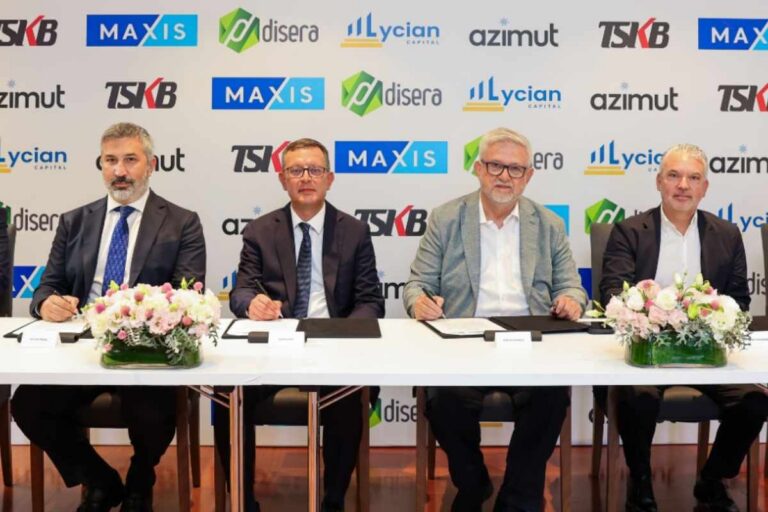
Türkiye Green Fund, the first venture capital investment fund in Türkiye and the world dedicated to emission reduction and inclusive transformation, financed through credit, has made its third investment. Türkiye Green Fund invested $10 million in Disera, a company operating in the medical supplies sector.

Türkiye Sınai Kalkınma Bankası (TSKB) made the $10 million third investment of Türkiye Green Fund — established with funding provided by the World Bank under the guarantee of the Turkish Ministry of Treasury and Finance — into Disera Tıbbi Malzeme Lojistik Sanayi ve Ticaret A.Ş. The investment, provided entirely through a capital increase and contributing to nature-positive production, aims to support Disera’s green transformation and growth strategies.

Through Türkiye Green Fund, medium- to long-term investments are made in companies that create added value in areas with growth and development potential in line with Türkiye’s development plan, with the aim of reducing greenhouse gas emissions and supporting the green and inclusive transformation of the Turkish economy. While supporting environmentally friendly production by efficient companies operating in sectors covered by the EU Green Deal, the fund also aims to play an active role in deepening and diversifying capital markets’ focus on climate finance, mobilizing private capital in the process.

With more than 30 years of experience, Disera is one of the leading players in the medical supplies sector. Under this partnership, the company will carry out projects aimed at reducing its carbon footprint, increasing the use of renewable energy, improving production efficiency, and strengthening waste and water management. The investment also represents an important step toward accelerating an inclusive green transformation in industry, in line with Türkiye’s 2053 Net Zero target.

Commenting on the agreement, TSKB General Manager Ozan Uyar said, “For more than 75 years, we have taken pride in pioneering many initiatives for the multifaceted development of our country and industry. Türkiye Green Fund, which we established by combining our expertise in development and investment banking, is one of these initiatives. As we strengthen our joint efforts under Türkiye Green Fund, an important step in our long-standing collaboration with the World Bank, we are also steadily increasing our contribution to our country’s sustainable development goals. We believe this valuable partnership with Disera will not only accelerate the green transformation of our industry but also advance public health through environmentally friendly products that comply with medical device regulation principles. I wish this valuable agreement to be beneficial for Disera and all our stakeholders, as well as for our country.”

Noting that the investment made by Türkiye Green Fund in Disera Tıbbi Malzeme Lojistik Sanayi ve Ticaret A.Ş. is strongly aligned with the company’s sustainability vision, Disera General Manager Kenan Deniz Büyükakman said, “This investment is an important indicator of the confidence placed in our sustainable production and growth goals. Through this partnership with Türkiye Green Fund, we aim to further strengthen our production and export capacity while reducing our environmental impact.”

Maxis Girişim Sermayesi General Manager Özgür Temel noted that Türkiye Green Fund continues to support companies’ green transformation processes in line with its decarbonization and inclusive transformation goals, adding that the investment in Disera marks the fund’s first investment in the healthcare sector. Highlighting the significance of the steps Disera — with roughly 30 years of sector experience, expertise in medical devices, and technology development capabilities — has already taken in renewable energy and advanced technology, Temel noted that these steps form a solid foundation for the green transformation investments planned for the coming period. Temel added, “Through this investment, we aim to contribute to Disera’s growth goals while increasing energy and resource efficiency, reducing environmental impact, and further strengthening the company’s sustainability approach in its future investments. We believe the Disera investment will serve as an important example of growth and green transformation advancing together in the healthcare sector.”

World Bank Türkiye Country Director Jean-Christophe Carret said, “Mobilizing private sector capital for climate action and sustainable growth is critical to accelerating Türkiye’s green transformation. The investment made in Disera through Türkiye Green Fund shows that innovative financing mechanisms can help companies reduce their environmental footprint while also increasing their competitiveness, creating employment, and supporting inclusive growth. We are pleased to support this partnership, which contributes to Türkiye’s 2053 Net Zero Emissions target and supports the spread of more sustainable production practices in the healthcare sector. We hope this investment will encourage additional private sector investment in green and resilient development.”

Commenting on behalf of Azimut LCP I Private Equity Fund, an existing investor in Disera, Azimut Portföy General Manager Murat Salar said, “At Azimut Portföy, the largest independent company in the portfolio management sector, we have made alternative investment funds one of our strategic priorities. Alongside the $13 billion in assets we currently manage, we aim to reach $1 billion in alternative funds within a short period. LCP I GSYF, which we established with our strategic partner in private equity in Türkiye, Lycian Capital Partners, has surpassed 3 billion TL in fund size, and the performance Disera — the fund’s first investment — has demonstrated to date has further reinforced Azimut Group’s confidence in Türkiye’s real sector and private equity market. We are delighted to welcome Türkiye Green Fund, for which TSKB is the lead investor, as Disera’s new investor and our partner, and we believe this partnership will accelerate Disera’s growth journey.”

Lycian Capital Partners Managing Partner Gökhan Arıkoç added, “At Lycian Capital, our priority is to add long-term, sustainable value to our portfolio companies. We see green transformation as one of the core elements of our value-creation strategy. In our goal of making Disera a global player in its field, we are pleased to welcome a strong institutional investor that shares our vision, Türkiye Green Fund, for which TSKB is the lead investor, as one of our partners.”


Şekerbank receives innovation award from Global Finance

Şekerbank was deemed worthy of an award within the scope of the “Innovators Awards 2026,” organized by Global Finance, one of the leading publications in the financial sector, with its project that enables farmer and tradesman customers to access banking services as customers via Şeker Mobil quickly and easily from wherever they are.

Şekerbank earned the right to receive an award within the scope of the “Innovators Awards 2026” organized by Global Finance, a leading publication in the financial sector where innovative financial solutions are evaluated, with its project that allows farmers and tradesmen to become Şekerbank customers without needing to go to a branch.

Thanks to the solution offered via Şeker Mobil, farmer and tradesman users can carry out their banking transactions faster and more easily as remote customers without needing to submit additional information or documents. During the process, users’ sectoral statuses are determined instantly through online services, and thanks to verifications carried out via the Farmer Registration System (ÇKS) and Revenue Administration (GİB) integrations, users do not need to perform any additional transactions. Thus, while customer acquisition processes through digital channels are facilitated, farmers and tradesmen are provided with access to banking services without needing to leave their workplaces.

Mustafa Çamlar: “We will continue to develop digital solutions aimed at facilitating the banking transactions of our farmers and tradesmen.”

Şekerbank Executive Vice President Responsible for Digital Solutions and Business Banking Mustafa Çamlar stated, “It is of great importance that our farmers and tradesmen can access banking services quickly and easily without leaving their work. Therefore, it is very valuable for us that our Remote Customer Acquisition project, which we developed, was deemed worthy of an award in the field of innovation by Global Finance and that our digital banking services were appreciated on an international scale. In this context, we will continue to develop digital solutions aimed at facilitating the banking transactions of our farmers and tradesmen.”

TCMB introduces “Biometric” option for remote identity verification

The Central Bank of the Republic of Turkey (TCMB) has issued a regulation allowing payment and electronic money institutions to use biometric data or identity documents with electronic identity verification features for customer identity verification via remote communication tools.

The “Communiqué Amending the Communiqué on Information Systems of Payment and Electronic Money Institutions and Data Sharing Services in the Field of Payment Services of Payment Service Providers,” issued by the Central Bank of the Republic of Turkey, has been published in the Official Gazette and entered into force.

Accordingly, payment and electronic money institutions will be able to use the biometric data of the person whose identity is to be verified during the identity verification and contract establishment processes carried out via remote communication tools.

In remote identity verification processes, the expression previously limited to “document” has been amended to “identity document,” introducing new regulations for processes conducted through remote communication tools by customers.

Tests regarding the originality, integrity, wear, and tampering status of the identity document and the data and information contained within it—particularly photographs and signatures—along with the visual inspection process of the front and back sides of the identity document, will be recorded uninterruptedly.

The identity verification of real persons who are not Turkish citizens will be conducted via remote identity verification using a passport that complies with the International Civil Aviation Organization (ICAO) Doc 9303 standard and features near-field communication (NFC) capabilities, in accordance with the principles of the General Communiqué of the Financial Crimes Investigation Board (MASAK).

Corendon Airlines adds PayPal to its payment options

Continuing its investments to enhance the digital passenger experience, Corendon Airlines has added PayPal—the widely used global digital payment platform—to its payment options in international markets where the service operates.

Continuing its technology investments aimed at making the travel experience easier and more user-friendly starting from the booking stage, Corendon Airlines is strengthening its payment infrastructure with the PayPal integration, offering passengers a new payment alternative for their flight bookings.

Following its launch, PayPal received intense interest in Germany, one of Corendon Airlines’ largest markets. This interest highlighted both PayPal’s widespread adoption in the country and Corendon Airlines’ high passenger volume in Germany.

Within the first nine hours following the integration going live, PayPal became the most preferred payment method among alternative payment options outside of cards. During this period, 50% of all alternative payment transactions were conducted via PayPal.

The technical integration process, carried out in close cooperation between the Corendon Airlines and PayPal teams, was completed within two months. With this new payment option, Corendon Airlines aims to offer passengers in eligible markets greater flexibility in managing their travel budgets. Installment payment options offered by PayPal to eligible customers can also be used where available.

“We Want to Offer Options Suited to Our Passengers’ Budgets and Payment Habits”

Evaluating the new payment integration, Corendon Airlines CFO Erkan Erbay stated: “While continuing to improve the digital passenger experience, we take into account not only the booking process but also our passengers’ payment habits and expectations. PayPal is a widely used payment method in many of our key international markets, especially in Germany, which is one of our strongest markets. Adding PayPal to our payment options is an important step toward offering greater choice and flexibility to our passengers in these markets. In the coming period, we will continue to leverage technology to simplify our passengers’ travel experience and provide reliable, flexible options tailored to their individual budgets and payment habits.”

dLocal and Alternative Airlines launch BNPL for flights

dLocal has partnered with Alternative Airlines to introduce BNPL options for flight bookings in emerging markets. The integration connects Alternative Airlines to BNPL Fuse, dLocal’s solution combining local BNPL providers into a single integration, giving travellers access to instalment payments when booking flights and travel packages.

Addressing a gap in credit card access

Airfares and travel packages represent high-value purchases for which instalment payment options are particularly relevant. In Brazil, splitting purchases into monthly payments, a practice known locally as parcelado, already accounts for more than half of all credit card spending. Across emerging markets more broadly, however, only around 10-15% of consumers hold a credit card, according to World Bank data. This means the travellers most likely to benefit from spreading out a fare are often those without a card that supports it. In addition, for an online travel agency operating across multiple countries, closing this gap through individual arrangements with local lenders is resource-intensive and difficult to scale.

With this in mind, through BNPL Fuse, Alternative Airlines now offers Addi and Pagaleve, BNPL providers operating in Colombia and Brazil respectively, via a single API integration and contract. Under the arrangement, travellers can spread the cost of a flight or travel package over time, while Alternative Airlines receives full payment upfront and does not carry payment risk. Moreover, the integration also gives Alternative Airlines access to BNPL Fuse’s wider network, which currently spans eight countries and reaches more than 500 million potential buyers, with additional markets and local providers planned.

Expansion plans

dLocal and Alternative Airlines intend to extend the partnership into Chile, Pakistan, and countries across Asia and Africa, where instalment payment habits are already established among consumers. According to the companies, outbound travel demand in these markets is growing faster than credit card penetration, a mismatch that BNPL Fuse is intended to address.

Sam Argyle, Managing Director at Alternative Airlines, said the arrangement allows the company to extend payment flexibility to markets where credit cards have not traditionally featured in travel purchasing decisions, without having to build individual relationships with local lenders

Polymarket reportedly raises USD 300 million from 1789 Capital

Polymarket has reportedly raised USD 300 million from 1789 Capital as part of a USD 1 billion funding round. According to the report by The Wall Street Journal, the investment forms part of a broader funding round for Polymarket totalling around USD 1 billion.

1789 Capital had previously invested USD 200 million in Polymarket, bringing its cumulative commitment to the platform to USD 500 million once the new round is included. The fund has also backed other technology-related ventures, including the Enhanced Games, an alternative sporting competition founded by former technology industry figures that permits the use of performance-enhancing substances. Polymarket had not issued a public comment on the reported funding at the time of the original report.

Regulatory scrutiny around prediction markets

The investment comes as prediction markets face increasing regulatory attention in the US. At least 20 states are engaged in litigation against prediction market operators, including Polymarket and Kalshi, over sports-related wagers offered on their platforms, according to reporting by The New York Times in August 2026.

The federal government has taken a different position from several state regulators. The Trump administration has argued that the Commodity Futures Trading Commission (CFTC) should serve as the sole regulator of the prediction market industry, rather than individual state authorities. The CFTC has, in turn, filed lawsuits against at least nine states over their attempts to regulate the sector.

In July 2026, a coalition of 44 state attorneys general signed a letter contesting the CFTC’s position, arguing that the agency does not have the authority to regulate sports-related wagers on prediction platforms. The dispute reflects an ongoing divide between federal and state approaches to overseeing the sector.

The reported funding round underscores continuing investor interest in prediction markets despite the unresolved regulatory dispute between state and federal authorities. The outcome of ongoing litigation, as well as any future rulings on CFTC jurisdiction, is likely to shape how prediction market operators such as Polymarket structure their US operations going forward.

Juspay launches Breeze Universal for AI shopping discovery

Juspay has launched Breeze Universal, a pilot enabling brand discovery and shopping across AI platforms, including ChatGPT and Claude.

The product is an extension of Breeze, Juspay’s commerce technology platform, and allows shoppers to discover, compare, and purchase products from participating brands within a single AI conversation. According to the company, the offering is intended to let businesses with an existing customer base build an AI-driven shopping experience without additional technical development.

Connecting existing catalogues to AI surfaces

According to the official press release, Breeze Universal integrates with a business’s existing online stores, including those built on Shopify, WooCommerce, Magento, and custom platforms. Once connected, the underlying product catalogue becomes accessible across the channels where consumers shop, spanning AI platforms, mobile applications, and websites. For merchants, Juspay has positioned the offering as a plug-in commerce layer intended to extend product discoverability beyond a company’s own digital storefront.

As part of the pilot, shoppers can invoke ‘@breeze’ within ChatGPT to receive recommendations drawn from brands present on the Breeze Universal platform, without leaving the ChatGPT interface. Juspay cited examples such as queries for gift suggestions or skincare products priced under USD 18, with the system returning recommendations across multiple participating brands.

Built on Google’s Universal Commerce Protocol

Breeze Universal is built on Google’s Universal Commerce Protocol (UCP), which Juspay said allows brands to align with emerging AI commerce standards without building custom integration specifications. Through the platform, brands can launch a dedicated ‘@brand’ application inside ChatGPT, published via Breeze, or develop their own AI-powered storefront built around a single search function spanning their full catalogue. The offering is available to merchants as drop-in components, a headless kit, or through APIs, depending on the level of integration a business requires.

Commenting on the launch, Sheetal Lalwani, COO and co-founder of Juspay, said discovery and payments are increasingly converging into a single process for consumers as AI assistants become more central to everyday purchasing decisions. Lalwani added that Juspay aims to act as the technology provider connecting brand discovery with commerce execution within AI-led conversations, giving merchants a basis to prepare for a shift toward agent-led shopping.

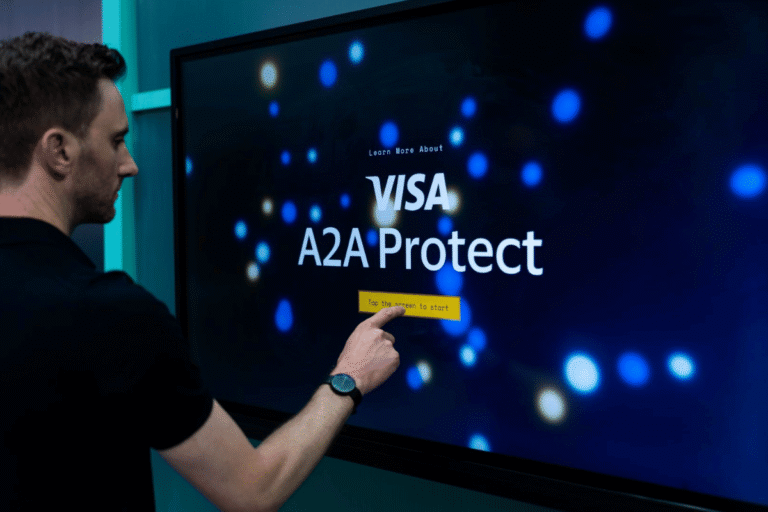
Visa expands A2A Protect to fight fraud

Visa has launched an updated A2A Protect solution, integrating Featurespace technology to detect fraud before funds leave accounts. The expanded version includes a unified fraud score, marking the integration of technology from Featurespace, the UK-based fraud analytics company that Visa acquired in 2024.

Rising A2A payment volumes drive fraud prevention focus

A2A payments, which move funds directly between bank accounts without card networks, are expanding rapidly worldwide. According to the data cited by Visa, A2A transaction volumes are projected to reach USD 5.8 trillion by 2028, representing a 160% increase from 2024 levels. This growth has increased pressure on financial institutions to detect fraud in real time, as A2A transfers are typically irrevocable once completed, unlike card payments that carry chargeback mechanisms.

According to the official press release, A2A Protect applies artificial intelligence and transfer learning techniques to provide banks with risk insights drawn from data across Visa’s network, instead of relying solely on a single institution’s historical transaction data. Visa states this allows banks to access risk detection capabilities without the lead time typically required to train models on proprietary data or the need to wait for other institutions to join a data-sharing consortium.

Network-level intelligence and integration

Financial institutions that opt into network-level intelligence sharing can access additional signals designed to flag emerging scam patterns and coordinated fraud activity across the payments ecosystem. With this in mind, Visa states this shared visibility can help identify scams before transactions are authorised, addressing activity that may be harder for individual institutions to detect using their own data alone.

Additionally, Visa reports that A2A Protect increased fraud detection by 75% within the first six months of deployment. The company also adds that the tool has been associated with a reduction of over 50% in fraud and over 40% in unnecessary fraud alerts.

The solution connects to banks’ existing systems through a single API, which Visa says is intended to reduce implementation time and complexity compared with building bespoke detection infrastructure. Each fraud alert generated by the system includes a plain-language explanation of the flagged risk factors, aimed to help fraud teams assess cases more efficiently without introducing friction for legitimate customers.

21 financial firms plan regulated USD stablecoin for 2027

Bank of America, Goldman Sachs, Citi, and Deutsche Bank have joined a 21-firm consortium to launch a regulated US dollar stablecoin in 2027. A group of 21 financial institutions, including Bank of America, Goldman Sachs, Citi, Deutsche Bank, UBS, Santander, MUFG, and Fidelity Investments, has announced plans to form a dedicated company to develop and issue a regulated US dollar stablecoin. The consortium is targeting a launch in the first half of 2027, contingent on the formation of the new entity and the fulfilment of other unspecified conditions.

A wider coalition builds toward regulated stablecoins

According to the announcement, the planned stablecoin is intended to serve wholesale, institutional, and retail use cases, with cross-border payments and digital asset settlement cited as proposed applications. The consortium has framed these as areas where stablecoins could reduce friction relative to existing settlement processes. Beyond the initial dollar product, the group has said it intends to expand into other G7-denominated stablecoins, identifying a euro-denominated coin as its next priority after the US dollar launch.

The initiative builds on an earlier effort disclosed in October 2025, when ten banks said they were examining a reserve-backed digital money model operating on public blockchains. The consortium’s membership has since more than doubled to 21 institutions, now spanning North America, Europe, East Asia, the Middle East, and Africa. The broader geographic spread indicates that the discussion has moved from individual exploration toward coordinated planning, a step generally associated with establishing shared standards and addressing cross-border legal and operational requirements.

Regulatory alignment with GENIUS and MiCA

The consortium has said its stablecoin design is intended to comply with the US GENIUS Act and, where applicable, the EU’s Markets in Crypto-Assets Regulation (MiCA). Regulatory clarity in both jurisdictions is a factor that can influence bank participation, custodial arrangements, and the willingness of payment networks to integrate stablecoin infrastructure. Separately, Singapore has signalled it is reconsidering restrictions that currently limit its regulatory framework to domestically issued stablecoins, a development that could affect how cross-border consortium models are structured in the future.