Home Blog Page 15

Klarna launches in-store payments at GARAGE and DYNAMITE

Klarna has announced its partnership with GARAGE and DYNAMITE to offer in-store payment at the store locations across Canada, the US, and the UK. The Sweden-based digital bank and flexible payments provider has extended its services into more than 300 physical stores operated by Canada-based Groupe Dynamite, which owns the GARAGE and DYNAMITE fashion brands.

Customers shopping at the two retailer locations can now scan a QR code at checkout using their phone, which directs them to complete the transaction through the Klarna app. Within the app, shoppers can choose to pay for eligible purchases in full or split the cost into interest-free instalments. The process mirrors the payment flow customers already use when shopping with the brands online, extending a single payment experience across both digital and physical retail channels.

Context within Klarna’s retail strategy

The rollout forms part of Klarna’s continued expansion into physical retail, an area in which the company has been building out its presence alongside its established ecommerce offering. By enabling in-app payment completion through a QR code, Klarna is positioning its BNPL infrastructure as a channel-agnostic tool rather than one limited to online transactions.

Lisa Robinson, Klarna Head of Partner Success, US East Coast and Canada, says the expansion allows GARAGE and DYNAMITE shoppers to access the same payment choice and control in-store that they already use online.

Stacie Beaver, President and Chief Operating Officer of Groupe Dynamite, adds that the integration was designed to give customers more flexibility at checkout while maintaining consistency between the retailer’s digital and physical channels.

The expansion arrives as retailers across North America and Europe continue to integrate BNPL payment options into physical checkout flows, following a broader shift in consumer demand for flexible payment methods that were first popularised in online retail.


Walmart to adopt Apple Pay and Google Pay across US stores

Walmart has announced it will accept Apple Pay and Google Pay via Tap to Pay at its Walmart and Sam’s Club locations in the US, starting 24 August 2026. According to the announcement, the plans focus on expanding the option to all Walmart and Sam’s Club locations by the end of the year. The company also intends to bring the payment method to its fuel stations by the middle of 2027.

For several years, Walmart declined to support contactless mobile payment services such as Apple Pay and Google Pay, instead directing customers towards its own tools, including Walmart Pay and Scan-and-Go. Between 2012 and 2016, Walmart was among the retailers involved in the Merchant Customer Exchange (MCX), a consortium that developed CurrentC, a mobile payment system positioned as an alternative to Apple Pay. The initiative ceased operations in 2016.

Despite this history, contactless payment adoption has continued to expand across the US retail sector. According to Apple, Apple Pay is accepted at 85% of retailers in the country, including most larger chains, which had made Walmart one of the more prominent holdouts ahead of this announcement.

Company statement

In its announcement, Walmart described the addition of Tap to Pay as part of a broader effort to give customers and members more flexibility at checkout, alongside existing options such as cash, credit cards, and Walmart Pay. At the same time, the company positioned the change as an expansion of payment choice rather than a replacement for its existing tools.

Implications for the retail payments ecosystem

The rollout reflects a wider pattern in the payments industry, in which large retailers face growing pressure to support widely used mobile wallet infrastructure rather than rely solely on closed, proprietary systems. As one of the largest retail operators in the US, with both Walmart stores and Sam’s Club membership warehouses, the company’s decision affects a substantial share of everyday in-store transactions.

Simya VC makes its new investment in domestic mobile gaming startup Surge Games

Simya VC has made its latest investment in the domestic mobile gaming startup Surge Games. The investment round saw participation from Play Ventures and Drilo alongside Simya VC.

Having secured a total of 3 million dollars in funding, Surge Games aims to expand its team, strengthen its user acquisition efforts, and globally scale its games that achieve successful metrics. Established by 212—Turkey’s first venture capital fund—to invest in early-stage startups, Simya VC was joined in the round by gaming-focused investors Play Ventures and Drilo.

Artificial Intelligence at the Core of Game Development

Focusing on puzzle games that are easy to learn and offer a short-term gameplay experience, Surge Games places artificial intelligence at the center of its game development and production processes. Thanks to this infrastructure, the company aims to test new game mechanics more rapidly, enhance its products using insights derived from user behavior, and scale successful titles more quickly.

Surge Games’ first game, Twin Tiles!, is built upon original game mechanics within the puzzle category. Through its AI-backed production model, the venture strives to gain speed and efficiency in game development processes.

A New Step in Simya VC’s Investment Strategy

This investment also represents a new milestone in Simya VC’s portfolio strategy. Becoming Simya VC’s 17th portfolio company, Surge Games marks the fund’s first investment outside of its B2B focus.

Selma Bahçıvanoğlu, Managing Partner at Simya VC, noted that the extensive experience of the Surge Games team in gaming, product, data, and growth played a decisive role in the investment decision. Highlighting that the fund can move flexibly on special high-potential opportunities outside its main focus, Bahçıvanoğlu expressed full confidence in Surge Games’ international growth potential.

FAST transaction limits raised to 300.000 TL

The Central Bank of the Republic of Türkiye (TCMB) has announced that FAST (Funds’ Instant and Continuous Transfer) transaction limits will be increased from 100 thousand liras to 300 thousand liras, effective August 26, 2026.

According to the press release issued by the TCMB regarding the increase in FAST system transaction limits, the announcement stated that the next-generation instant payment system FAST—developed by the TCMB and launched on January 8, 2021—enables secure, fast, and easy payments 24/7 with its innovative approach and overlay services, rapidly spreading as an alternative to cash and card payment methods in shopping transactions.

Taking into account user interest in the FAST system and the dynamic requirements of the payments ecosystem, it was reported that starting August 26, 2026, FAST transaction limits will be raised from 100 thousand liras to 300 thousand liras for money transfers and payments made via the Request-to-Pay (Ödeme İste) Overlay Service.

The announcement also noted that for dynamic verification-based merchant payments conducted using FAST-TR QR codes, the transaction limit will be increased from 250 thousand liras to 300 thousand liras.

Destek Portföy’s first two investment funds, Dap and Deh, meet with investors

Destek Portföy has introduced its first two investment funds to investors: the Money Market Fund with the code DAP and the Equity Fund (designated as an Equity-Intensive Fund) with the code DEH. Created to cater to varying risk, maturity, and investment expectations, both funds have begun trading on TEFAS (Turkey Electronic Fund Trading Platform).

In addition to banks and brokerage firms where TEFAS transactions are conducted, the funds are also accessible via DestekBank and Destek Yatırım. Designed with investor costs in mind, DAP features an annual management fee of 0.25%.

Following its establishment, Destek Portföy has made its first two investment funds available to the public. While the DAP-coded Destek Portföy Money Market Fund offers an investment alternative tailored to short-term cash management needs, the DEH-coded Destek Portföy Equity Fund is managed for investors aiming to seize opportunities in equity markets who possess a matching risk profile.

Thus, Destek Portföy has officially commenced its operations in the mutual funds market with two funds appealing to different investor profiles and preferences.

Cost-Oriented Structure for Investors in DAP: 0.25% Annual Management Fee

Operating under the code DAP, the Destek Portföy Money Market Fund is managed for individual and institutional investors looking to evaluate their savings in short-term and liquid capital market instruments. The fund provides an appropriate alternative addressing investors’ short-term cash and liquidity management needs.

Designed by prioritizing investor costs, DAP’s annual management fee has been set at 0.25%. Current information regarding the management fee can be accessed via KAP (Public Disclosure Platform) and TEFAS.

Investment Opportunity in Equity Markets with 0% Withholding Tax Advantage via DEH

Destek Portföy’s second investment fund, the DEH-coded Destek Portföy Equity Fund, is managed for investors who wish to capitalize on investment opportunities offered by equity markets and hold the corresponding risk profile. Under current tax regulations, the withholding tax rate applied to earnings derived from the buying and selling of participation shares in DEH—which qualifies as an equity-intensive fund—is 0%. DEH complements DAP’s structure focused on short-term cash management with equities, forming the second pillar of Destek Portföy’s product range addressing varying risk and return expectations.

“We Are Excited to Bring Our First Two Funds to Investors”

Sharing his remarks on the commencement of trading for DAP and DEH, Destek Portföy General Manager Yasin Atikler stated:

“As Destek Portföy, we are thrilled to bring our first two investment funds together with investors. With DAP and DEH, we offer investment alternatives created in line with our professional portfolio management approach for investors possessing different investment needs and risk preferences. While providing a liquid and accessible investment alternative for individual and institutional investors requiring short-term cash management through DAP, we offer a product tailored for investors seeking to capture opportunities in equity markets through DEH. Consequently, we have taken the first step of our product range with two funds responding to distinct investment needs. When designing DAP, we treated the cost element as a primary priority for our investors and set the fund’s annual management fee at 0.25%. We aim to present our professional portfolio management approach through a cost-focused product structure addressing short-term cash management needs. We consider developing products suited to investors’ varying maturity, risk, and liquidity expectations among our top priorities. Moving forward, we will continue closely monitoring market conditions and investor needs to expand our product range with new funds answering diverse expectations. With Destek Group’s experience in the financial sector, our strong corporate structure, and expert staff, we aim to create sustainable value for our investors.”

Cryptocurrency market value surges by over $500 Billion last week

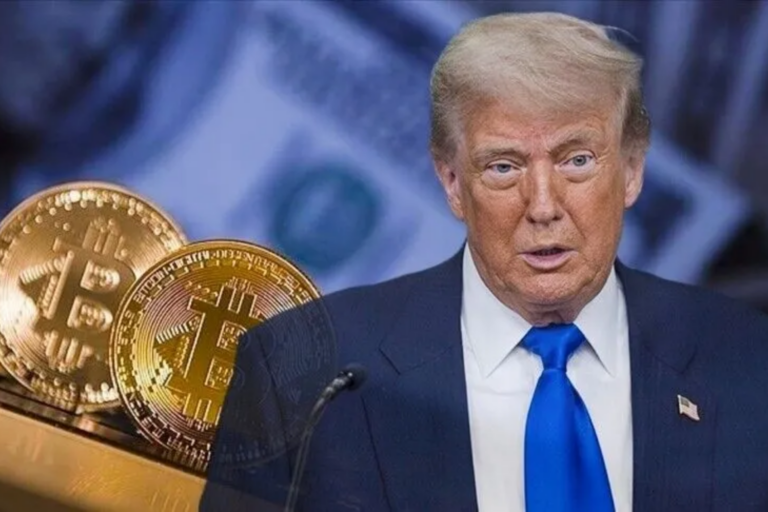
Maintaining its strong momentum into August, the cryptocurrency market experienced a massive rally last week, driven by cooling macroeconomic data in the U.S. and a high-profile meeting between U.S. President Donald Trump and crypto industry representatives.

As softening employment and inflation data in the U.S. reduced expectations for Federal Reserve interest rate hikes, investments shifted toward risk assets. Additionally, the U.S. Treasury’s decision to increase the scale of its long-term bond buyback operations helped alleviate selling pressure in the bond market, positively impacting the broader crypto ecosystem.

Trump’s Support Boosts Confidence

The most significant development of the week was U.S. President Donald Trump’s meeting at the White House with representatives from major crypto companies, including Coinbase, Ripple, and Gemini.

Vowing strong support for the sector to ensure the U.S. does not fall behind China in global geopolitical competition, Trump called on Congress to swiftly approve the “Clarity Act,” a legislative proposal designed to establish a comprehensive legal framework for digital assets.

Following these developments, the total cryptocurrency market capitalization surged by more than $500 billion over the week, reaching $2.668 trillion.

Bitcoin climbed to $79,500—its highest level since May 15—before stabilizing around $78,300, marking a 24% weekly increase. Ethereum reached $2,546, its highest point since January 30, and settled at $2,519, representing a 33% weekly gain.

“A Strong Relief Rally Following a Prolonged Period of Pressure”

Speaking to Anadolu Agency (AA), Blockchain and Crypto Asset Strategist Mete Ali Başkaya noted that the sharp rally should not be attributed to a single factor. “A combination of factors played a role simultaneously: Bitcoin technically breaking upward from a strong zone, renewed inflows into spot Bitcoin and Ether ETFs, improving expectations regarding digital asset regulations in the U.S., and a recovery in global risk appetite,” he said.

Highlighting that ETF inflows indicate institutional demand has re-engaged rather than the rally being driven solely by retail investor excitement, Başkaya emphasized that this upward movement should not be immediately classified as the start of a “new bull market,” but rather as a strong relief and repricing process following a prolonged period of pressure.

Stating that for the rally to become permanent, ETF inflows must continue, regulatory uncertainties in the U.S. must ease, and pressure from bond yields and the dollar must subside, Başkaya concluded: “In short, the current picture is positive, but since the crypto market remains highly sensitive to liquidity conditions and news flow, it is safer to view this movement within a framework of controlled optimism.”

Citi, HSBC, Standard Chartered, Deutsche ​Bank, and Barclays, Adopt Ant International’s Forex AI Tool

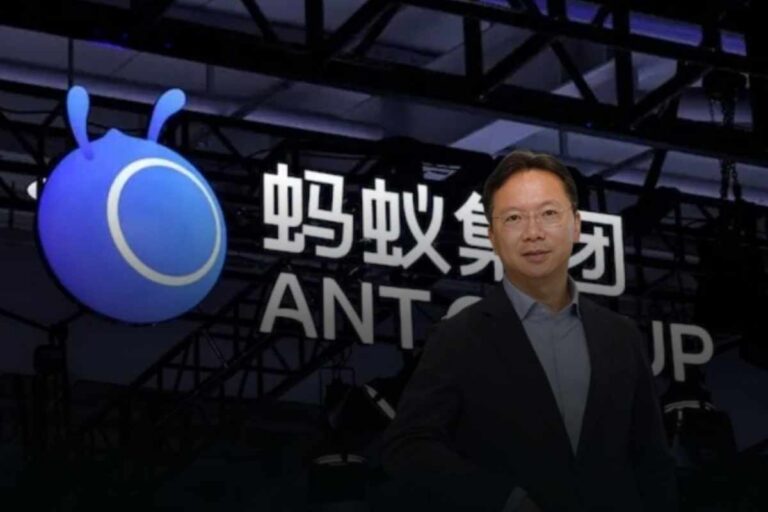
Ant International launched an upgraded version of its artificial intelligence model on Thursday, signing up major global banks as financial institutions accelerate the adoption of specialised AI to manage liquidity risks.

The Singapore-based fintech giant rolled out its Falcon Time-Series Transformer Model 2.0 and has partnered with six large banks including Citi, HSBC, Deutsche Bank , Standard Chartered, and Barclays, according to Kelvin Li, the firm’s general manager of platform tech.

The launch comes amid an accelerating global race among financial institutions to embed AI into their core operations.

Li said the model specialises in financial scenarios and has an edge over general-purpose large models, which have “yet to achieve a universal breakthrough in the financial sector.”

“Precise forecasting can slash foreign exchange hedging and allocation costs by over 60%,” Li said.

Ant International, an overseas affiliate of the ​Jack Ma-founded Chinese fintech firm Ant Group, raised $1.2 billion last month in its latest equity fundraising as it seeks to expand.

Al Baraka Islamic Bank joins Bahrain’s wage protection system for corporate and institutional clients

 Al Baraka Islamic Bank B.S.C (c) announced joining the Wage Protection System (WPS), enabling its corporate and institutional clients to manage employee salary payments efficiently and conveniently, in line with the approved regulatory requirements in the Kingdom of Bahrain.

This step comes as part of the Bank’s commitment to developing its corporate banking solutions and providing practical digital services that meet clients’ needs and support the efficiency of their operational processes. The service also helps facilitate salary payments through secure and organised channels, contributing to enhanced transparency and compliance, while supporting the smooth management of payroll-related procedures.

The WPS offers Al Baraka Islamic Bank’s corporate clients a more efficient experience in managing salary payments through banking solutions designed to simplify procedures and reduce time and effort, while maintaining high levels of security and reliability. It also reflects the Bank’s ongoing commitment to providing advanced banking solutions that support the growth of clients’ businesses and help them meet their operational and regulatory obligations.

Commenting on the occasion, Mr Husain Yusuf Ateyah, Acting Chief Executive Officer and Chief Corporate & Institutional Banking Officer at Al Baraka Islamic Bank, said: “We are pleased to announce joining the Wage Protection System for our corporate and institutional clients, in a step that reflects our commitment to providing practical and reliable banking solutions that support the needs of the business sector in the Kingdom of Bahrain. This service forms part of our ongoing efforts to enhance the customer experience and facilitate our clients’ day-to-day transactions by providing more efficient and flexible channels for managing salary payments.”

He added: “At Al Baraka Islamic Bank, we continue to focus on developing our corporate banking services in line with the digital transformation of the banking sector, while strengthening our clients’ ability to manage their operations more efficiently. We also reaffirm our commitment to continuing to provide Shari’a-compliant financial solutions built on quality, innovation and reliability, supporting the long-term growth of our clients’ businesses.”

Al Baraka Islamic Bank affirmed that joining the WPS comes within its strategic direction to expand the scope of its corporate and institutional banking services and enhance the Bank’s readiness to meet changing market requirements through integrated solutions that combine compliance, efficiency and ease of use.

It is worth noting that Al Baraka Islamic Bank is among the leading Islamic banks in the Kingdom of Bahrain. Since its establishment in 1984, the Bank has achieved outstanding results in providing banking services to both individuals and corporates. It has a strong track record of innovation and delivering Shari’a-compliant investment and financing solutions. The Bank also continues to play a pioneering role in supporting social responsibility and sustainability initiatives, maintaining a prominent position among Islamic banking institutions serving customers worldwide.

Stripe launches Treasury in Australia to unify global funds

Stripe has launched Stripe Treasury in Australia, giving local businesses a single platform to accept payments, hold and convert funds, and pay recipients internationally directly from the Stripe Dashboard. The launch addresses a longstanding operational challenge for companies trading across borders: reliance on multiple banking relationships and payment providers to move money between currencies, which typically delays settlement and adds conversion costs.

Reducing settlement delays across currencies

Stripe Treasury consolidates incoming and outgoing currency flows into a single account, according to the company. Rather than waiting the typical two days for funds to clear into an external bank account, businesses using Stripe Treasury gain immediate access to revenue, which they can use to pay suppliers, contractors and other third parties in close to 100 countries using only a recipient’s email address. The platform allows businesses to receive and hold funds in Australian dollars, US dollars, British pounds and euros, and to convert instantly between ten supported currencies, including the Hong Kong dollar, Singapore dollar, and New Zealand dollar.

Karl Durrance, Stripe’s managing director for Australia and New Zealand, said growing numbers of new Australian businesses and sole traders are joining the platform each month with international ambitions from the outset, and that this was the rationale for launching Treasury locally. Stripe already supports Australian businesses with payment acceptance, subscription management, fraud prevention, and cross-border sales; Treasury adds the ability to hold, convert, and move funds through the same platform used to process revenue.

Later in 2026, Australian platform businesses on Stripe will gain access to Treasury for Platforms, allowing them to offer embedded financial accounts to their own customers. In the US, companies such as Squarespace already use this functionality to let businesses hold balances, earn rewards, and access spending cards directly through their websites.

Additional launches target authorisation and fraud

Alongside Treasury, Stripe outlined further product updates for the Australian market at Stripe Tour Sydney, its annual regional conference. From this month, Stripe Managed Payments will process Australian businesses’ international sales domestically, through Stripe’s local entities in the customer’s country, aiming to improve card authorisation rates. Stripe noted that cross-border payments made without a local entity are around five percentage points more likely to be declined by the customer’s card issuer. 

X reportedly in talks with Circle over USDC creator payments

Social media platform X, owned by Elon Musk, is reportedly considering paying influencers and content creators in stablecoins, according to media reports. The reports indicate that X is in discussions with Circle Internet Group about using its USDC stablecoin as a payment method for individuals on the platform.

Scope of the proposed payments

According to the reports, stablecoin payments under consideration would cover royalties to content creators as well as influential users who regularly upload content to the platform. A stablecoin is a form of cryptocurrency whose value is pegged to another asset, most commonly the US dollar, which distinguishes it from more volatile cryptocurrencies used primarily for speculative trading.

The stablecoin market has grown to a combined market capitalisation of more than USD 300 billion, and stablecoins have increasingly been adopted as a method for blockchain-based payments. This scale reflects a broader shift among payment providers and platforms towards dollar-pegged digital assets for settlement and transfer purposes.

Wider context within Musk’s businesses

The reported talks with Circle would not be the first instance of a Musk-led company engaging with stablecoins. SpaceX, another company founded by Elon Musk, already uses stablecoins to facilitate cross-border payments, according to the reports. This existing use case within Musk’s business network may inform how a similar mechanism could be applied to creator payments on X.

X has also made a related hire in this area. In March 2026, Musk brought on cryptocurrency veteran Benji Taylor as head of design at X. Taylor’s professional background includes experience in digital wallets and decentralised finance (DeFi), areas directly relevant to the integration of stablecoin-based payment infrastructure.