Home Blog Page 18

MoonPay launches MoonPay Enterprise stablecoin platform

MoonPay has launched MoonPay Enterprise, a stablecoin payments platform built on Iron, the infrastructure provider it acquired in 2025.

Addressing fragmented infrastructure

The platform is described as the company’s largest expansion since it acquired Iron, an API-first stablecoin infrastructure provider, in March 2025.

According to the company, businesses building stablecoin-based payment flows previously had to combine multiple providers to cover fiat on-ramps, stablecoin issuance, and cross-border settlement separately. This fragmented approach added vendor dependencies, cost, and compliance overhead for companies operating across jurisdictions.

MoonPay Enterprise is designed to consolidate these functions into a single platform. It uses Iron’s technology to let companies issue virtual accounts, manage treasuries in multiple currencies, and transfer funds through established rails such as ACH, wire transfer, and SWIFT. Incoming fiat is converted into stablecoins and settled into wallets through one API, according to the company.

MoonPay Enterprise is structured around four core functions. Pay In allows businesses to collect fiat through local payment rails, including SEPA, ACH, FPS, and PIX, as well as SWIFT, with funds received into virtual accounts and automatically converted into stablecoins. Convert provides access to institutional stablecoin liquidity for treasury management and large over-the-counter conversions. At the same time, Pay Out enables global payouts settled either in stablecoins or local fiat currencies across supported markets. Issue allows businesses to mint fully reserved, white-label stablecoins using built-in issuance infrastructure.

A company representative said the platform is intended to let businesses access issuance, conversion, and settlement capabilities through a single integration, without needing to build in-house expertise in banking infrastructure or blockchain operations.

MoonPay Enterprise operates on top of MoonPay’s existing regulatory coverage, which includes money transmitter licences in all 50 US states, a New York BitLicense, MiCA approval in the EU, and registrations in the UK, Canada, Australia, and other markets. The platform holds SOC 2, PCI DSS, and ISO 27001 certifications. MoonPay stated that it already processes hundreds of millions in volume across more than 190 countries for more than 50 enterprise partners.


Crypto.com launches tokenized stocks for EEA users

Crypto.com has launched Tokenized Stocks, giving EEA users continuous access to US equity and ETF exposure via its app.

Tokenized Stocks give users price exposure to more than 1.500 underlying US-listed stocks and exchange-traded funds, including companies such as NVIDIA, Tesla and Apple, as well as commodity-linked ETFs such as SPDR Gold Shares (GLD) and iShares Silver Trust (SLV). Access starts from as little as US$1, and trading is available outside standard market hours, subject to platform availability and market conditions.

Structure and custody arrangements

Tokenized Stocks are derivative financial instruments that track the price performance of their underlying assets rather than conferring direct ownership or shareholder rights such as voting. Users may, however, be eligible for dividend-equivalent adjustments under the applicable product terms. The underlying assets referenced by the product are held in custody with Alpaca, a US-regulated self-clearing broker-dealer that, according to Crypto.com, supports more than 90% of the infrastructure underpinning the tokenized US stocks and ETF market.

In the EEA, Tokenized Stocks are issued by Foris Capital CY Limited, formerly known as A.N. Allnew Investments Limited. The entity is regulated by the Cyprus Securities and Exchange Commission (CySEC) and holds a Cypriot Investment Firm licence under the Investments Services Law 87(I)/2017, which transposes the EU’s Markets in Financial Instruments Directive II (MiFID II) into Cyprus. With this in mind, the licence has been passported to other EEA jurisdictions on a freedom of services basis, allowing the firm to offer the same services across the bloc without separate national authorisation.

Pricing and market context

Crypto.com is offering zero-commission trading on Tokenized Stocks for a limited introductory period, subject to terms and conditions, although other foreign exchange charges or spreads may still apply. Kris Marszalek, Co-Founder and CEO of Crypto.com, said the launch reflects the firm’s broader push into multi-asset investing, combining round-the-clock access with the settlement speed associated with blockchain-based infrastructure.

Bank of America, JPMorgan Chase adopt new Swift payments framework

Bank of America and JPMorgan Chase have joined an initial group of around 60 banks adopting Swift’s new cross-border payment framework.

According to American Banker, the framework, which Swift first proposed four months earlier, in 2026, is designed primarily to support smaller cross-border transactions such as remittances. It combines near-real-time settlement, a transaction tracker, and a fixed fee structure as an alternative to the variable rates historically charged by correspondent banks. Bank of America and JPMorgan Chase are among roughly 60 banks across 25 countries that have adopted the standard so far, according to Swift.

The initiative comes as non-bank providers have expanded their presence in smaller-value international payments, often relying on stablecoins or related distributed ledger technology to reduce processing time and cost. Moreover, some banks have traditionally been reluctant to operate in this segment because of the low margins involved, tied more to delivery costs than to revenue potential, but they are also becoming more engaged as a way to offer a broader range of services beyond payments themselves.

Swift’s framework operates over the organisation’s existing international messaging network, connecting the parties involved in a transaction. Sending banks can show customers the cost, exchange rate, and estimated processing time for a transfer, supported by a tracker that lets customers monitor a transaction’s status. Furthermore, receiving banks credit funds to customers in near-real-time where local market infrastructure permits it.

AJ McCray, head of global payments products at Bank of America, said the framework allows a cross-border payment to resemble a domestic transfer more closely. According to McCray, Swift’s differentiator against newer blockchain-based or digital-asset schemes lies in its established network of 11.000 banks, which provides scale, alongside the simplicity of working with existing fiat currency.

Tokenised deposits as a complementary approach

Swift has also pointed to tokenised deposits, a digital currency format some banks favour over stablecoins because of a perception of lower risk, as a further option for improving cross-border payments. In materials shared with American Banker, Swift said tokenised commercial bank money offers banks a way to introduce new digital capabilities while remaining within established, regulated deposit models, even where the underlying infrastructure requires new technical components such as distributed ledger environments.

Payrails partners with Flix on travel chargeback management

Payrails has partnered with Flix to introduce a centralised approach to managing chargebacks across travel payment disputes.

The partnership addresses a recurring operational challenge in the travel sector, where high order values, long booking-to-travel lead times, and multiple customer touchpoints make dispute evidence difficult to compile within tight deadlines. The challenge is compounded when merchants work with several payment service providers (PSPs), as chargeback data then becomes fragmented across separate portals, spreadsheets, and manual processes.

Through Payrails Chargebacks, Flix will consolidate dispute management across its payment stack rather than handling chargebacks separately for each PSP. According to Payrails, the product aims to standardise workflows and attach fuller payment and order context to each case, with the stated objective of reducing the manual work required per dispute and improving consistency in how chargebacks are handled.

The system uses AI to review the transaction type and reason code associated with a chargeback, then identifies relevant supporting evidence, such as delivery confirmation, 3-D Secure authentication records, and customer service transcripts, before generating a response file structured to card scheme requirements. In addition, a dashboard tracks chargeback volume and flags which disputes are, based on the available data, more likely to be worth contesting.

Payrails also applies rules-based automation to more straightforward cases. Auto-refund logic evaluates factors including order value, shipment status, and customer history against predefined thresholds, processing eligible cases without manual review. Cases that fall outside these thresholds are routed to a shared queue and assigned to the relevant team, with transaction context attached at the point of assignment.

Addressing a structural cost for travel merchants

Alexandru Dorobantu, Head of Payment Ecosystem, Payrails, said the company built its chargeback product around the premise that disputes are primarily an operations problem, particularly in travel, where the associated administrative burden can be significant. The company noted that, without a consolidated source of chargeback data, merchants often spend considerable time locating documentation before a dispute can be contested, a process manual enough that some merchants forgo disputes they might otherwise win, or decline to contest chargebacks at all.

Bank of England to trial stablecoin, digital pound in trade finance

The Bank of England has launched Phase 2 of its Digital Pound Lab with NOBO Finance, Dun & Bradstreet, and Polygon Labs.

The central bank announced the development on Wednesday, as monetary authorities worldwide continue to examine how privately issued stablecoins and potential central bank digital currencies (CBDCs) might coexist.

According to CoinDesk, the BOE has been experimenting with a CBDC and the distributed ledger technology underpinning blockchain networks since 2024. The new phase marks the first time the Digital Pound Lab has tested how public stablecoins and central bank money could function together in a single payment flow, alongside a portable credit identity designed for small businesses. The lab does not involve real customers or funds, and the BOE said the initiative does not indicate any decision to issue a digital pound.

Three organisations have been named as participants: NOBO Finance, a UK-based fintech building digital trade finance infrastructure aimed at making small and medium-sized enterprises (SMEs) more visible, verifiable, and bankable, Dun & Bradstreet, a global provider of business decisioning data, analytics, and credit-rating services, and Polygon Labs, a blockchain software company. NOBO Finance was also involved in Phase 1, during which it helped demonstrate conditional business-to-business escrow payments relevant to trade finance workflows.

Bankable profiles and invoice factoring

The first workstream will focus on building an SME ‘bankable profile’ by combining wallet transaction data, open-finance information, and business intelligence into a reusable credit assessment. Polygon Labs will supply smart contracts intended to record verified outcomes and manage consent, drawing on its Open Money Stack, which includes fiat-to-stablecoin conversion, wallet infrastructure, and smart contracts.

Furthermore, a second workstream will trial invoice factoring backed by electronic bills of lading. Under this model, an exporter would receive an advance through stablecoin technology, while a UK importer settles the final payment in digital pounds.

Industry relevance and next steps

According to Otto Jacobsson, UK chapter lead at the Digital Assets Association, faster and more efficient trade finance processes could allow UK businesses to access working capital sooner and simplify international trade financing. He noted that delays in trade finance make it harder for smaller firms to demonstrate creditworthiness and secure funding.

Mastercard partners with PEXA, increasing certainty for UK homebuyers

Mastercard has partnered with PEXA, aiming to reduce the uncertainty UK homebuyers experience when buying properties.

A2A testing approach

The collaboration’s goal is to test an account-to-account (A2A) payment innovation method that could simplify and synchronise all parties involved in property acquisition.

Completion day usually brings with it the uncertainty derived from legal checks, payment flows or property data that don’t always align, which can lead to cost delays or even purchase failures. Mastercard’s and PEXA’s ambition is to use programmable A2A payments that keep customer funds secure and only release them automatically as soon as the completion standards are fulfilled.

The testing is done through Mastercard’s A2A Sandbox – a payment orchestration platform, and via PEXA’s expertise in digital property completion. Also, the work is supported by Vocalink – a Mastercard company experienced in the UK’s A2A payments infrastructure.

Ambitions and expectations

Helena Forest, EVP, Global Product & Commercial, Real Time Payments at Mastercard, says that the new approaches tested by Mastercard’s A2A Sandbox and through the help of PEXA’s know-how are exploring how A2A payment innovation could bring more predictability and efficiency to property operations.

Keith Douglas, CEO of Vocalink, states that the partnership with PEXA examines how A2A innovation methods can change property completion into a simpler and safer experience that brings certainty to the homebuyer.

Mastercard’s A2A Instant Payments Sandbox platform functions

Mastercard’s Sandbox platform enables UK banks and financial institutions to freely evaluate, verify, and develop their payments across the UK, using Mastercard’s latest technologies. They host any bank, fintech or PSP in the UK that wishes to experiment with their transaction applications and re-shape them to meet regulations before adoption

Klarna partners with Housecall Pro on US home services payments

Klarna has partnered with Housecall Pro to bring flexible payment options to home service professionals and homeowners across the US.

The partnership allows tradespeople using the Housecall Pro platform to offer their customers a choice of payment methods, including paying in full, an interest-free instalment option split into four payments, and longer-term financing.

More than 200.000 users on the Housecall Pro platform will be able to offer Klarna’s payment options to their customers. Housecall Pro states that the professionals using its platform, which spans trades such as plumbing, electrical work, and HVAC services, have collectively served one in four American homes. In addition, the partnership is aimed at giving homeowners clearer visibility of payment terms before committing to repair or improvement work, while giving service providers an additional tool to structure how customers settle invoices.

Market context

According to the Harvard Joint Center for Housing Studies, Americans spend more than USD 600 billion a year on home services, covering work ranging from routine maintenance to larger projects such as roof replacements or HVAC repairs. Because many of these jobs are unplanned and cannot be deferred, the cost is often unexpected for homeowners. With this in mind, through the process of integrating Klarna’s payment options directly into the Housecall Pro platform, the companies aim to give homeowners payment terms upfront, before work begins, rather than leaving payment discussions to be handled separately from the service transaction.

David Sykes, Chief Commercial Officer at Klarna, said tradespeople across the US have updated most aspects of how they run their businesses, with the exception of how they get paid, and that the partnership extends payment flexibility to plumbers, electricians, HVAC professionals, and other skilled trades. Furthermore, Ethan Senturia, President, Platform at Housecall Pro, said homeowners increasingly expect the same flexible payment experiences in home services that they encounter in other purchasing contexts, and that the partnership is intended to give homeowners more choice and transparency when moving forward with repairs and projects.

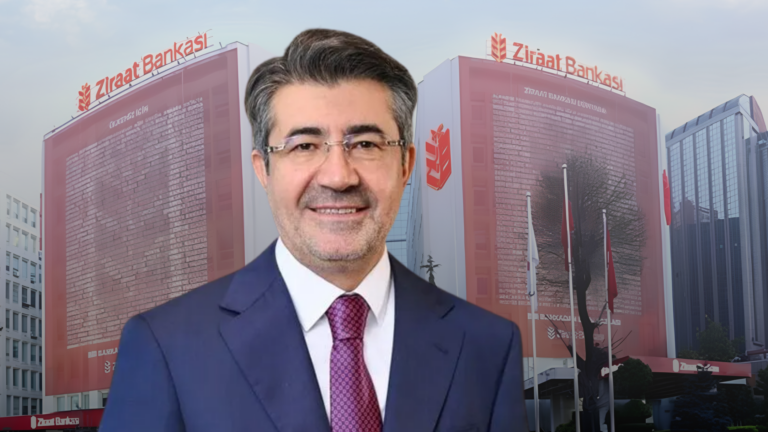
Ziraat Bankası posts 74.2 billion lira in net profit in first half of 2026

Ziraat Bankası, the leader of Turkey’s banking sector, strengthened its equity with net profit of 74.2 billion lira in the first half of 2026. Following a selective lending policy in line with the government’s Medium-Term Program, the bank brought its cash loan volume to 4.9 trillion lira and its non-cash loan volume to 2 trillion lira, taking total loan volume to approximately 7 trillion lira as of the first half of 2026. Turkish lira loans accounted for 66 percent of total loans, while the bank’s non-performing loan ratio stood at 1.9 percent, well below the sector average, thanks to its effective risk management policy.

The bank’s total assets reached 9.1 trillion lira over the same period, continuing to grow in the second quarter. Total deposits stood at 5.78 trillion lira by the end of the first half, while equity came in at 772.6 billion lira. The bank’s main funding source remained broad-based deposits, which surpassed 5.7 trillion lira.

Maintaining stable, balanced growth in its core balance sheet items through a customer-focused balance sheet strategy, the bank used the 74.2 billion lira in net profit generated in the first half of the year to strengthen its equity while continuing to support agricultural financing — its core mission — as well as investment, employment, production, and exports.

Continuing to invest in expanding financial inclusion across its growing domestic and international service network in the first half of the year, the bank continued to meet customers’ financial needs through its wide product range, reaching approximately 26 million active mobile banking customers.

Positioned as the primary strategic partner of the agricultural ecosystem, Ziraat Bankası brought its agricultural loan volume to 1 trillion lira in the first half of 2026, continuing to provide financing for mechanization, agriculture-based industrialization, productivity, food security, rural development, and support for women and young farmers.

With a vision of turning Ziraat Finans Grubu into a reference and leading financial force not just in Turkey but across the region, the bank — which operates through nearly 1,800 correspondent banks in 145 countries and a network of subsidiaries and branches in 20 countries — expanded its global footprint to 21 countries with the launch of its Tirana branch in Albania. According to the announcement, Ziraat Bankası achieved a foreign trade market share of more than 20 percent across all 12 global trade corridors it operates in, and facilitated 25 percent of Turkey’s exports.

Ziraat Bankası General Manager Alpaslan Çakar said the second quarter was a challenging period shaped by global uncertainties, tight monetary conditions, and rising funding costs, adding: “We will continue with determination to support our producers, exporters, and entrepreneurs in every geography where we operate.”

ING digitalizes vehicle loan document signing for businesses

ING Türkiye has digitalized the document signing process for its “İşim İçin Taşıt Kredisi” (Vehicle Loan for My Business) product. Businesses can now apply for the vehicle loan through the ING Mobile app or website. Following limit approval, sole proprietorship customers can sign the documents required for loan disbursement through digital channels, allowing them to complete the process without visiting a branch.

Commenting on the update, ING Türkiye Deputy General Manager for Corporate Banking Hüsniye Ulu said the digitalization is part of the bank’s broader effort to move its products and services online, and is intended to make the loan process faster and reduce the need for in-branch visits.

Through the “İşim İçin Hızlı Limit” (Fast Limit for My Business) offering, businesses can apply digitally for financing on passenger or commercial vehicles, without visiting a branch. The product, available to freelancers, sole proprietorships, and SMEs, offers financing of up to 80 percent of the vehicle’s value, deferral options of up to three months, and maturities of up to 48 months. Customers using the vehicle loan can also apply for an ING Bonus Business Card to receive a bonus on their first fuel purchase under a separate campaign.

Ulu said the bank aims to make businesses’ financial processes faster and easier through its digital products, adding that the digitalization of the vehicle loan product allows businesses to complete their applications and manage the process remotely, without visiting a branch.

Gemini reaches 1 billion monthly users

CEO Sundar Pichai shared that 63% of users use the voice feature, and that the platform generates more than 150 million images every day.

Google’s AI platform Gemini has surpassed the 1 billion monthly active user mark, becoming the company’s 14th product to reach this threshold. With this new milestone, Gemini has closed the gap with OpenAI’s ChatGPT, which reached 1 billion users in June.

In a statement on X, Google CEO Sundar Pichai said Gemini has become one of Google’s fastest-growing products. According to the data shared, 63% of Gemini users speak directly with the assistant through the voice feature. It was also noted that Gemini generates more than 150 million images every day.

Google has for some time been integrating Gemini into its products, particularly Search, Workspace, Android, and its standalone app. The company’s AI Mode in Search also stood out, surpassing 1 billion monthly active users worldwide.

The company continues to roll out new models and features as well, including Gemini 3.5 Flash, which Google said was designed to improve coding and autonomous AI agent tasks. The announcement came shortly after the company’s second-quarter 2026 earnings call.

In that call, Google had announced that Gemini had surpassed 950 million monthly users, with daily active users tripling over the past year. The announcement also coincided with the run-up to the Made by Google event, where the company is expected to unveil new Gemini-powered features on its Pixel devices.