Home Blog Page 21

Abay Bank launches international Visa prepaid card

Ethiopia-based Abay Bank has launched an international prepaid Visa card in partnership with Visa Inc.

The card has been designed for business owners engaged in international trade, professionals using global digital platforms, and travellers who require international payment tools, according to Yehuala Gessesse, chief executive officer of Abay Bank. The launch positions the product within a broader category of prepaid international cards that allow users to transact abroad without a linked current account, a format that has gained relevance as demand for cross-border payment access grows among Ethiopian consumers and businesses.

The introduction follows a period in which Ethiopia’s banking sector has increased investment in digital financial services, with banks expanding mobile banking, internet banking, card services, and electronic payment platforms to meet rising demand for digital transactions.

Regulatory context

The launch also follows foreign exchange reforms introduced by the National Bank of Ethiopia, which have included measures to improve access to foreign currency services and support closer integration with global markets. These reforms have created conditions in which financial institutions can introduce additional international payment products, a shift that follows Ethiopia’s longstanding foreign currency shortages, which have historically constrained cross-border transaction capacity for both individuals and businesses.

Yared Endale, Visa’s country manager for Ethiopia and head of the East Africa cluster, said the partnership with Abay Bank is intended to expand international payment access for Ethiopian customers. He noted that Visa’s local office in Ethiopia, one of ten offices the company operates across Africa, reflects its continued presence in the country’s financial ecosystem.

Revolut receives French banking license

Revolut has announced that it has been granted a banking license in France, marking a major milestone in the company’s European expansion.

According to the announcement, the new French bank will serve customers across Western Europe, where around 30 million people already use Revolut, making it one of the largest digital banks in the region by customer count.

To support this scale, Revolut said it is committing well over €1 billion in investment across the region, hiring more than 600 people, and establishing its new Western European headquarters in Paris by 2027.

Under a European dual-hub model, the French bank will operate alongside Revolut Bank UAB in Lithuania, with both banks supervised by the European Central Bank (ECB) as the company looks to drive innovation at scale.

Revolut currently operates as a bank in more than 32 countries, though not in all the markets where it is present.

Mastercard completes acquisition of BVNK

Mastercard Chief Product Officer Jorn Lambert said: “By bringing together Mastercard’s global network with BVNK’s on-chain infrastructure and stablecoin-focused technology, we can deliver a more efficient, reliable, and seamless payment experience.”

Mastercard has announced the completion of its acquisition of BVNK, a digital payments infrastructure provider.

According to a statement from the company, the acquisition is aimed at increasing interoperability between fiat and digital currencies, giving individuals and businesses more options for transferring value.

By bringing together BVNK’s on-chain infrastructure and stablecoin-focused technology with its global network, Mastercard aims to strengthen the connection between digital assets and traditional payment systems. The deal is expected to support the broader global adoption of secure, interoperable value transfers.

BVNK provides the infrastructure underpinning fiat currencies and on-chain payments. The company’s technology enables individuals, businesses, and machines to store, transfer, manage, and convert value between fiat and digital currencies, with all such transactions carried out within a framework of security, regulatory compliance, and interoperability.

Combining BVNK’s technology and industry expertise with Mastercard’s global capabilities is expected to help financial institutions, fintech companies, and businesses scale use cases based on stablecoins and tokenized assets. These use cases include cross-border business-to-business payments, mass payouts, reconciliation, and treasury operations.

Commenting on the matter, Mastercard Chief Product Officer Jorn Lambert said digital currencies, particularly stablecoins, are increasingly addressing real needs in areas such as cross-border business-to-business payments, personal cross-border money transfers, mass payouts, reconciliation, and treasury operations, adding:

“In a multi-currency ecosystem where fiat currencies, stablecoins, tokenized deposits, and other forms of value coexist, the new payment paradigm will be shaped by how effectively different infrastructures, networks, and forms of money connect and interoperate with one another. By bringing together Mastercard’s global network with BVNK’s on-chain infrastructure and stablecoin-focused technology, we can deliver a more efficient, reliable, and seamless payment experience.”

Albaraka Türk provided TL 363 billion in funded and non-funded financing support to the real economy

Albaraka Türk announced its first-half 2026 financial results through KAP. The pioneering Turkish participation bank, Albaraka Türk, earned a TL 4 billion profit in the first half of 2026 based on consolidated figures.

Total Assets Surpassed TL 540 Billion, With Balance Sheet Quality Preserved

Financial statements show that Albaraka Türk provided TL 363 billion in total funded and non-funded financing provided to the real economy in the first half of the year. Total assets grew to TL 541.7 billion by the end of June, with the bank maintaining its solid asset quality. Albaraka Türk’s NPL ratio for June 2026 was 1.93%, which is below the sector average, confirming its high asset quality. Its capital adequacy ratio reached 17.05%.

Funds collected via participation and special current accounts grew to TL 330 billion. Albaraka Türk continued to grow steadily through robust funding resource management and effective financial control, despite rising market funding costs. Special current accounts accounted for a high 46.7% of the total collected funds.

Effective Management Delivers Growth in Financing Support

Albaraka Türk General Manager and Board Member Malek K. Temsah commented on the financial results: “We are continuing to support the real economy despite tough market conditions caused by inflation and tight monetary policies. In the first half of 2026, our funded financing growth was higher than the banking sector average. We increased our funded financing by 20% compared to the end of 2025, reaching TL 284.3 billion. Our sustainable income growth and solid financial structure are showing positive results. Our consolidated net profit for the first half of 2026 grew by 48% compared to the same period in 2025, reaching TL 4 billion (excluding the TL 7 billion free provisions reversed in the first quarter last year), while our average return on equity was 34.2%.”

He added “We are maintaining our momentum in 2026, aligned with our Bank’s vision and mission. Adhering to participation finance principles, we are further evolving our customer-centric approach to optimize customer satisfaction. By scaling up our investments to enhance our Bank’s technological capabilities, we continue to deliver more accessible, innovative, and user-friendly financial services. Furthermore, by broadening our sustainability initiatives, we are meeting our social and environmental responsibilities, ensuring that we prioritize social impact alongside economic value creation.”

EBay forecasts upbeat quarterly revenue as high-value categories drive momentum

EBay, opens new tab forecast third-quarter revenue above Wall Street estimates on Wednesday, leaning on ‌its push into authenticated luxury goods, collectibles and refurbished products to bring more high-value buyers to its online marketplace.

The results are the first since the company rebuffed GameStop’s GME.N about $56 billion unsolicited bid as “neither credible nor attractive”. ​GameStop CEO Ryan Cohen has, however, said he plans to continue pursuing a ​combination. EBay has doubled down on its “focus categories”, targeting enthusiast buyers who value ⁠selection and specialist services, a strategy that sets it apart from rivals.

The $1.4 billion acquisition of ​fashion resale platform Depop is also providing a lift, expanding the company’s reach among younger consumers ​and strengthening its position in the growing re-commerce market.

“Focus categories, consumer-to-consumer and re-commerce, each grew 20% on the platform individually and collectively, representing 70% of gross merchandise volume,” CEO Jamie Iannone said in an interview ​with Reuters.

The company forecast third-quarter revenue to be between $3.07 billion and $3.12 billion, compared with analysts’ ​estimate of $2.97 billion. The online retailer’s shares, up more than 25% this year, were trading 1% higher after the ‌bell.

BROAD-BASED ⁠GAINS

Second-quarter revenue rose 15% to $3.13 billion, beating analysts’ average estimate of $3.02 billion, according to data compiled by LSEG.

The results reflect strength that was “broad-based” with focus categories such as collectibles, motors, fashion and refurbished all contributing to growth, Chief Financial Officer Peggy Alford said during a post-earnings call.

Gross ​merchandise volume, a key ​industry metric measuring ⁠the total value of all goods sold on the platform, rose 15% to $22.4 billion for the three months ended June 30.

The Depop deal, ​which closed on July 30, has helped eBay unlock “new supply and new ​demand for ⁠the marketplace that had not been there before,” Iannone said.

For the third quarter, eBay expects GMV growth to be between 10% and 12%, including 2.5 points of contribution from Depop, he said.

Block lifts 2026 profit forecast on Cash App growth, margin gains

Block, opens new tab raised its full-year gross profit forecast ​on Wednesday after delivering market-beating second-quarter results on the back of ‌resilient consumer spending, strong growth at Cash App and improved margins.

Cash App has largely fended off competition by evolving beyond peer-to-peer transfers into a broader consumer financial services platform offering banking, investing ​and lending products. Gross profit at Cash App surged 31% in the quarter.

The ​second half of the year also brings major shopping events, including ⁠the holiday season, with retailers offering deep discounts to entice budget-conscious consumers.

Block now expects ​gross profit of $12.51 billion, representing a 21% growth in 2026, versus its prior forecast ​of $12.33 billion, or 19% growth.

The stock reversed course after an initial post-results rally. “Seems like there’s the usual post-print volatility in the stock,” analysts at Seaport Research Partners wrote.

It was last down 1.4% ​in extended trading. Shares are up nearly 30% in 2026.

Ödüyo receives Bilişim 500 Special Award

Ödüyo has been honored in the Bilişim 500 Special Awards category as part of the “Bilişim 500 2026 Research,” regarded as one of Türkiye’s most prestigious technology sector studies.

Ödüyo achieved a notable success in the Bilişim 500 Research through its innovative solutions that digitalize businesses’ financial operations and its growth performance. With a broad product ecosystem spanning collections, open banking, POS management, and payment technologies, Ödüyo brings together companies’ financial processes on a single platform, once again demonstrating its strong position in the sector through its technology-focused approach.

Driving operational efficiency for businesses of different scales across Türkiye through the integrated financial technologies it offers, Ödüyo continues to make companies’ payment and collection processes faster, more secure, and more manageable through the solutions it develops, remaining a strategic business partner in their digital transformation journeys.

Commenting on the achievement in the Bilişim 500 2026 Research, Ödüyo General Manager Erman Yapıcı said:

“Being honored with this award as part of the Bilişim 500 Research is an important indicator not just for our company, but for the vision we’ve developed in financial technologies. While developing solutions that allow businesses to manage their financial processes from a single platform, our goal is to turn technology into operational efficiency. The trust our customers place in us, the efforts of our team, and our commitment to continuous innovation are the most important building blocks of this success. Going forward, we will continue investing in new technologies that accelerate businesses’ digital transformation and developing solutions that make financial processes smarter.”

One of Türkiye’s most comprehensive and long-standing studies in the technology sector, the Bilişim 500 Research evaluates companies each year based on their financial performance and areas of activity, shedding light on the sector’s development. This achievement once again confirms Ödüyo’s sustainable growth in financial technologies and its strong position in the sector.

Ödüyo will continue to add value to businesses’ digital transformation in the period ahead by developing innovative solutions for payment technologies, open banking, collection systems, and financial operations management.

Mastercard shares assessment on AI governance in the financial sector

Mastercard Chief AI and Data Officer Greg Ulrich said artificial intelligence’s true potential can only be realized through high operational standards, strong governance, and scalability.

According to a statement from the company, while new technological developments emerge in AI on a daily basis, the benchmark in critical sectors such as finance and payment systems remains ensuring that the technologies underpinning the foundations of economies operate reliably and without interruption.

Mastercard is focusing its AI investments on developing new capabilities for its customers and boosting employee productivity. As part of this effort, the company is developing AI-powered commerce technologies, personalization tools, and big-data-driven fraud solutions for banks and retailers, while also rolling out AI-powered coding assistants and customer service tools for its employees.

Through new foundational AI models, Mastercard Agent Suite, and Virtual C-Suite — which integrates AI into decision-making processes — the company aims to place this technology at the center of its operations. Mastercard’s recognition by Fast Company as one of the leading companies in applied AI, along with its high ranking on the Evident AI Payments Index, are cited as indicators of this strategy.

“Once trust is lost, it’s extremely difficult to rebuild”

Commenting on the matter, Ulrich said the “move fast and fix it later” approach cannot be accepted when it comes to using AI in the financial sector.

Noting that decisions made by AI in critical areas such as payment approvals, fraud detection, and risk management cannot be undone, Ulrich said that once trust is lost, it is extremely difficult to rebuild, emphasizing that AI’s true potential can only be realized through high operational standards and scalability.

Highlighting four key strategic areas for sustainably positioning AI at the center of commercial systems, Ulrich said:

“Decentralization without standards creates risk, while centralization without proximity to business units slows down the pace of impact. Striking the right balance is critical. AI maturity isn’t built by data scientists alone — it’s built together with engineers, product leaders, and operators who understand how models actually behave in the real world.”

Ulrich said that confidently integrating technology into core operations is the most important innovation criterion for financial institutions, adding that trust in financial services is non-negotiable.

Touching on the company’s approach to transparency and governance, Ulrich said: “Governance is a foundational force that ensures AI’s scalability and sense of accountability from the very start, running through every stage of a project. Many people think governance slows processes down, but our experience shows the opposite. When a solid governance structure is in place, teams are free to focus entirely on innovation and solving customer needs.”

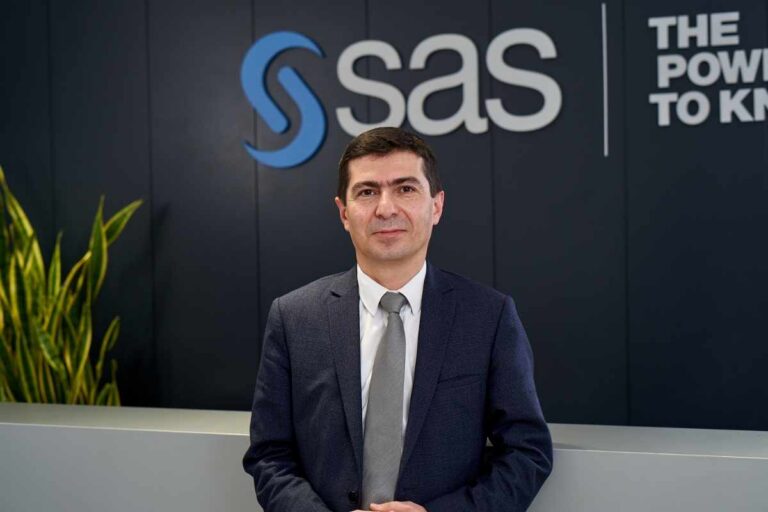
SAS marks 50 years defined by trusted innovation and global impact

As global data and AI leader SAS celebrates half a century of advancing the world through its “THE POWER TO KNOW®” vision, the company continues to carry its leadership in trusted AI and data analytics forward into the technologies of the future.

Beginning as a piece of software developed at North Carolina State University to analyze agricultural research data, SAS’s journey has grown into one of the world’s leading data and AI companies, now operating in more than 150 countries and helping organizations make more accurate, faster, and more reliable decisions. Supporting the most critical decision-making processes of institutions across sectors ranging from banking to healthcare and from the public sector to manufacturing, SAS today combines its expertise in analytics with trusted AI technologies.

SAS CEO and co-founder Jim Goodnight said: “Over the past 50 years, we’ve witnessed extraordinary advances in technology. But the one thing that hasn’t changed is the importance of helping people solve real problems. Technology only matters when it helps organizations make better decisions and achieve better outcomes. This understanding, which has guided SAS since day one, continues to shape our work with our customers, communities, and industries around the world today.”

SAS’s global track record is also reflected in its roughly 30 years of operations in Türkiye. The company accompanies organizations through their data-driven transformation across a range of sectors, including finance, the public sector, telecommunications, insurance, manufacturing, and retail. Through advanced analytics and AI technologies, SAS helps organizations make more accurate decisions, boost operational efficiency, and accelerate their digital transformation processes, while also supporting institutions in the areas of trusted AI, data governance, model management, and explainable AI.

SAS Türkiye and Central Asia General Manager Rasim Eğri commented: “By combining our global analytics and AI expertise with our local experience in Türkiye, we help organizations manage their AI transformation with confidence. Artificial intelligence is no longer just a new technology — it has become a strategic factor shaping competitiveness, operational efficiency, and sustainable growth. We’re seeing data-driven transformation accelerate, particularly in the finance, public, telecommunications, and manufacturing sectors. While supporting our customers in confidently carrying out this transformation through trusted, transparent, and scalable AI solutions, we believe Türkiye holds significant potential in this field thanks to its strong technology ecosystem and qualified workforce. At SAS, we see supporting qualified employment as vital not only for the development of our sector, but also for delivering more effective, higher-value services to our citizens and creating sustainable value across society. We believe that investments in human capital and technology will help accelerate Türkiye’s digital transformation and contribute to building a stronger, more inclusive, and more sustainable future.”

Fifty years of trust-based global impact

As artificial intelligence takes on an increasingly central role in decision-making processes across business and public administration, SAS helps organizations integrate AI into their operations responsibly and reliably, through an approach built on governance, transparency, model management, and human oversight.

This approach carries particular importance in heavily regulated sectors. Financial institutions, for instance, rely on SAS’s analytics and AI solutions to detect fraud, manage risk, and stay prepared against increasingly sophisticated AI-driven fraud techniques. Healthcare and life sciences organizations use SAS’s AI and analytics technologies to power groundbreaking disease research and develop new treatments and procedures. Public institutions likewise draw on SAS solutions to deliver more effective services to citizens, uncover new areas of efficiency, and build safer, more sustainable communities.

Through every major shift in the world of computing — from mainframes to personal computers, from the internet to cloud computing, and now the age of artificial intelligence — SAS has combined deep industry experience and domain expertise with an approach to innovation rooted in customers’ real needs.

The next 50 years: from trusted AI to quantum computing

SAS is building the next 50 years on its long-term vision, its discipline in adapting to — and often leading — a constantly evolving technology landscape, its strong, mutually beneficial relationships with customers, and its ability to attract some of the most capable experts in data and AI.

These strong foundations will continue to guide SAS’s mission of turning the promise of artificial intelligence into tangible progress delivered with confidence. To that end, the company will continue investing in the SAS® Viya® platform, industry-specific AI solutions, agentic AI, digital twin technologies, synthetic data, AI governance, and future technologies such as quantum computing research.

Goodnight concluded: “We take great pride in what we’ve achieved over the past 50 years. But what truly excites us is the new chapter ahead. As artificial intelligence reshapes the way business gets done, organizations are facing unprecedented opportunities and challenges. We have led, and successfully navigated, many major technological transformations before. That experience puts us in a unique position to help our customers bring AI to life with confidence. And we will continue to do so guided by the same commitment to trust, responsibility, and long-term impact that has defined our company since day one.”


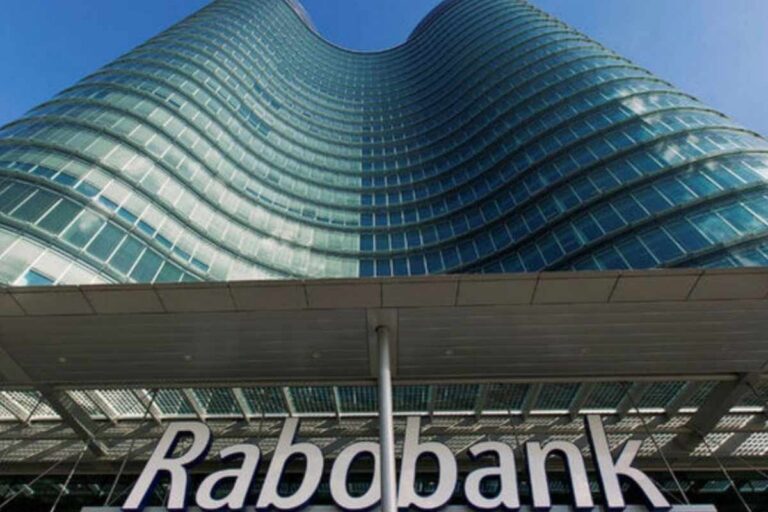
Kaspi.kz’s acquired Rabobank Türkiye becomes “Hepsi Bank”

Kazakhstan-based technology and finance giant Kaspi.kz has added another investment to its growing footprint in the Turkish market. Having received approval for its acquisition, the company has changed the trade name of Rabobank Türkiye to Hepsi Bank A.Ş., announcing the decision in an official disclosure through Turkey’s Public Disclosure Platform (KAP).

In 2025, Kaspi.kz made a rapid entry into the Turkish market by acquiring a majority stake in e-commerce giant Hepsiburada for approximately $1.1 billion. Following its Hepsiburada operation, the company took the step of securing a banking license, aiming to bring its Turkish operations together under an integrated structure.

The SuperApp concept behind Kaspi.kz’s global success is now being rolled out in Türkiye as well, through the Hepsi Bank move. The company aims to offer users an end-to-end digital financial experience by bringing e-commerce shopping (Hepsiburada), digital wallet and payment systems, and consumer lending and deposit banking services (Hepsi Bank) together under a single umbrella.

Türkiye continues to be an attractive investment destination for major Kazakhstan-based financial groups. Another Kazakhstan-based financial group, Freedom Holding Corp., recently entered the market by acquiring Turkish Bank and renaming it Freedom Bank A.Ş. With Kaspi.kz’s Hepsi Bank move, the two Kazakh giants are now set to compete head-to-head in Türkiye’s digital banking space.