Home Blog Page 22

Yapı Kredi launches ChatGPT integration

Yapı Kredi has rolled out a new integration on ChatGPT, extending its banking services into the digital ecosystem. The integration enables access to Yapı Kredi’s products and services through a natural conversational experience on ChatGPT, allowing users to get information about the bank’s specific products and services directly through the platform.

Built on the Model Context Protocol (MCP), the integration takes a different approach from standard content-feeding methods for AI, allowing users to perform calculations on ChatGPT related to topics such as personal loan interest rates, monthly installment amounts, and payment plans.

Yapı Kredi Deputy General Manager Yakup Doğan emphasized that the integration goes beyond offering a simple question-and-answer experience, representing an important step in Yapı Kredi’s vision for servitization and embedded finance. Noting that this approach, which extends banking services to different digital platforms, allows customers to access financial services from within the ecosystems they already use, Doğan said:

“Our solution, enriched with user interface components specific to Yapı Kredi that support the banking experience, offers a more comprehensive experience that directs our customers to the services they need. In this respect, our work sets itself apart from applications on AI platforms that merely provide information, introducing a next-generation interaction model that directly supports the banking experience. Through new integrations we’ll develop in line with our servitization and embedded finance strategy, we will continue meeting our customers on the digital platforms they already use and making the banking experience more accessible.”

Paribu announced its “Recurring Purchase” feature and updates to its web platform

Paribu accelerated its portfolio-focused app journey by implementing one of its most significant product updates at the beginning of July, rolling out new products and features.

The three new order types launched to provide speed, control, and flexibility in every transaction, along with the recurring purchase feature that allows users to automate their buying processes, have become the latest examples of Paribu’s approach to improving the trading experience for users at all levels. Meanwhile, Paribu’s web platform experience has also been updated with all the new features previously offered on mobile.

Greater control over price, speed, and conditions

Paribu has added Conditional-Market, Advanced Limit, and OCO (One Cancels Other) order types alongside the existing Limit, Market, and Conditional order types used in crypto trading. Visible in the order type selection screen when the advanced view is enabled on Paribu, these new order types allow users to exercise greater control over price, speed, and execution conditions.

  • Conditional-Market, added under conditional order types, ensures that orders execute instantly at the best market price once the trigger price is reached.
  • Advanced Limit expands the boundaries of standard limit orders with new types such as Post Only, IOC, and FOK. Post Only ensures the order is added to the order book solely as a market maker; IOC (Immediate or Cancel) cancels any portion that cannot be executed immediately; and FOK (Fill or Kill) makes it possible for the order to either execute in its entirety or be canceled altogether.
  • OCO allows users to enter a take-profit and stop-loss order simultaneously, automatically canceling one when the other is triggered.

Buying processes can be automated with the recurring purchase feature

Another new feature rolled out by Paribu at the beginning of August appeals to those seeking planned and regular trading behaviors. Introduced under the name Recurring Purchase, this feature serves to spread out purchases over time, automate them, and thereby balance costs.

Recurring purchase stands out as a mechanism that enables a predetermined amount to be purchased automatically at a set frequency and in a selected asset. Once a recurring purchase order is set up, transactions occur automatically according to the designated schedule. Instead of making large transactions all at once, this method—which relies on converting a fixed amount into purchases at regular intervals—is known in finance literature as dollar-cost averaging (DCA). In this model, since each purchase is distributed across different price levels, the average cost is spread out over time.

Recurring purchases are processed using the user’s Paribu balance. Additionally, users can fully automate their recurring purchase strategies by setting up regular TL transfer orders to Paribu through their banking applications.

Innovations also brought to the web platform

Furthermore, at the beginning of this month, the new products and features offered by Paribu on mobile were also launched on the web platform accessed via paribu.com. Users who can evaluate their assets in flexible and term pools via the Yield feature can now access advanced trading tools and charts on a larger screen. While the Markets page offers the opportunity to perform crypto asset transactions on the web platform and desktop with the same precision, DeFi and stock market data can also be tracked through Paribu’s new web platform.

The news feed, where market-moving selected news can be filtered by categories such as crypto, BIST, US, macro, Turkey, and technology, brings the habit of tracking the market through cause-and-effect relationships and understanding its dynamics directly to the web interface. Additionally, the Discover tab on the new web platform provides access to tools like the Crypto Glossary.

Expansion continues uninterrupted

Paribu had expanded its spot crypto trading experience with innovations such as DeFi access, Yield, live stock data streaming, and Paribu Pass through a comprehensive update released on July 1, 2026. The new updates rolled out in mid-July and early August indicate that Paribu is maintaining its product development momentum and implementing innovations without interruption.

Figopara and ING Leasing partner on financial leasing solutions

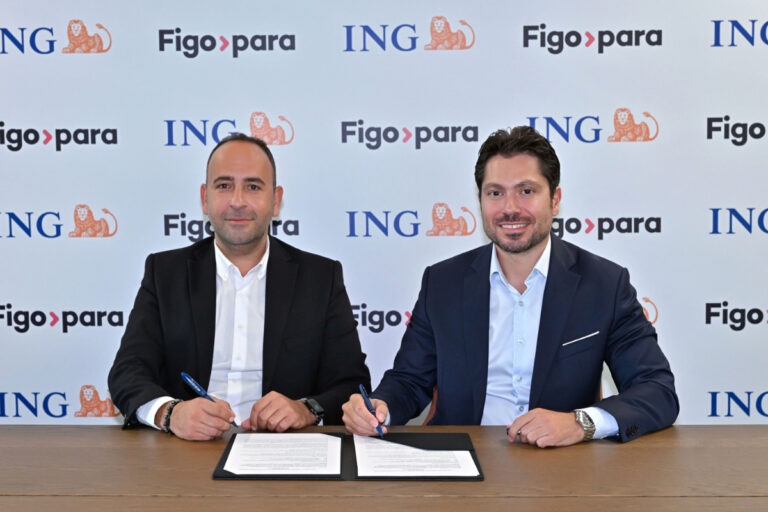
Figopara, which helps SMEs and businesses access fast, easy, and secure financing, has connected its customers with ING Leasing’s financial leasing services through a new partnership. Noting that the collaboration will allow SMEs to finance machinery and equipment investments with maturities of up to 60 months and favorable terms, Figopara Deputy General Manager for Sales Fatih Sönmez said: “This allows companies to grow their business rather than tying up their capital in machinery and fixed-asset purchases.”

Figopara, which makes it easier for SMEs to access financing through innovative financial technology solutions, continues to expand its range of services. Through its partnership with ING Leasing, Figopara is now also connecting its customers with financial leasing solutions. Under the collaboration, customers on the Figopara platform will be able to finance purchases of machinery, equipment, fixed assets, and various commercial assets through leasing, offered via ING Leasing’s financial leasing service. This will give SMEs the ability to manage their investment processes with longer-term, more flexible financing options.

The partnership targets investment-minded SMEs operating primarily in manufacturing, as well as in logistics and transportation, construction and heavy equipment, printing, packaging, and food and beverage.

Maturities of up to 60 months and up to 100% financing

Through the leasing solution, SMEs can benefit from maturities of up to 60 months and financing of up to 100 percent. SMEs will be able to take advantage of preferential interest rates offered by ING Leasing exclusively to Figopara customers, accessing financing without requiring additional collateral, while also benefiting from exemption from the Banking and Insurance Transactions Tax (BSMV) and the Resource Utilization Support Fund (KKDF) on their leasing payment plans.

Under the leasing arrangement, financing will be available for production machinery, construction equipment, commercial vehicles (trucks, buses, tractors, trailers, etc.), medical devices, and IT and office equipment.

Sönmez: “We’re providing stronger support for SMEs’ growth journey”

Emphasizing that the partnership is significant in expanding the range of solutions offered to SMEs through the Figopara platform, Figopara Deputy General Manager for Sales Fatih Sönmez commented on the collaboration, saying: “Leasing is once again gaining significant importance, particularly under the current economic conditions. Companies can finance their investments with maturities of up to 60 months and at favorable costs. At Figopara, we aim to support not only SMEs’ short-term financing needs, but also their long-term investment and growth processes. Through this partnership with ING Leasing, we’re strengthening our ecosystem by giving our customers access to long-term financing. Going forward, we will continue developing new solutions that make it easier for SMEs to do business.”

HSBC lifts profit 23%, announces $1 billion share buyback

HSBC’s pre-tax profit for the first half of 2026 rose 23 percent year-on-year to $19.5 billion. After-tax profit increased by the same rate, reaching $15.3 billion. Growth was more pronounced in the second quarter, with pre-tax profit up 60 percent and after-tax profit up 63 percent.

The bank’s revenue rose 11 percent to $37.7 billion, driven by growth in interest income as well as wealth management and corporate transaction banking. Net interest margin increased 4 basis points to 1.61 percent.

Credit losses rose by $400 million to $2.4 billion, driven by a provision related to a fraud case in the UK and a provision set aside for the Hong Kong commercial real estate sector. The bank’s CET1 capital ratio fell 0.8 percentage points to 14.1 percent, partly due to the full acquisition of Hang Seng Bank.

HSBC’s board decided to declare a second interim dividend of 10 cents per share, alongside a share buyback of up to $1 billion. The bank also raised its 2026 net interest income guidance.

İş Bankası releases first-half financial results: 3.7 trillion TL in economic support through non-cash loans

Continuing to channel its resources to broad segments of the economy, Türkiye İş Bankası provided a total of 3.7 trillion TL in support to the economy through cash and non-cash loans as of the end of June.

Türkiye İş Bankası grew its equity by 6 percent in the first half of the year to reach 453 billion TL, and increased its total assets by 10.1 percent to 5.1 trillion TL, maintaining its position as “Turkey’s largest private bank.”

Channeling its resources to broad segments of the economy in line with its goal of creating sustainable value, İş Bankası’s cash loan volume rose to 2.7 trillion TL by the end of June, while its non-cash loan volume reached 1 trillion TL. Having provided a total of 3.7 trillion TL in loan support to households and the real sector, the bank maintained its position as the private bank providing the highest level of financing to the economy through combined cash and non-cash loans.

The bank’s net profit for the period stood at 30 billion TL as of the end of June 2026, while its capital adequacy ratio, a sign of its solid financial structure, came in at 15.4 percent.

Over the same period, the bank also ranked first among private banks in total deposits, alongside its lead in assets and loans, with total deposit volume rising 9.7 percent since the end of the year to reach 3.4 trillion TL by the end of June.

$3.1 billion secured from abroad for the real sector

Continuing to make use of access to international financing sources, the bank carried out a $500 million Eurobond issuance in international capital markets in July, structured as Tier 2 capital with a 12-year maturity and an early repayment option in the seventh year. In addition to this issuance, İş Bankası secured a sustainable syndicated loan worth $658.8 million and €520.3 million with a 367-day maturity in June. The bank also secured €20 million in six-year funding from the Southeast Europe Fund, to be used in support of projects aimed at boosting agricultural productivity and developing good agricultural practices, in line with its sustainable development goals. The total funding the bank has secured from abroad for the service of the real sector since the end of 2025 has reached $3.1 billion.

“Artificial intelligence is also transforming how value is created”

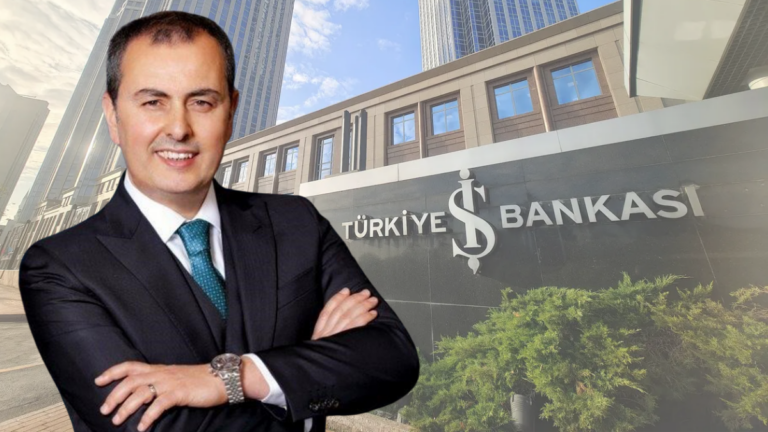
Commenting on the bank’s first-half 2026 financial results, Türkiye İş Bankası General Manager Hakan Aran said artificial intelligence — which is deeply affecting the economy, forms of production, working life, and many other areas of life including education and healthcare — is also transforming how value is created.

Noting that this new era presents significant opportunities for competitiveness and efficiency for both countries and institutions, and that İş Bankası is investing in AI and technology with a human-centered approach, Aran said technology investments and partnerships that expand human potential rather than replace it can serve as a powerful lever for reducing inequality of opportunity in the economy.

Saying that in the future, it will not be those who develop the best, most advanced technologies alone who stand out, but the institutions and countries that use that technology together with human competence, Aran said: “Competition will not be shaped solely by strong financials and balance sheets, but around those who make the most effective use of artificial intelligence in combination with human productivity. Through our new-generation subsidiaries and fintech partnerships, as well as our other investments, we will continue to generate lasting value for our country.”

“Digitalization and Value-Focused Growth Program” for SMEs

Among the notable developments for Türkiye İş Bankası in the first half of the year was the “Digitalization and Value-Focused Growth Program,” launched together with the Istanbul Chamber of Industry’s Strategic Transformation Center to support the transformation of SMEs, the driving force of the economy. The program aims to help SMEs achieve a more competitive and resilient position in global value chains through comprehensive, applicable, and scalable solutions in digitalization and value-focused growth.

Other notable developments in the first half of the year included İş Bankası being named Turkey’s most valuable bank brand for the third consecutive time in an assessment by Brand Finance, one of the world’s leading brand valuation and strategy consultancy firms, and being ranked among Europe’s top 10 banks in terms of brand strength.

The bank was also recognized as the best bank in open banking at The Banker magazine’s “Tech Awards 2026,” and was named the best digital bank in Central and Eastern Europe at Euromoney’s “Awards for Excellence.”

KKR closes $19.2 billion infrastructure fund for North America, Europe

Private equity firm KKR (KKR.N), opens new tab said on Monday it had closed a record $19.2 billion infrastructure fund focused on investing in ​assets primarily in North America and Western Europe.

Infrastructure fundraising ‌has surged in recent years, fueled by growing investor demand for assets linked to the energy transition and digital infrastructure, especially data centers ​benefiting from the rise of artificial intelligence. The company’s infrastructure ​business has grown into one of the biggest globally, ⁠with KKR managing about $120 billion in infrastructure equity.

It saw inflows ​of $34 billion in the second quarter, driven by the real ​assets business which houses KKR’s infrastructure strategies.

Through its global infrastructure strategy, KKR has invested more than $70 billion of equity in infrastructure assets across North ​America and Europe, the company said.

KKR said the fund, Global ​Infrastructure Investors V, contributes to the roughly $45 billion raised across its latest infrastructure ‌fund ⁠vintages globally. Fund V will focus on infrastructure investments that provide critical services, benefit from high barriers to entry and are expected to generate stable cash flows over the long term, KKR ​said. The fund ​has already ⁠committed more than $9 billion to investments.

“Europe is entering a period where investment in critical infrastructure will ​play an increasingly important role in supporting competitiveness, ​energy ⁠security and economic resilience,” said Vincent Policard, Co-Head of European Infrastructure at KKR.

The company beat expectations for second-quarter profit last week, ⁠as it ​collected higher fees from managing a ​growing pool of client money and cashed in on a strong run of ​asset sales.

Visa beefs up cybersecurity offerings with $2.4 billion BioCatch deal

Visa (V.N), opens new tab said on Monday it would buy fraud intelligence provider BioCatch for $2.4 billion ​in cash, marking the card giant’s latest effort to beef up ‌its cybersecurity offerings.

The deal would help the world’s largest payment processor further bolster its existing cyber, fraud, risk and security offerings and enable it to help clients better protect themselves in ​an increasingly complex threat environment, Visa said. “Account takeovers and scams cost the ​global economy over $1 trillion annually and AI is enabling these attacks ⁠at unprecedented scale. BioCatch will help our clients stop fraud before it ​reaches the point of payment,” said Andrew Torre, president of value-added services at Visa.

Founded ​in 2011, BioCatch helps detect fraud and distinguish legitimate users from fraudsters in real time by analyzing signals such as keystrokes, touch gestures and device handling to safeguard transactions.

The firm serves ​more than 350 banking clients in 21 countries and offers protection to 1.8 ​billion devices and 760 million users around the world. “We think investors will welcome the news as ‌there ⁠has been increasing discussion about the need for enhanced fraud solutions to protect payments in the AI age, with many flagging Mastercard’s Recorded Future as the best-in-class tool for this,” Evercore analyst Adam Frisch said.

Permira first invested in BioCatch in 2023 ​and then acquired ​a majority stake ⁠in 2024 at a $1.3 billion valuation. Under the investment firm’s ownership, BioCatch’s revenue and gross profit both grew roughly threefold.

Card ​giants have increasingly turned to acquisitions to bolster their fraud prevention ​offerings ⁠in recent years.

Robinhood’s second private markets fund targets $200 million US IPO

A newly minted venture fund run by Robinhood (HOOD.O), opens new tab for investing in early-stage companies is aiming to raise as much ​as $200 million in its U.S. initial public offering, ‌according to a regulatory filing on Monday.

The vehicle, Robinhood Ventures Fund II (RVII) (RVII.N), opens new tab, is offering up to 8 million shares in the IPO, including ​400,000 shares owned by Robinhood. The IPO is being ​marketed at $25 apiece.

Here are some other details:

  • The move ⁠comes as the Menlo Park, California-based Robinhood looks to broaden retail ​investors’ access to private-company investments long dominated by Silicon ​Valley’s largest venture capital firms.
  • The venture fund, RVII, plans to invest in early- and growth-stage private companies, with a focus on those ​that are current or previous participants in the Y ​Combinator startup accelerator program.
  • Robinhood debuted its first venture fund, Robinhood Ventures Fund I (RVI.N), opens new tab, in ‌March. ⁠That vehicle largely invests in late-stage companies and added OpenAI to its portfolio earlier this year.
  • Robinhood CEO Vlad Tenev earlier this year said the firm’s customers were seeking access to emerging ​AI companies at ​an earlier stage.
  • Goldman Sachs ⁠is the lead bookrunner for the offering. Citigroup, J.P. Morgan, UBS Investment Bank, and ​Wells Fargo Securities are joint bookrunners.
  • The window to ​request IPO ⁠shares is expected to close on August 12.
  • The roadshow for RVII was expected to kick off on Monday at ⁠12 ​p.m. ET (1600 GMT). Shares are expected ​to be listed on the New York Stock Exchange under the symbol “RVII.”

23 projects in Digital Turkish Lira Project move to testing phase

The Central Bank of the Republic of Türkiye (TCMB) has announced that it has completed the second-stage application evaluation process under the call for participation in the Digital Turkish Lira Project ecosystem.

According to the statement published on TCMB’s website, the project invites organizations from the finance and technology sectors to develop innovative products and use cases compatible with the digital Turkish lira. In the first stage, held between September 4 and October 15, 2025, a total of 85 project applications were submitted, with 16 banks and 25 payment and electronic money institutions taking part.

Following TCMB’s evaluation, 51 projects that met the first-stage criteria advanced to the second stage, with second-stage applications carried out between November 13 and December 12, 2025.

The statement said that following an evaluation of the documents and presentations submitted by applicants during the second stage, a total of 23 projects — belonging to 12 banks and 6 payment and electronic money institutions — were selected to move on to the third stage. It was noted that development work and sandbox testing will be carried out for these projects during the third stage.

The statement also noted that 6 projects were placed on hold following the second-stage evaluation, and that these projects could be included in the third stage at a later date.

Regarding the category breakdown of the 23 projects advancing to the third stage, the statement noted that a single project can be associated with more than one category, and provided the following distribution: 15 projects in Tokenization, 17 in Programmable Payments, 7 in User-Sovereign Identity, 15 in Interoperability with Existing Systems, and 1 in Machine-to-Machine Payments.

TCMB said in its statement that it continues its work in line with its goal of fostering public-private sector cooperation in the context of financial technologies and the digital Turkish lira.

Binance Research: Gen Z entering global markets earlier and better prepared

A new Binance Research report finds that Generation Z is entering investment markets at a younger age, with greater awareness, and with a notably disciplined approach compared to previous generations — contrary to conventional perceptions. The findings challenge long-held assumptions about young investors and speculation.

According to the research, 30 percent of Gen Z investors began investing during their university years or early adulthood, compared to just 15 percent of Millennials who started investing at the same life stage. Gen Z’s markedly higher level of financial literacy is also reflected in the finding that 77 percent of investors in this generation report having received some form of formal or structured financial education before they began investing.

A Binance Research spokesperson commented on the findings: “This data shows that, contrary to popular perception, Gen Z has a far more informed and long-term-oriented investor profile. The fact that young users, particularly in emerging markets, are able to access global markets this early and this well-prepared marks an important milestone for financial inclusion.”

A generation starting to invest earlier

The data points to a structural shift in when and how young people are entering the markets. Gen Z currently accounts for 44 percent of users of direct equity products, 44 percent of tokenized equity product users, and 45 percent of users of TradFi-linked perpetual products. Among investors who use all three product types, nearly half — 48 percent — belong to Gen Z.

Emerging markets as the driving force behind the shift

Perhaps the report’s most striking finding is geographic in nature: while more than 90 percent of investors using traditional-finance-linked products examined in the report, across all generations, are based in emerging markets, that share rises to 95 percent among Gen Z investors.

The research also identifies a distinct user group described as the “new generation”: young users based in emerging markets, holding equity assets under $2,000, and typically accessing US equity markets for the first time. Notably, 13 percent of direct equity product users fit this exact profile — Gen Z, based in emerging markets, and newly accessing global equities.

Discipline, not speculation

Contrary to the perception that young investors gravitate toward high-risk trades, the report shows the opposite. Gen Z holds the lowest share of leveraged ETF trading volume among all generations, at just 5.9 percent. This new generation of investors also trades less frequently than the overall user base, averaging 2.6 trades per day compared to 3.0 among the general user base.

In their first trades, young investors tend to gravitate toward more established assets such as NVIDIA, Micron, Tesla, and Apple shares, along with the Nasdaq-100 ETF — a pattern that points to a tendency to build portfolios around durable themes such as artificial intelligence and global technology.

Small balances, fast growth

While individual portfolio sizes remain modest, the collective momentum is significant. Gen Z’s share of new users joining traditional-finance-linked products rose from 41 percent in January 2026 to 47 percent in July 2026. Over the same period, this generation contributed approximately $80 billion in trading volume, with a monthly compound growth rate of around 24 percent.

Taken together, the findings point to a generational shift: young investors, most of whom live in emerging economies, are accessing global markets for the first time with a more structured approach — and doing so more cautiously and with greater preparation than members of previous generations did at the same life stage.