Home Blog Page 23

Turkey transfers BTK’s powers to Cybersecurity Directorate: Access blocks now come before court approval

The Information and Communication Technologies Authority’s (BTK) critical powers over digital platforms have been transferred to the Cybersecurity Directorate (SGB). The most widely discussed provision of the new regulation concerns access blocking and content removal procedures. Under the previous system, a court order and a four-hour implementation window were required; under the new law, the process has been significantly sped up.

Courts and judicial matters

  • Action without prior court order: At the request of the Cybersecurity Directorate, content can now be removed without a preceding court decision.
  • Two-hour deadline: Content providers will be required to comply with a takedown request within two hours at the latest.
  • Retroactive judicial approval: The decision must be submitted for approval to a criminal judge of peace within 24 hours. If the judge does not approve it within 48 hours, the decision will automatically lapse.
  • Penalties ahead: Those who fail to comply will face administrative fines ranging from 20,000 to 100,000 TL per violation.

Social networks and gaming platforms now under the Cybersecurity Directorate

Oversight authority over major social media platforms and online gaming services with millions of daily users in Turkey has also been transferred to the Cybersecurity Directorate. Sanctions, access restrictions, and local-representative requirements imposed on major platforms — on grounds such as national security, public order, the right to life, and public health protection — will now be directly overseen by the new institution.

A new era for lawful interception and bandwidth throttling

  • Lawful interception infrastructure transferred: Responsibility for providing the technical infrastructure needed for court-ordered wiretaps carried out by institutions such as the National Intelligence Organization (MİT) and the police has been moved from BTK to the Cybersecurity Directorate.
  • Legal change to bandwidth throttling: The provision on bandwidth throttling under Law No. 5809 has been repealed. Under the new structure, the Cybersecurity Directorate will be able to issue restriction orders either on its own initiative or at the request of security and intelligence agencies.

Three-month transition period begins

All physical and digital assets, systems, and financial obligations BTK used to carry out the powers now transferred to the Cybersecurity Directorate are to be fully handed over to the new institution within three months.

Record increase in university cybersecurity quotas in Türkiye: Capacity rises 16-fold

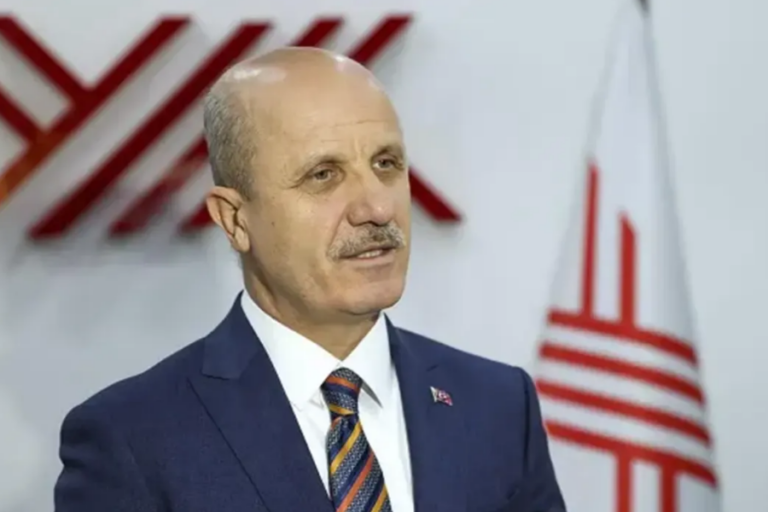
Council of Higher Education (YÖK) President Erol Özvar announced that university quotas are being planned in line with Türkiye’s development goals and labor market needs. Özvar said the country’s education capacity in cybersecurity has been increased roughly 16-fold, marking a 1,520 percent rise.

Noting that quota planning is not based solely on student preferences from previous years, Özvar said digital transformation, the needs of strategic sectors, and graduates’ employment prospects are also taken into account. He said capacity is being increased in programs geared toward the professions of the future, while a more balanced policy is being pursued in fields with a high number of graduates.

Quotas planned with a focus on employment

Özvar said that when determining quotas for university programs, institutions’ academic staff, physical facilities, and application and research infrastructure are evaluated together. He noted that graduates’ employment prospects and the qualified workforce sectors will need in the future also factor into the planning process.

He said the process drew on input from relevant ministries, universities, professional organizations, chambers of industry and commerce, and sector representatives. Özvar emphasized that quota decisions are made not based on temporary trends, but through a long-term, data-driven approach.

Cybersecurity capacity increased roughly 16-fold

One of the largest capacity increases in higher education came in cybersecurity programs. According to figures shared by Özvar, education capacity in this field was raised by 1,520 percent, bringing it to roughly 16 times its previous level.

The increase in cybersecurity programs was described as aimed at meeting the growing need for specialists in both public institutions and the private sector. The spread of digital systems, along with the need for data security and defense against cyberattacks, is driving demand for qualified human resources in this field.

Quotas raised in information technologies

Quotas for associate-degree information technology programs were increased by approximately 48 percent. Quotas for vocational schools operating within Organized Industrial Zones were raised by approximately 41 percent.

These programs are intended to give students hands-on training and enable them to enter the manufacturing sector more quickly after graduation. Strengthening cooperation between universities and industrial organizations is also among the core goals of the quota policy.

More students to be admitted to computer and information sciences

Quotas for undergraduate computer and information sciences programs have been increased by approximately 31 percent over the past three years. The growing need for specialists in software, artificial intelligence, data science, and digital technologies was cited as a key rationale behind the capacity increase in these programs.

Özvar said the goal is to prepare young people for the professions of the future and strengthen Türkiye’s human capital in technology. He noted that efforts to expand next-generation information technology programs at universities are also ongoing.

Kaspersky: Cyber espionage a growing threat across Türkiye, the Middle East and Africa

Experts from Kaspersky’s Global Research and Analysis Team (GReAT) shared their latest findings on cyber espionage threats across the Middle East, Türkiye, and Africa (META) region at the Cyber Security Weekend – META event. While most categories of cyber threats declined over the past year, cyber espionage activity in the region continued to rise unabated. Over this period, spyware attacks in Türkiye rose by 20 percent, while password stealer attacks showed a relatively stable picture within the regional threat landscape.

The cyber espionage ecosystem across the META region continues to be shaped by geopolitical tensions, regional conflicts, and ideological motivations. Intelligence-gathering activity is becoming increasingly critical for both Advanced Persistent Threat (APT) groups and cybercriminals, with organizations and individuals facing more frequent attacks aimed at seizing sensitive information and maintaining long-term access to compromised systems.

Looking at threats targeting organizations, entities in the Middle East were among the regions that saw the most pronounced rise in espionage-focused threats over the past year. In Türkiye, spyware detections rose by 32 percent, password-stealer attacks by 3 percent, and backdoor detections by 17 percent. Such malware is widely used to infiltrate corporate networks, seize sensitive information, maintain persistent access to systems, and carry out subsequent stages of targeted attacks.

As geopolitical developments continue to be one of the primary drivers of APT attacks, these groups remain among the most significant cyber risks facing businesses and public institutions in the region. Seeking to increase their persistence and evade detection, APT actors are continuously refreshing their toolkits by developing increasingly sophisticated malware capable of maintaining long-term access and gathering valuable intelligence. As of 2026, Kaspersky GReAT is tracking more than 20 APT groups actively targeting organizations across the META region.

Recent research by Kaspersky GReAT revealed that the MuddyWater APT group targeted organizations in the Middle East during the Gulf conflict with previously unseen malware chains. The campaign made use of custom-built loaders, injectors, previously unknown Remote Access Trojans (RATs), credential stealers, and a modular data exfiltration infrastructure. The findings illustrate how quickly the group can develop new tools in order to seize sensitive information and evade detection.

This surge in espionage activity is not limited to organizations, and is also targeting individual users. Attacks carried out using password-stealing software rose by 12 percent across the region over the past year. In Türkiye, spyware attacks targeting ordinary users grew by 10 percent over the same period. Data obtained through such attacks can be used to hijack accounts, orchestrate follow-up attacks, carry out extortion, or sell the data to third parties on black-market platforms.

Another rapidly growing trend is mobile cyber espionage. As smartphones increasingly become devices that store personal communications, corporate information, authentication data, and financial information, they are turning into extremely valuable targets for attackers.

Dmitry Galov, Head of Kaspersky’s Russia and CIS Global Research and Analysis Team (GReAT), commented: “Smartphones have become one of the most valuable sources of intelligence for cyber espionage actors. While Android devices remain the primary target of mobile spyware, we’re also observing a rise in reports of sophisticated campaigns targeting iOS, as seen in Operation Triangulation and, more recently, the Coruna attacks. These findings show that advanced mobile threats continue to evolve across both major platforms, and that mobile security has become an indispensable part of cyber resilience for both organizations and individuals.”

As cyber espionage threats continue to evolve, Kaspersky recommends that organizations adopt a layered cybersecurity approach that combines continuous vulnerability management, timely patching, employee awareness training, threat intelligence, and advanced security solutions such as Kaspersky Next. This approach helps detect sophisticated targeted attacks while protecting organizations against long-term system breaches.

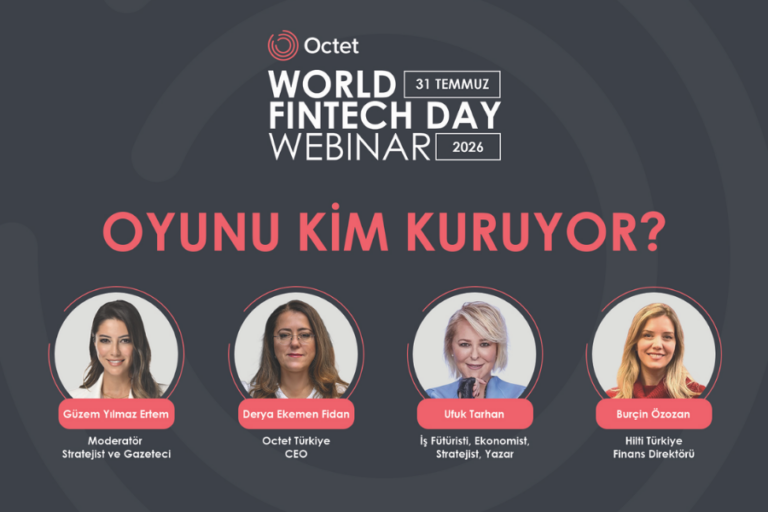
Octet World Fintech Day held under the theme “Who’s Setting the Rules?”

The fourth edition of Octet World Fintech Day, held under the theme “Who’s Setting the Rules? Shared Power, Shared Responsibility,” addressed key transformation topics for the future of B2B finance. Experts emphasized that as the industry moves toward 2030, routine finance operations will increasingly be handled by AI agents, while strategic decision-making, final sign-off, and accountability will remain with humans.

This year’s fourth edition of Octet World Fintech Day was moderated by strategist and journalist Güzem Yılmaz Ertem. Speakers included Octet Türkiye CEO and Board Member Derya Ekemen Fidan, business futurist, economist, and author Ufuk Tarhan, and Hilti Türkiye Finance Director Burçin Özozan.

The event focused on how financial technologies are evolving beyond tools that merely digitize transactions into structures that support companies’ decision-making processes. Speakers noted that banks’ financial infrastructure, the agility of fintechs, the trust created by regulation, and technology’s data-processing capacity can only create value when they come together around genuine customer needs.

“The customer is at the center of the game”

Commenting on the division of roles within the fintech ecosystem, Octet Türkiye CEO and Board Member Derya Ekemen Fidan said banks provide financial infrastructure, fintechs develop agile solutions and strong user experiences, and regulators establish the legal framework. Noting that all of these structures gain meaning only when they respond to a genuine customer need, Ekemen Fidan said: “In today’s world, the customer is the central actor at the heart of the game. Real value emerges from correctly understanding the customer’s need and developing a solution for it. Bringing together data companies hold across different banks, collection, and payment channels into a single point is the first step of digitalization. But bringing data together on its own isn’t enough. This data needs to be used not just for reporting, but to monitor cash flow, catch delays early, evaluate channel performance, and make forward-looking decisions. With this transformation, finance teams are also moving away from being a function that reports on the past and becoming structures that contribute to companies’ strategic processes.”

“We also need to explain the digital experience to SMEs”

Noting that Octet Türkiye is expanding its structure focused on SMEs, Ekemen Fidan said the company has built a dedicated setup for SMEs alongside its work with large-scale companies. Noting that the company has begun reaching SMEs directly through teams established in different regions of Anatolia, Ekemen Fidan said financial literacy needs to be addressed together with knowledge and experience about how digital solutions can be used in business processes.

Emphasizing that customer needs form the foundation of the product development process, Ekemen Fidan pointed to the Direct Debiting System as an example of this approach, continuing: “We need to explain to SMEs not just financial literacy, but also how they can use digital solutions in their business processes. Because the real value of digitalization comes not from the existence of a technology, but from how much it eases a business’s daily operations. In the past, companies had to check their dealer limits at different banks separately. With Octet Türkiye’s solution, this information can now be viewed on a single platform. This allows financial operations to be monitored from a more holistic perspective and managed more effectively. Looking at all of this, competition in the period ahead will be shaped less by offering more screens or features, and more by how much you reduce the customer’s operational complexity and decision-making burden.”

Finance teams are becoming strategic business partners

Responding to Güzem Yılmaz Ertem’s question on how digitalization is changing the role of finance teams, Hilti Türkiye Finance Director Burçin Özozan said that in the past, because financial and operational data resided in different systems, teams spent a significant portion of their time collecting data from various sources, consolidating it, and making it ready for analysis. Noting that integrated systems and automation now allow faster, more holistic access to data, Özozan said: “We can now spend our time interpreting data, evaluating different scenarios, and making faster, more accurate decisions together with business units, rather than preparing data. In the past, finance was largely a function that answered the question ‘What happened?’ Today, it has become a strategic business partner focused on the questions ‘What could happen?’ and ‘How can we make the best decision?’, working together with sales, marketing, and operations teams. But the goal here isn’t to incorporate every new technology into the system — it’s to correctly use the solutions that create real value for our business and our customers. Every improvement made in our processes not only increases internal efficiency, but is also directly reflected in the customer experience. That’s why we see technology not just as a tool that speeds up operations, but as a strategic investment that strengthens the quality of decisions and creates value for the customer.”

“Responsibility cannot be delegated to an algorithm”

Business futurist, economist, and author Ufuk Tarhan said AI agents will take on increasing responsibility in the day-to-day operations of finance teams, noting that repetitive tasks such as invoice and order matching, cash flow forecasting, comparing maturity and payment options, and generating reports and recommendations could be carried out by AI agents. However, she emphasized that this transformation will not remove human decision-making from the process.

According to Tarhan, the finance managers of the future will move away from carrying out each transaction individually and instead become conductors who set goals, authority levels, and boundaries for action, ensuring alignment between people and the digital workforce. Noting that while AI can calculate the most suitable options, humans will continue to decide when exceptions should apply, how to approach a given customer, and when intervention is needed, Tarhan said: “AI will significantly ease our work by providing us with reports, forecasts, and recommendations. Agents will be able to calculate the most suitable option, take on repetitive tasks, and speed up decision-making processes. But strategic decisions cannot be left entirely to technology. It will be up to humans to determine who to say no to, how to act in a particular special circumstance, and when to intervene on a given signal. That’s why the managers who will make a difference in the future will be those who master both the technology and the essence of their work, and who can properly orchestrate the relationship between people and AI agents. Let’s trust the algorithm and work with it — but we have to keep control, the ability to recognize exceptions, and responsibility in human hands. No matter how advanced technology becomes, the human will remain at the center of the final decision and accountability.”

Touching on AI ethics and accountability, Tarhan said the responsibility for actions carried out by systems cannot be assigned to an algorithm. She noted that while automation can manage standard processes, it is experienced humans who can recognize unexpected situations, exceptions, and developments that require early intervention.

“In 2030, the final signature will still belong to a human”

Closing the panel, speakers responding to Güzem Yılmaz Ertem’s question on how B2B finance will take shape by 2030 envisioned a future in which technology becomes invisible, while responsibility remains more clearly in human hands.

Derya Ekemen Fidan said that what will matter going forward is not how many banks a company works with, but how integrated its overall financial ecosystem is and how it uses data. Ekemen Fidan said a model in which information from different channels is interpreted within a single structure and turned into decision-making processes would come to the fore.

Ufuk Tarhan said an invisible decision network would emerge in which AI agents carry out routine payment and collection transactions, while the boundaries of action are set by humans. According to Tarhan, systems will present options, speed up transactions, and develop recommendations — but the final signature and accountability will remain with humans.

Burçin Özozan said finance would move away from being a separate, supporting process within a company and become a natural part of the customer experience. Özozan noted that as routine operations are taken over by technology, finance teams will focus more on strategy, foresight, decision quality, and business partnership.

The Octet World Fintech Day event can be watched here: https://www.youtube.com/live/X-S-2dxhT6s

“Secure Title Deed Transaction System” integrated into Garanti BBVA’s digital channels

Garanti BBVA has integrated the Secure Title Deed Transaction System, launched in partnership with Turkey’s General Directorate of Land Registry and Cadastre, into its digital channels. Through the system, payment and title deed transfer in real estate transactions now take place simultaneously, under bank guarantee. Both retail and corporate customers can manage the entire process easily through Garanti BBVA Mobile and Internet Banking.

With the new service, launched in partnership with the General Directorate of Land Registry and Cadastre, payment and title deed transfer in real estate transactions can now be carried out simultaneously, under bank guarantee, through mobile and internet banking.

Available through Garanti BBVA Mobile and Internet Banking, the Secure Title Deed Transaction System allows buyers and sellers to manage their transactions securely through a single platform. Under the system, the buyer’s payment is held in a secure account under bank guarantee until the title deed transfer is completed; once ownership transfer takes place, the payment is automatically transferred to the seller’s account.

“We’re bringing trust together with a digital experience for the most important financial decisions”

Commenting on the new service, Garanti BBVA Deputy General Manager Cemal Onaran said: “Buying or selling real estate is one of the most important financial transactions in our customers’ lives. Trust, speed, and convenience are of great importance in such a critical process. Through our partnership with the General Directorate of Land Registry and Cadastre and the Secure Title Deed Transaction System, we offer a secure transaction environment for both buyers and sellers by carrying out payment and ownership transfer simultaneously under bank guarantee. With this service, which can be managed end to end digitally through Garanti BBVA Mobile and Internet Banking, we enable our customers to complete their processes much more comfortably and with greater control. As Garanti BBVA, we will continue developing digital solutions that make our customers’ lives easier and leading innovative applications in banking.”

A new standard in real estate transactions

The service, offered to Garanti BBVA’s retail and corporate customers, eliminates the need to carry cash in high-value real estate transactions while also helping reduce risks such as fraud, counterfeit currency, and theft. Because the application, approval, and transaction tracking can be carried out entirely through digital channels, the process moves forward faster, in a more controlled manner, and with greater ease.

Enpara Bank’s total assets grow 21% to 301.8 billion TL in first half of 2026

According to non-consolidated financial statements as of June 30, 2026, Enpara Bank’s total assets reached 301.8 billion TL in the first half of 2026, up 21 percent compared to the end of 2025. Over the same period, customer deposits rose 13 percent to 231.9 billion TL, while equity increased 20 percent to 22.6 billion TL.

Enpara Bank, which has offered fee-free banking services with an innovative, customer-focused approach since 2012, has announced its financial results for the first half of 2026.

Enpara Bank generated 10.8 billion TL in net interest income in the first half of 2026. Gross operating profit reached 16.2 billion TL, while pre-tax profit came in at 5.4 billion TL. The bank reported net profit of 3.9 billion TL for the first six months of the year. Enpara Bank’s return on equity for the first half of 2026 stood at 37.7 percent.

Enpara Bank’s total customer base also continued to grow. The number of customers, which stood at 8.6 million at the end of 2025, rose 6 percent in the first half of 2026 to reach 9.2 million.

Enpara Bank General Manager Cumhur Türkmen said: “In the first half of 2026, while maintaining our strong balance sheet structure, we grew our total assets to more than 300 billion TL. The growth we recorded in our loan volume, customer deposits, and equity reflects how the trust our customers place in Enpara Bank is showing up in our financial results. Our customer-focused, efficient way of working allowed us to achieve a return on equity well above the sector average. During this period, we also expanded our range of products and services. We began offering new investment and insurance products to our retail customers, and an installment-based commercial loan product to our SME customers. Going forward, without compromising on our customer focus, we will continue our sustainable and healthy growth through new products and services that deliver real benefit to our customers. We thank all our customers for the trust they place in Enpara Bank.”

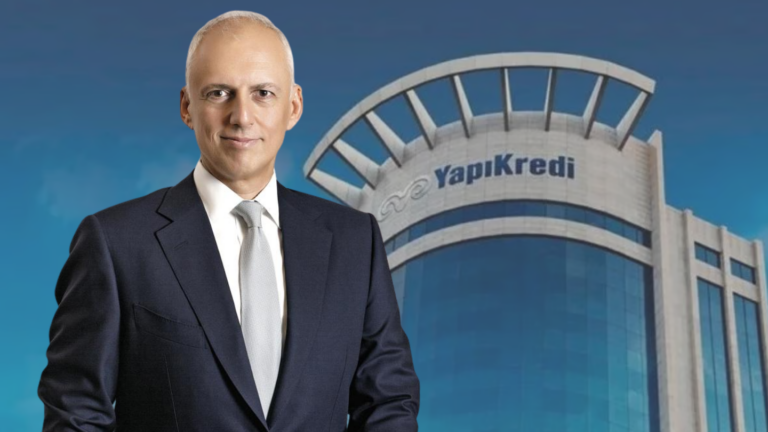
Yapı Kredi posts 31 billion lira in net group profit in first half of 2026

Yapı Kredi has released its financial results for the first half of 2026. According to the bank’s consolidated financial statements, total cash loan volume rose 14 percent since the start of the year to reach 2.1 trillion lira, while the bank’s total assets reached 4 trillion lira.

Over the same period, the bank’s total customer deposits rose to 2.1 trillion lira, while return on tangible equity stood at 23.4 percent and the consolidated capital adequacy ratio came in at 14.4 percent. The bank’s net group profit for the first half of the year totaled 31 billion lira.

Yapı Kredi CEO Gökhan Erün said the bank sustained its strong financial performance in the first half of the year.

“In the first six months of 2026, in line with our goal of contributing to our country’s development, we provided close to 3 trillion lira in resources to the Turkish economy,” Erün said. “With our broad customer base and innovative products and services, we continued to stand by our customers this year and support our economy’s production, trade, and investment capacity.”

Noting that the bank further strengthened its strong capital structure through successful transactions in international markets in the first half of the year and continued to provide long-term funding to the Turkish economy, Erün said the $500 million additional tier 1 capital bond issuance the bank successfully completed in international markets in the second quarter reflects the confidence placed in the bank’s strong financial structure and sustainable growth strategy.

Pointing to a syndicated loan agreement worth approximately $1.1 billion, Erün added:

“We structured the two- and three-year tranches of our syndication under our Sustainable Finance Framework. Through the $700 million DPR transaction we carried out as part of our long-term, diversified funding strategy, we further strengthened our funding base. As a result, the funding we’ve secured from international markets over the past year rose to $5.8 billion. Today, Yapı Kredi offers end-to-end financial solutions to its customers through a strong subsidiary structure spanning banking, investment services, asset management, leasing and factoring, payment systems, and its international operations.

“Thanks to the synergy created by our subsidiaries, each of which generates value in its own field, we continue to develop holistic solutions for our customers’ evolving needs while growing our contribution to our country’s economy. Our strong group structure, shared vision, and the complementary nature of our subsidiaries continue to be among the most important drivers of our sustainable growth.”

“We continue to support the transformation of companies”

Yapı Kredi CEO Erün emphasized that the bank continues to support the transformation of companies that play a critical role in Turkey’s economic growth, saying:

“We believe that digital transformation is the path to making our country’s production capacity more efficient and competitive. With this understanding, through our Digital Transformation in Manufacturing Program, launched in partnership with MEXT, we finance a wide range of investments — from production software to electronic device investments, and from manufacturing machinery to automation solutions. Through funding from the European Bank for Reconstruction and Development, KGF guarantee support, and favorable-maturity solutions, we make it easier for companies to access financing. The fact that one in every three manufacturing companies is a Yapı Kredi customer is an important indicator of the responsibility we’ve taken on in our country’s production transformation.”

Erün also pointed to the bank’s work under its entrepreneurship and innovation platform, FRWRD, noting that through this work the bank supports entrepreneurs’ access to investment resources, strategic business partners, and international markets, and that through its partnerships it connects the innovative solutions of the entrepreneurship and innovation ecosystem with customer needs at the right time and in the right way, positioning the bank as an industry leader in innovation.

Erün said that this year, through FRWRD Global, the bank contributed to helping high-growth-potential Turkish startups expand into the DACH region, covering Germany, Austria, and Switzerland, adding:

“In addition, through the Yapı Kredi FRWRD AI Academy, launched in partnership with CIFAL Istanbul, UNITAR, and Bahçeşehir University, we are investing in our country’s future by preparing our young people for the future in the fields of artificial intelligence, entrepreneurship, and innovation. In the period ahead, we will continue to contribute to Turkey’s technology-producing, highly competitive startups writing global success stories.”

“We continue to lead the banking sector’s digital transformation”

Gökhan Erün said the bank continues to lead the banking sector’s digital transformation, noting that it aims to extend its strong experience in digital banking into the crypto asset space to build a secure, transparent digital asset ecosystem fully compliant with regulations.

Noting that the Capital Markets Board’s approval of the bank’s application to establish a crypto asset platform marks an important milestone in line with this vision, Erün said preparations to begin operations are continuing with the same determination.

Sharing the bank’s approach to the responsible use of artificial intelligence, Erün said:

“We believe artificial intelligence is one of the most important technologies transforming the future. But we also know that ethical principles and strong governance are essential if this transformation is to create lasting value. In our Responsible AI Principles, developed with this understanding, we place respect for human rights, transparency, accountability, and data security and privacy at the center. We view artificial intelligence not merely as a technological capability, but as a strategic area of transformation shaped around trust, responsibility, and social benefit.”

QNB Türkiye’s total assets grow 16% to reach 2.136 trillion TL in first half of 2026

QNB Türkiye, the Turkish subsidiary of Qatar National Bank (Q.P.S.C.), has announced its financial results for the first six months of 2026. The bank continued to support the economy through the financing tools it provides to the real sector, backed by its strong financial structure and balanced growth approach.

As of June 30, 2026, QNB Türkiye’s total assets reached 2.136 trillion TL, up 16 percent compared to the end of 2025. Over the same period, net loans rose 17 percent to 1.263 trillion TL, while customer deposits increased 13 percent to 1.077 trillion TL. The bank’s net profit for the first half of 2026 came in at 29.299 billion TL.

QNB Türkiye General Manager Ömür Tan said: “Thanks to our strategy of adapting to changing market conditions in the first half of the year and our balanced growth approach, we achieved strong financial results. While providing uninterrupted support to our customers, we continued adding value to the economy and investing in ways that support our long-term growth.”

Noting that geopolitical developments, shifting expectations around monetary policy, and uncertainties in trade policy continue to affect global markets, Tan said Turkey’s economic policies have supported macroeconomic rebalancing. “While the Central Bank of the Republic of Türkiye (TCMB) maintained its tight monetary stance to limit the impact of global market volatility on domestic markets, measures on the fiscal policy side also supported price stability. Going forward, as global uncertainties ease and the inflation outlook improves, we expect economic activity to follow a more balanced course.”

Touching on the importance of international funding to the bank’s growth strategy, Tan said: “In the second quarter of the year, we completed a new $320 million securitization transaction with the participation of Japan- and Europe-based banks and international development institutions. With this, our total securitization volume for 2026 reached $700 million. We also renewed our sustainability-themed syndicated loan at $400 million, once again confirming the confidence international investors place in our bank. The funds secured will be used to finance our SME loan portfolio under QNB Group’s Sustainable Financing and Product Framework.”

Commenting on the bank’s work in sustainable financing, Tan said: “We continue to prioritize financing renewable energy investments. In this regard, we provided long-term financing support for solar power plant investments by several of Türkiye’s leading companies. In addition, financing of up to 50 million euros secured through a partnership between the European Bank for Reconstruction and Development (EBRD) and our subsidiary QNB Leasing, under the Turkey Green Economy Financing Facility III (GEFF III), will contribute to supporting green investments and economic recovery in the earthquake-affected region.”

Touching on the bank’s community-focused initiatives, Tan said: “Through our Minik Eller Büyük Hayaller (Little Hands, Big Dreams) platform, we continue our projects supporting children’s development in technology, environment, and sustainability. Through Scratch Cup, carried out in partnership with Habitat Association, we have so far contributed to more than 55,000 children receiving over 450,000 hours of training. Through the Nature Pioneers Program, launched in partnership with the Ministry of National Education and WWF-Türkiye, we have reached more than 35,000 students. In addition, through our partnership with the Turkish Tennis Federation, we have taken on the main sponsorship of padel in Türkiye, aiming to contribute to the sport reaching wider audiences and to strengthening its infrastructure.”

Tan said that with its strong financial structure, sustainability approach, and customer-focused service philosophy, QNB Türkiye will continue to generate added value for its customers, all its stakeholders, and the economy in the period ahead.

Russia issues international arrest warrant for Telegram founder Pavel Durov

Russia’s Federal Security Service (FSB) has issued an international arrest warrant for Telegram founder Pavel Durov on charges of “supporting terrorism.” Durov, in turn, argued that the accusations are aimed at justifying new access restrictions on the platform.

Russia has launched an international manhunt for Pavel Durov, founder of one of the world’s largest messaging platforms, Telegram. The FSB accuses Durov of turning a blind eye to chat channels and bots allegedly used by terrorist organizations and Ukrainian intelligence.

According to the FSB’s statement, certain channels and bots on Telegram were used in terrorist attacks that killed civilians in Russia — including women and children — as well as in various cybercrime activities. Authorities also said separate investigations are underway into claims that a chatbot named “Dayvinchik/Leo” was used to direct young people toward terrorism and sabotage activities.

Responding to the accusations via Telegram, Durov claimed that Russian authorities were fabricating pretexts to justify new access restrictions on the platform. Known for his stance on digital privacy and freedom of expression, the entrepreneur has previously clashed with the Russian government over the sharing of user data.

Born in Russia and a longtime resident of France, Durov holds French and United Arab Emirates citizenship. Telegram, which reaches hundreds of millions of users worldwide, is also one of the most widely used messaging apps in Russia.

Tensions between platforms and states resurface

The decision has once again brought into focus the delicate balance between content moderation, user safety, and regulatory demands from governments on technology platforms. How globally operating digital platforms navigate the security policies and legal demands of different countries continues to be one of the most contentious issues in the technology and communications sector.

Revolut partners with OpenAI to bring ChatGPT Go to millions of customers

Revolut has announced a global partnership with OpenAI to integrate ChatGPT Go into the Revolut ecosystem, making it available as a benefit across all Revolut plans.

According to the announcement, the collaboration comes as artificial intelligence becomes increasingly embedded in everyday activities, from scaling a business to conducting market research, making the management of multiple standalone subscriptions an unnecessary point of friction for both consumers and business owners.

Noting that ChatGPT is already used by almost one billion people every week, Revolut said it is including the tool as a benefit across all its plans. Starting with three months free on the Standard plan, Revolut customers will be able to unlock up to 12 months of ChatGPT Go at no extra cost, depending on their plan.

The company said the partnership forms part of its curated subscription portfolio, which brings together leading global services across travel, connectivity, and productivity under a single membership. By consolidating multiple monthly subscription bills, Revolut said the move is designed to help customers simplify their subscription management while maximizing the everyday value of their Revolut plan.

The offer is available to customers aged 18 and over, subject to Paid Plan and Partnership terms and conditions. It will be available globally, excluding the US and Brazil, with Australia to follow in the near future. Revolut noted that it does not operate as a bank in all countries where it is present, directing customers to Revolut.com for details specific to their local entity.