Home Blog Page 24

Microsoft says cash will keep flowing from AI, shares rise

Microsoft, opens new tab on Wednesday said it expects to keep generating cash through its just-started fiscal 2027 and gave a ​capital expenditure forecast below Wall Street estimates after an accounting change for data center leases.

The company also forecast sales and cloud growth that beat expectations for its current ‌fiscal first quarter, after it also topped Wall Street estimates for quarterly cloud revenue growth in its fiscal fourth quarter ended June 30. All told, the metrics were a sign Microsoft’s massive AI spending bets were paying off, easing investor concerns that one of tech’s biggest cash generators was spending heavily in pursuit of profits that had yet to materialize. They also appeared to give investors confidence that Microsoft, which is facing a strong challenge from long-time rival ​Google in its cloud business, can hang on to its No. 2 position behind cloud leader Amazon.com.

Shares of Redmond, Washington-based Microsoft were up more than 8% in extended trading after ​its forecast.

Revenue at the company’s Azure cloud-computing business rose 43% in its fiscal fourth quarter, compared with analysts’ consensus estimate of 39.98%, according to Visible ⁠Alpha.

CoinTR launches Kur+, a new financial services hub

CoinTR, Türkiye’s leading crypto asset service provider, has launched Kur+, a new-generation financial services hub developed in line with its user-focused product vision. Positioned as a key part of CoinTR’s long-term product strategy, Kur+ stands out as a dynamic platform bringing financial solutions together under a single roof. The platform is designed to evolve over time to incorporate a range of additional financial services. In its initial phase, Kur+ will allow users to convert Turkish lira under more favorable conditions.

Developed based on user insight

Launched under the slogan “Buy. Sell. Store. And more,” Kur+ was developed based on the behavior and expectations of CoinTR users. Company analysis found that users did not want to be limited to buying and selling alone, but wanted to manage their digital assets through a more practical, advantageous, and faster experience. Built on this insight, Kur+ was designed as a financial hub where users can address a range of different financial needs from a single point, one that will be enriched with new services over time. Through this structure, CoinTR, one of Türkiye’s trusted crypto exchanges, aims to offer a smarter experience that better understands and adapts to user needs.

Commenting on the launch, CoinTR Product and Operations Director Büşra Özsipahi said: “Traditional investment instruments and the crypto asset ecosystem have become closely intertwined. When managing their investments, users want to invest in the instrument that’s most suitable and advantageous for them — and in doing so, they still rely on traditional methods, such as exchange bureaus, to check exchange rates. With Kur+, our goal is to offer users an alternative for foreign exchange alongside crypto asset trading. Developed based on feedback from our users, Kur+ will initially allow them to convert Turkish lira on favorable terms. With Kur+, we aim to offer our users not just a trading platform, but a comprehensive experience where they can meet all their financial needs under one roof. By enriching Kur+ with new services, our goal is to turn CoinTR into a financial services hub.”

CoinTR celebrates the launch of Kur+ with its users

New users who meet the eligibility conditions for Kur+’s launch will be able to receive a gift worth 400 TL. In addition, eligible new and existing users who complete the KYC and KYB process will be able to earn Gift Center bonus points based on their Kur+ transaction volume and net TL deposit tiers.

Selma Bahçıvanoğlu of Simya VC: “We Plan to Launch Our Third Fund This Year”

Originally published in: Fintech Dünyası magazine, 2026 June issue (Turkish edition) — adapted and translated for Fintech in Türkiye


Quick Answer

Simya VC Managing Partner Selma Bahçıvanoğlu says the fund’s core differentiator isn’t just investing capital, but actively accelerating portfolio startups’ expansion into global markets — largely through a partnership with San Francisco-based Alchemist Accelerator, whose roughly 30,000-person mentor network gives Simya’s startups faster, more direct access to international markets. Founded in 2022 under the 212 umbrella and co-managed with Çağdaş Yıldız, Simya VC has invested in 16 early-stage, globally scalable B2B technology startups to date, including Agrotics, B2Metric, Hardal, Juphy, and Robolaunch. The fund plans to close its third fund this year, with a mid-term goal of launching a new fund roughly every two years.


Interview

Fintech Dünyası: Can you share Simya VC’s founding story and investment vision? What’s the core approach that sets your fund apart from other venture capital structures?

Selma Bahçıvanoğlu: Simya VC is an international accelerator fund founded in 2022 under the 212 umbrella, focused on investing in early-stage startups. Our focus is on B2B technology startups that carry globalization potential or solve a global problem. I co-manage the fund together with Çağdaş Yıldız. The core approach that sets us apart is that we’re not just a structure that invests — we offer a model that actively accelerates startups’ expansion into global markets.

[Editor’s note: 212 is one of Turkey’s most established venture capital funds, founded in 2011. Simya VC operates as a related early-stage accelerator fund under the same umbrella.]

To that end, we partner with Alchemist Accelerator, one of the world’s leading acceleration programs. Thanks to Alchemist’s strong mentor network and programs spanning multiple geographies, our startups gain the opportunity to gain experience in international markets and work directly with global leaders.

Our core motivation at Simya VC isn’t just to grow the startups in our portfolio — it’s to be a venture capital fund that supports them with concrete business plans and strategic networks that turn them into global players.

Fintech Dünyası: How would you describe your investment strategy? Which sectors, business models, and growth stages are priorities for you?

Selma Bahçıvanoğlu: We define Simya VC’s investment strategy as focusing on early-stage B2B technology startups with the potential to scale globally. Our priority is early-stage startups solving a clearly defined problem, with a validated product, ready to enter their growth path. SaaS, AI, and data-driven business models stand out in particular within this scope. Our core approach is catching strong teams early and helping them become scalable in international markets.

Fintech Dünyası: When evaluating a startup, how do you balance team, technology, and market potential? What are the core characteristics of an “investable” startup for you?

Selma Bahçıvanoğlu: At Simya VC, we generally look first at the team, then at the reality of the problem, and then at market size. That’s because at the pre-seed and seed stages, the technology can evolve over time, the product can change, and even the target market can shift toward a more accurate segment.

That said, the founding team’s learning speed, resilience, knowledge of the problem, and ability to gather the right people around them are far more decisive. For us, a strong team doesn’t just mean a good résumé. We’re talking about teams that can clearly articulate why they’re solving this particular problem, that genuinely listen to customers, that rapidly evolve the product based on feedback, and that have the appetite to build a company at a global scale.

Beyond that, we evaluate whether the technology genuinely makes a difference — whether it offers a defensible advantage or is just a surface-level innovation. Finally, market size is critically important; we look for opportunities that are large enough, undergoing transformation, and meaningful at a global scale.

Fintech Dünyası: Could you tell us about the startups in Simya VC’s portfolio? What are the common traits and success factors behind these investments?

Selma Bahçıvanoğlu: Since our founding, we’ve invested in a total of 16 startups. Our portfolio includes Agrotics, B2Metric, Hardal, Juphy, Eluvium, Evercopy, Keyrails, Kheanda, PhiTech, Reprai, Robolaunch, Rudiq, Surveill, Syntonym, Voltfox, and Werover.

What these startups have in common is that they’re B2B-focused, technology-producing, and built on globally scalable business models. The large majority are driving transformation across different sectors through solutions in data, AI, and automation. Their success factors center on strong early-stage teams, a clearly defined problem, and fast product-market fit.

Fintech Dünyası: What kind of support do you provide founders in the post-investment process?

Selma Bahçıvanoğlu: At Simya VC, we position ourselves not just as an investor providing capital, but as a structure that actively supports startups’ growth journey. We believe that in the early stage, the most critical contribution is often not financing itself, but connecting with the right customer, entering the market, and building the initial sales structure. Within this scope, we support our portfolio companies in areas like market entry strategy, clarifying the target customer segment, connections to enterprise customers and pilot projects, access to international networks, and preparation for the next investment round.

Our partnership with Alchemist Accelerator is one of the strongest levers in this process. Thanks to San Francisco-based Alchemist’s mentor network of roughly 30,000 people and its region-focused program structure, our startups get the opportunity to expand into global markets faster and more accurately, and to work directly with experienced leaders. We also build a structure where founders share experience, learn from one another, and become part of a strong ecosystem — offering not just investment, but a sustainable growth network.

Fintech Dünyası: How do you assess the development of Turkey’s startup ecosystem in recent years?

Selma Bahçıvanoğlu: Turkey’s startup ecosystem has clearly matured in recent years, both in terms of startup quality and investor diversity. In particular, the rise of more professional fund structures in early-stage investment and institutional capital entering the ecosystem more actively created an important transformation. At the same time, on the startup side, we’re seeing business models that target the global market from the very beginning become far more common, not just local ones.

Fintech Dünyası: Looking at a global scale, what do you see as the most critical factors in startups’ growth and scaling journey? How do you view Turkish startups’ competitiveness on this front?

Selma Bahçıvanoğlu: The most critical factors in startups’ global growth and scaling are a strong team structure, a clearly defined problem being solved, and the ability to enter the right market quickly. We find Turkish startups quite strong on this front — they particularly stand out in technical competence and product development speed.

When supported with the right global connections and market access opportunities, we clearly observe this potential turning into a much higher level of competitiveness.

Fintech Dünyası: Will there be changes in Simya VC’s investment focus going forward? Are new funds, new sectors, or different investment models on your agenda?

Selma Bahçıvanoğlu: At Simya VC, we plan to launch our third fund this year. We’re strengthening our partnerships with international accelerators, particularly Alchemist, to accelerate our portfolio companies’ expansion into global markets. In the medium term, our goal is to build a sustainable fund structure by launching a new fund roughly every two years, developing more flexible and increasingly differentiated investment strategies.


Frequently Asked Questions

When was Simya VC founded, and who manages it? Simya VC was founded in 2022 under the 212 umbrella as an international accelerator fund, co-managed by Selma Bahçıvanoğlu and Çağdaş Yıldız.

How many startups has Simya VC invested in, and what do they have in common? Simya VC has invested in 16 startups since its founding, including Agrotics, B2Metric, Hardal, Juphy, and Robolaunch. They share a B2B focus, technology-driven products, and globally scalable business models, largely centered on data, AI, and automation.

What role does Alchemist Accelerator play in Simya VC’s model? Alchemist Accelerator, a San Francisco-based accelerator with a mentor network of roughly 30,000 people, is a core partner that helps Simya VC’s portfolio startups access international markets faster and work directly with experienced global leaders.

What does Simya VC prioritize when evaluating early-stage startups? Simya VC evaluates the founding team first, followed by the reality of the problem being solved and market size — prioritizing teams with fast learning speed, resilience, deep problem knowledge, and a defensible technological advantage.

What are Simya VC’s plans for 2026 and beyond? Simya VC plans to close its third fund this year and aims to launch a new fund roughly every two years over the medium term, building an increasingly flexible and differentiated investment strategy.


This article is based on an interview originally conducted by Fintech Dünyası in Turkish. It has been translated and adapted for an international audience by Fintech in Türkiye.


BBVA reshuffles leadership team, names new CFO and Mexico head

Spain’s Banco Bilbao Vizcaya Argentaria (BBVA.MC), opens new tab said on ​Wednesday it had reshuffled its leadership ‌team and streamlined its organisation as it seeks to drive transformation amid the growing impact of ​artificial intelligence on its business and ​customer experience.

The Spanish lender said the ⁠reorganisation was also designed to simplify reporting ​lines, with new executives drawn from within ​the group and several top managers leaving their executive roles. Gonzalo Rodríguez, previously head of retail banking ​in Spain, will replace Luisa Gómez ​Bravo as group chief financial officer, the company said.

José ‌Luis ⁠Elechiguerra, currently head of Global Risk Management, will succeed Eduardo Osuna as BBVA’s country manager in Mexico.

Osuna is set to ​become chairman of ​BBVA ⁠Mexico’s board.

BBVA also named new heads for risk, legal, strategy and ​talent functions, created an Institutional ​Engagement ⁠unit and integrated several functions as part of the overhaul.

The changes are generally expected ⁠to ​take effect on September ​1, subject to regulatory procedures

Germany’s financial watchdog to monitor AI use at banks and insurers

Germany’s financial regulator Bafin said on Wednesday that it will begin ​overseeing the use of artificial intelligence ‌at the country’s banks and insurers after an expansion of its powers by legislators.

  • Bafin’s expanded ​powers stem from legislation that came ​into force on Wednesday.
  • It will be ⁠allowed to order fines as it ​aims to protect fundamental rights.
  • The watchdog said ​it would monitor compliance with transparency regarding companies’ use of chatbots with customers, as well as ​risky AI systems like those that ​measure creditworthiness.
  • It will also ensure that financial firms don’t ‌turn ⁠to prohibited AI practices, including the collection and analysis of sensitive information about people that could lead to them being ​unfairly disadvantaged.
  • “People ​have ⁠to be able to trust that their fundamental rights will be ​protected when AI is used. ​Bafin ⁠will ensure, for example, that everyone has fair access to financial services and that no ⁠one ​is discriminated against as ​a result of AI,” said Bafin President Mark Branson.

Visa to lay off 7% of staff as efficiency push deepens

Visa, opens new tab plans to cut 7% of its workforce, ​or about 2,600 jobs, a company spokesperson said on Tuesday, as the payments processor seeks to become more efficient, ‌about six months after a similar move by its closest peer. The job cuts will primarily affect technology and product teams.

“I have deep conviction that we are doing what is right for Visa, our clients and our partners as we continue to focus on driving efficiency across the company in order to reinvest ​in our highest potential opportunities,” CEO Ryan McInerney wrote in a staff memo, excerpts from which were confirmed by the ​company spokesperson. Earlier this year, peer Mastercard (MA.N), opens new tab announced plans to lay off 4% of its global workforce, citing the ⁠need to refocus investments in different areas. Fintech firm Block also said in February it would cut nearly half of its workforce, or ​4,000 jobs.

McInerney said Visa must keep evolving the way it operates to seize growth opportunities and stay ahead of industry changes, with ​AI playing a key role in accelerating that shift.

The layoffs underscore how companies are beginning to translate artificial intelligence investments into workforce changes, heightening concerns among workers and economists that the technology could replace jobs even as it drives productivity and profitability.

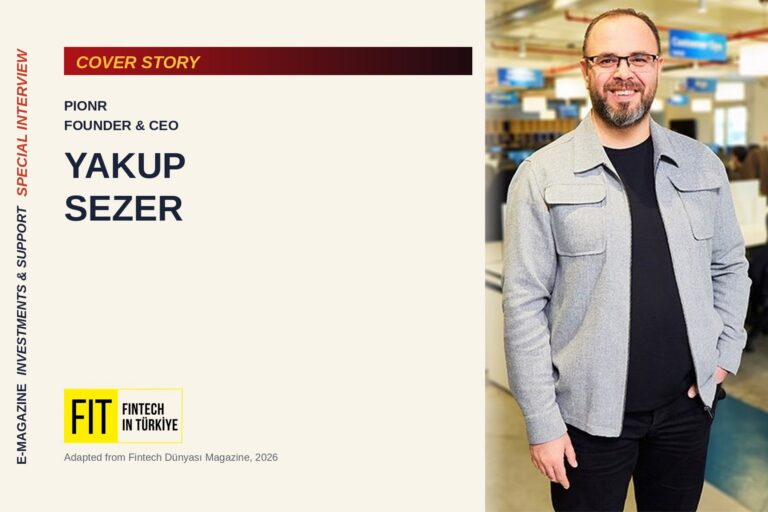
Yakup Sezer of PIONR: “Fintech’s New Playbook: Building Systems, Not Just Products”

Originally published in: Fintech Dünyası magazine, 2026 June issue (Turkish edition) — adapted and translated for Fintech in Türkiye


Quick Answer

PIONR Founder and CEO Yakup Sezer describes fintech’s future as integrated, multi-layered structures built with an ecosystem logic rather than standalone products, arguing the sector is moving past its “rapid experimentation” phase toward durable, institutional models. As a venture builder rather than a traditional investment fund, PIONR embeds directly inside the startups it backs — combining product, technology, sales, and marketing teams at the same table — with a focus on B2B systems and real-sector cash flow. Sezer says PIONR treats embedded finance, AI, and regulatory compliance not as future trends but as the foundational layers of its architecture today, and outlines a expansion roadmap that moves from Turkey to the Middle East, then Europe, then North America.


Interview

Fintech Dünyası: PIONR stands out as one of the pioneering structures applying the venture builder model in Turkey. What need gave rise to PIONR?

Yakup Sezer: PIONR was born from a perspective that sees fintech not as a sector, but as the invisible infrastructure of commerce. The real economy’s biggest pain point today remains the same: financial fragmentation. Businesses lose time and value navigating different banking screens, disconnected systems, and untraceable processes. We set out with a proposition of integration against that fragmentation. We position PIONR as a “multi-product technology” company that brings fintech products together under a shared infrastructure and management approach. Our goal is clear: to build the financial backbone of commerce.

[Editor’s note: A venture builder (also called a startup studio) is an organization that creates and operates startups from within, rather than simply providing capital from the outside — typically holding equity while directly supplying product, engineering, and operational resources.]

Fintech Dünyası: Unlike traditional investment funds, the venture builder approach means you’re more deeply involved in startups’ founding and scaling processes. What advantage does this model offer to startups?

Yakup Sezer: In the classic investment model, capital sits on one side and operations on the other. There’s no such separation in our model. PIONR doesn’t stand alongside the startups it partners with — it stands inside them. That closeness gives startups three things: speed, scale, and continuity. We solve regulatory, technology, and growth equations that could take years to work out alone, together, in a shared kitchen. The momentum that companies we bring into our ecosystem gain in a short time, almost like a collections process, is a direct result of this approach.

Fintech Dünyası: Looking at the startups developed or supported within PIONR, which problem areas do you focus on specifically, and how do you identify them?

Yakup Sezer: Our focus is clear: the B2B world and the real economy’s cash flow. In Turkey and globally, businesses’ biggest losses happen in the invisible friction of operational finance. We identify our focus areas from the field. We listen to the everyday problems of SMEs, finance managers, and people working within commerce. When a real, unresolved chaos meets the potential to turn it into a scalable solution, that’s when an area becomes meaningful to us.

Fintech Dünyası: What criteria are decisive in PIONR’s investment and venture development strategy? Which signals do you look for specifically in early-stage startups?

Yakup Sezer: There’s something I always tell founders: fall in love with the problem, not the idea. Because the product and the technology both evolve over time — what endures is conviction in the problem. As PIONR, when we set out, we look at three things: whether the problem being solved is real, whether the business model is sustainable, and whether there’s a vision that can integrate into our ecosystem. We look for structures that can go beyond being a single product and become part of a system.

Fintech Dünyası: What role does PIONR play in the product development process of the startups it supports?

Yakup Sezer: PIONR isn’t a structure that offers outside advice. Our product, technology, sales, and marketing teams make decisions at the same table. We see transformation not as one department’s job, but as a shared culture. In technology, we advocate for a flexible, modular architecture — we design solutions that can speak the same language as banking and enterprise systems, and that can embed into the customer’s daily operations. In marketing, we don’t produce advertising — we produce conversion design. We turn the product into a system that lives alongside the user and keeps learning.

Fintech Dünyası: Fintech entrepreneurship in Turkey has gained significant momentum in recent years. What do you see as the ecosystem’s strongest points today, and where does it still need to develop?

Yakup Sezer: The biggest strength of Turkey’s fintech ecosystem is that it has matured on difficult ground. Intense regulation, high user expectations, and rapidly changing market conditions make the models built here resilient at a global scale, too. The area that needs to develop is holistic thinking. Structures focused on a single feature struggle to scale. Fintech’s future lies in integrated, multi-layered structures built with an ecosystem logic. The sector is now at the threshold of moving from a “rapid experimentation” phase to durable, institutional models.

Fintech Dünyası: Will there be new focus areas in PIONR’s investment strategy going forward? What’s your perspective on areas like AI, embedded finance, payment systems, or regtech specifically?

Yakup Sezer: These areas aren’t tomorrow’s trends for us — they’re the foundational building blocks of our architecture today. We see embedded finance as an approach that places financing right at the moment of collection. We position AI not as a marketing narrative, but as a decision mechanism that runs in real time at the core of the system. We design regulation not as a checklist to comply with after the fact, but as the DNA of the architecture itself. Going forward, we’ll continue deepening these three layers.

[Editor’s note: Embedded finance refers to integrating financial services — such as payments, lending, or insurance — directly into non-financial platforms or workflows, rather than requiring users to access a separate banking product. Regtech refers to technology used to help companies comply with regulatory requirements more efficiently.]

Fintech Dünyası: What role does PIONR aim to play in the sustainable growth of Turkey’s startup ecosystem? How would you define your long-term vision?

Yakup Sezer: For PIONR, sustainable growth is something beyond individual success stories. We want the technology, talent, and founder energy accumulated in the ecosystem to keep generating value.

While reinforcing our role as a B2B system builder under an “everything is fintech” mindset in Turkey, our long-term goal is to carry this model beyond our borders. Our roadmap runs, in order, through the Middle East, Europe, and North America. We believe a model matured in Turkey can carry value into global markets too. Ultimately, our goal is this: to be part of the financial backbone that makes commerce possible, invisibly, everywhere it happens.


Frequently Asked Questions

What is a venture builder, and how does PIONR’s model differ from a traditional VC fund? A venture builder creates and operates startups from within rather than only providing outside capital. PIONR embeds its own product, technology, sales, and marketing teams directly into the startups it partners with, rather than sitting alongside them as a passive investor.

What is PIONR’s primary area of focus? PIONR focuses on the B2B world and real-sector cash flow, aiming to build integrated fintech infrastructure that addresses the operational friction businesses face across fragmented banking and financial systems.

What criteria does PIONR use to evaluate early-stage ventures? PIONR evaluates whether the problem being solved is real, whether the business model is sustainable, and whether the venture has a vision that can integrate into PIONR’s broader ecosystem, rather than remaining a standalone product.

What is PIONR’s international expansion roadmap? PIONR’s roadmap moves from Turkey to the Middle East, then to Europe, and then to North America, with the long-term goal of extending its B2B fintech system-building model beyond Turkey’s borders.

How does PIONR view AI and embedded finance within its strategy? PIONR treats embedded finance, AI, and regulatory compliance as foundational layers of its current architecture rather than future trends — positioning AI as a real-time decision mechanism at the system’s core, and regulation as a built-in design principle rather than an afterthought.


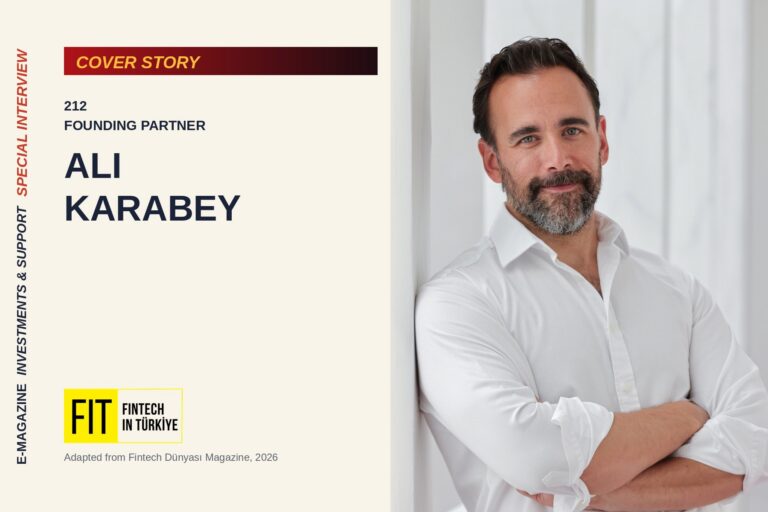
Ali Karabey of 212: “We Back Startups Focused on Solving a Global Problem”

Originally published in: Fintech Dünyası magazine, 2026 June issue (Turkish edition) — adapted and translated for Fintech in Türkiye


Quick Answer

212, founded 15 years ago as Turkey’s first venture capital fund, invests in early-stage, globally scalable B2B startups in AI-driven enterprise software, cybersecurity, marketing technology, and deep tech. Founding Partner Ali Karabey says the firm’s two clearest “game-changer” investments are Insider One and iyzico — each what 212 calls a “dragon investment,” a single exit large enough to return an entire fund on its own. The portfolio also includes RemotePass (Series A at a $70 million valuation in 2025), Trio Mobil ($26.5 million Series B in 2024), SOCRadar ($25.2 million Series B in 2024), Bolt Insight (£7 million Series A in 2025, a 7x valuation increase), and 123FormBuilder, acquired by Silicon Valley-based Kiteworks in 2024 at more than 2.5x return. Karabey argues international investors increasingly judge Turkish founding teams on their global thinking and execution capacity rather than geography alone.


Interview

Fintech Dünyası: How has 212’s investment approach evolved over the years? What’s the core investment thesis defining your fund today?

Ali Karabey: 212 was founded 15 years ago as Turkey’s first venture capital fund, and since then, the essence of our approach has been identifying high-potential early-stage technology companies and creating long-term value with them. Over time, the geographic and sectoral scope of this approach naturally expanded — we now cover a more regional and global investment space that includes companies operating in Turkey as well as Europe and the MENA region, alongside companies founded by entrepreneurs with ties to Turkey who have built companies in developed markets, particularly the US and Western Europe. Today, 212’s core investment thesis centers on catching early-stage, globally scalable B2B companies in AI-driven enterprise software, cybersecurity, marketing technology, and deep tech, and supporting them through their long-term growth journey.

Fintech Dünyası: What signals does 212 look for in early-stage investments? How do you evaluate startups that show promise but aren’t yet generating revenue?

Ali Karabey: At 212, in early-stage investments, we focus more on future signals than on current metrics. Especially in startups that aren’t yet generating revenue, the founding team’s connection to the problem, their learning speed, and their ability to adapt matter enormously to us. That’s because at an early stage, the product, market, and business model can all change over time. The team’s ability to correctly read market feedback and pivot when necessary is a critical signal at this point. Beyond that, globalization potential, technical depth, execution speed, and user behavior are also among the key indicators we evaluate.

Fintech Dünyası: Looking at your portfolio, you clearly focus on startups with strong potential to expand into global markets. What criteria do you use to evaluate a startup’s international scalability?

Ali Karabey: First, what the founder is giving up to pursue this — their opportunity cost — is an important indicator for us. Why a founder chose this particular problem, despite the alternatives available to them, is actually a strong signal of focus and determination. Second, whether the problem the startup addresses is a “local need” or a “global problem” is critical. We care about startups preparing as if for the Olympics in a sense — focused on solving a problem on a global scale, meaning they think globally from day one. Within this framework, we evaluate both the founder’s motivation and the problem’s global relevance together. Beyond that, the scalability of the business model and the team’s ability to adapt to different markets are natural complements to this process. When evaluating scalability, we don’t just look at market potential — we look at several core dimensions together.

Fintech Dünyası: Among all the investments 212 has made, are there examples you’d describe as true “game-changers”?

Ali Karabey: The strongest examples that stand out as game-changers in 212’s portfolio are Insider One and iyzico. These two investments also represent what we call a “dragon investment” — a structure where a single exit is large enough to return the entire fund’s performance on its own. Both companies were, in this sense, the most concrete and powerful validations of 212’s early-stage investment thesis. Beyond that, other startups in our portfolio also stand out with strong scaling stories.

[Editor’s note: iyzico is a Turkish payment infrastructure company acquired by PayU in 2019 — one of Turkish fintech’s best-known exits. Insider is a Turkey-founded global marketing technology (MarTech) company that has raised funding at unicorn valuation.]

RemotePass raised a Series A at a $70 million valuation in 2025, offering solutions in more than 150 countries, while Trio Mobil accelerated its growth with a $26.5 million Series B in 2024. SOCRadar strengthened its international position in cybersecurity with a $25.2 million Series B, also in 2024.

Bolt Insight completed a £7 million Series A round in 2025, achieving a 7x increase in valuation and becoming a solution partner for global brands across 90 markets. Separately, 123FormBuilder, which we added to our portfolio in 2020, was acquired by Silicon Valley-based Kiteworks in 2024, generating a return of more than 2.5x on that investment.

Beyond these, we also have early-stage portfolio companies that have captured strong growth momentum and carry high potential. The key factors that set these startups apart are a focus on global problems rather than being confined to a single market, business models built for scale from day one, and founding teams with an international growth vision.

Fintech Dünyası: In which areas does Turkey need to develop further for sustainable startup growth?

Ali Karabey: Turkey’s startup ecosystem has matured significantly in recent years, both in terms of investment volume and startup quality. In particular, the growing number of founders with prior startup experience, strengthening connections with Turkish entrepreneurs living abroad, and startups thinking globally from day one are all valuable developments for the ecosystem.

Today, many teams coming out of Turkey are focused not just on solving a local problem, but on building products that can resonate in global markets. The growing number of highly technically skilled teams, particularly in AI, fintech, cybersecurity, and B2B SaaS, is also driving a notable transformation. That said, there are still areas that need to develop for sustainable growth. More successful exit stories are critically important for the capital and know-how that flow back into the ecosystem.

Stronger access to late-stage investment capital is also one of the key needs. Turkey’s dynamic and challenging environment gives founders high adaptability. Supporting that with stronger global networks and access to capital will be one of the key factors shaping the ecosystem’s next growth phase.

Fintech Dünyası: As a fund in regular contact with global investors, how would you assess international investor perception of startups coming out of Turkey?

Ali Karabey: As a fund in regular contact with global investors, we see that the international perception of startups coming out of Turkey has changed noticeably in recent years. Turkey is no longer viewed merely as a local market — it’s increasingly seen as an ecosystem that produces founders who develop resilience under difficult conditions, execute quickly, and can ship products at a global scale.

Beyond that, the success stories built by Turkish founders living and building companies abroad have also been an important factor strengthening this perception. The growing number of Turkish entrepreneurs founding companies abroad or scaling in global markets is prompting international investors to take a closer look at Turkey-origin teams. In particular, investors are increasingly focused not just on geography, but on a team’s capacity for global thinking and execution.


Frequently Asked Questions

What is 212’s core investment focus? 212 invests in early-stage, globally scalable B2B startups in AI-driven enterprise software, cybersecurity, marketing technology, and deep tech, with a thesis built around startups solving global rather than purely local problems.

What does 212 mean by a “dragon investment”? A “dragon investment” is 212’s term for a single exit large enough to return the performance of an entire fund on its own. Founding Partner Ali Karabey names Insider One and iyzico as the fund’s clearest examples.

Which 212 portfolio companies have raised notable funding rounds recently? Recent rounds include RemotePass (Series A at a $70 million valuation, 2025), Trio Mobil ($26.5 million Series B, 2024), SOCRadar ($25.2 million Series B, 2024), and Bolt Insight (£7 million Series A with a 7x valuation increase, 2025).

What was 212’s return on its 123FormBuilder investment? 123FormBuilder, which 212 invested in in 2020, was acquired by Silicon Valley-based Kiteworks in 2024, generating a return of more than 2.5x for 212.

How does 212 evaluate early-stage startups that aren’t yet generating revenue? 212 focuses on forward-looking signals rather than current metrics — particularly the founding team’s connection to the problem, learning speed, adaptability, technical depth, and ability to think and scale globally from day one.


This article is based on an interview originally conducted by Fintech Dünyası in Turkish. It has been translated and adapted for an international audience by Fintech in Türkiye.
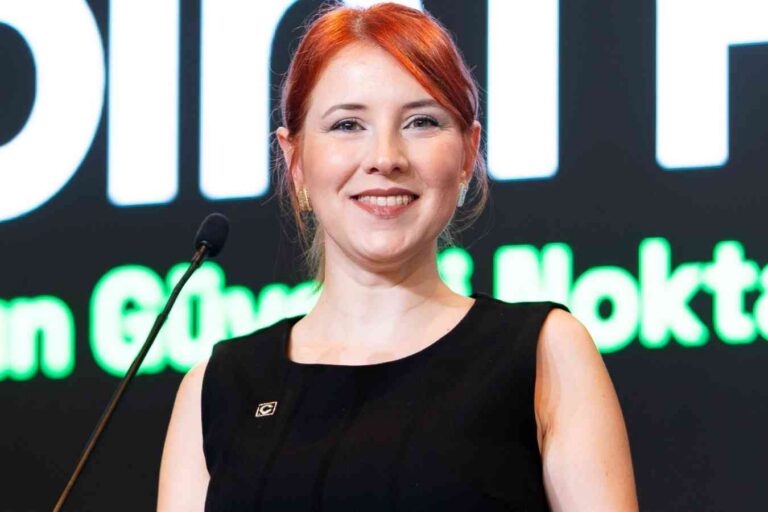
Barış Özistek of Boğaziçi Ventures: “We Aim to Bring the Startup Ecosystem and Asia Closer to Turkey”

Originally published in: Fintech Dünyası magazine, 2026 June issue (Turkish edition) — adapted and translated for Fintech in Türkiye


Quick Answer

Boğaziçi Ventures CEO Barış Özistek says the firm’s defining focus is Asia, where more than half of the global digital economy already takes place and where two-thirds of the world’s middle class is projected to live by 2030. The firm invests across stages — from early-stage to public companies — in “disruptive innovation” with fast global scaling potential, and is currently deploying three funds: BV Growth II, focused on applied AI; Greenwise, a climate-tech impact fund closing its first round in Q4 2026; and a new fund providing project financing to PC and console game developers. Özistek also points to a TÜSİAD-backed study ranking Turkey among the EMEA region’s top 10 startup ecosystems, and argues Turkey needs far more venture capital funds — citing South Korea’s more than 250 VC firms managing over 2,400 funds as a benchmark.


Interview

Fintech Dünyası: How would you describe Boğaziçi Ventures’ investment vision and its position in the venture capital ecosystem?

Barış Özistek: Our core focus is investing in innovative companies working with real passion — from early-stage startups to publicly listed companies, entirely technology-focused — that can drive major change in the verticals they operate in, particularly over the next three to five years, and potentially redefine those verticals from the ground up. That’s why we say we invest in “disruptive innovation.”

We’re one of the most active investment firms in Turkey. We don’t just operate as a next-generation financial institution — we put significant effort into growing the ecosystem itself. From the AI conferences we organize, to the events we participate in, to promoting Turkey’s ecosystem globally, we put in a lot of effort in areas where we have no direct revenue expectation.

Fintech Dünyası: Venture capital investment trusts are playing an increasingly strategic role in Turkey. In your view, what’s their most critical contribution to the growth of fintech and technology startups?

Barış Özistek: Beyond providing the capital startups need, domestic funds play a major role in bringing discipline to startups and preparing them for the global investment and business world. Local investors need to be especially active at the early and growth stages, which is exactly why GSYFs matter so much in this context.

[Editor’s note: GSYF (Girişim Sermayesi Yatırım Fonu, or Venture Capital Investment Trust) is a regulated Turkish investment vehicle structure used by domestic venture capital funds, overseen by Turkey’s Capital Markets Board (SPK).]

I’d advise founders to choose the funds they raise from based on what additional value they’re looking for. Some investors offer network access and business connections, some provide hands-on managerial support and act almost like a co-founder, and others are quiet investors who don’t get involved at all. Each has different benefits, upsides, and downsides. On the fintech side, discipline, bringing company operations into line with regulatory frameworks, financial resources, and network access stand out as the most critical forms of support.

Fintech Dünyası: What criteria does Boğaziçi Ventures prioritize when investing? Which signals matter most for early-stage startups specifically?

Barış Özistek: Naturally, the founders’ passion, their belief in what they’re building, and their command of their subject matter — both in Turkey and globally, in the relevant vertical — are decisive for us. On the business side, how scalable it is, the size it could reach if successful, how fast it could scale globally, and the founders’ ability to both build the product and scale into global markets are highly influential in our decisions.

Fintech Dünyası: Looking at your portfolio, which sectors and business models excite you most?

Barış Özistek: Our core philosophy is investing in businesses that develop innovative business models and can expand globally quickly, using their home market as a base. So whether it’s consumer-facing or B2B, businesses that can grow through digital marketing are the ones that excite me most.

Fintech Dünyası: Fintech entrepreneurship in Turkey has picked up significant momentum in recent years. Which fintech verticals do you think will grow fastest going forward?

Barış Özistek: I think technology solutions that don’t require regulatory licensing and put AI at their core — what’s often called TechFin — will grow faster.

Fintech Dünyası: Looking at the global investment ecosystem, how do you assess the standing of Turkish startups among international investors?

Barış Özistek: Certain sectors are quite strong and prestigious. Global investors show strong interest in Turkish companies in gaming, fintech, and retail technology that have demonstrated solid growth data. But I still think the ecosystem isn’t recognized accurately enough. Investors, founders, individuals, and the state all need to put in much more effort. Our priority should be to surface the areas where we’re genuinely strong.

Last year, as part of TÜSİAD’s Startup Ecosystem Development working group, we prepared and published a report. By consolidating 400 independent data points, we showed with hard data that Turkey ranks among the top 10 ecosystems in the EMEA region. More studies like this need to be done, and beyond that, we need to allocate significant budgets to get this message out in global media. Communicating the ecosystem properly and telling its story accurately will pay off in the medium term.

[Editor’s note: TÜSİAD (Turkish Industrial and Business Association) is one of Turkey’s leading business associations, representing major Turkish companies and playing an active role in economic policy advocacy.]

Fintech Dünyası: Areas like AI, gaming technologies, and fintech have been in investor focus recently. Which technologies stand out in Boğaziçi Ventures’ future investment strategy?

Barış Özistek: Our BV Growth II fund builds on the successful investment strategy of Growth I, but has shifted its focus entirely to applied-layer AI investments. Sector-agnostic — from industrial technologies to healthcare — we invest in companies that put AI at their core and can lead unique growth and drive change across different sectors. The fund’s first investment, Lucida AI, is growing very fast, particularly in South America and Asia, fully in line with our investment thesis.

Our climate-tech impact fund, Greenwise, will close its first round in the fourth quarter and begin making investments. I believe we’re addressing a major need in Turkey. Gaming, of course, remains one of our core verticals — our new gaming fund will provide project financing exclusively to PC and console game developers.

Through equity investment processes that provide fast financing without wasting time, the fund benefits founders, while also being quite advantageous for investors, since it shares in game revenue and offers a fast return on investment.

Fintech Dünyası: What role do you think venture capital funds play in developing Turkey’s entrepreneurial culture? Where does the ecosystem need more support to grow?

Barış Özistek: There’s a need for far more funds across different sectors, investment stages, and focus areas. We should compare ourselves to South Korea. More than 250 venture capital firms manage over 2,400 funds there. From accelerator programs to late-stage funds to thematic funds, there’s a highly sophisticated structure, led by the government. Compared to that, we’re still at the very beginning of the road.

Fintech Dünyası: We see that investment isn’t just about financial support. How does Boğaziçi Ventures contribute to portfolio startups’ strategic growth, network, and globalization?

Barış Özistek: Many investors support their portfolio companies in these areas. What sets Boğaziçi Ventures apart is our core focus on Asia. More than half of the global digital economy already takes place in Asia. By 2030, two-thirds of the world’s middle-class population is projected to live in Asia. The middle class in Southeast Asia alone is set to match Europe’s entire middle-class population.

[Editor’s note: Boğaziçi Ventures’ Asia focus includes active partnerships in South Korea and Japan, positioning the firm as a bridge between the Turkish startup ecosystem and Asian markets.]

Helping the companies we’ve invested in expand into such a fast-growing ecosystem is one of our top priorities. We aim to strengthen the bridges between Turkey and Asia, and to bring the startup ecosystem and Asia even closer together. We’re part of that ecosystem particularly through the business partnerships we’ve built in South Korea and Japan.


Frequently Asked Questions

What is Boğaziçi Ventures’ primary geographic focus? Boğaziçi Ventures is distinctly focused on Asia, where more than half of the global digital economy takes place and where two-thirds of the world’s middle-class population is projected to live by 2030.

What funds does Boğaziçi Ventures currently manage? As of 2026, Boğaziçi Ventures runs BV Growth II (focused on applied-layer AI investments), Greenwise (a climate-tech impact fund closing its first round in Q4 2026), and a new fund providing project financing to PC and console game developers.

How does Turkey’s venture capital ecosystem compare to South Korea’s, according to Özistek? Özistek notes that South Korea has more than 250 venture capital firms managing over 2,400 funds, with a sophisticated, government-led structure spanning accelerators to late-stage and thematic funds — a scale Turkey has not yet reached.

Which fintech verticals does Özistek expect to grow fastest in Turkey? Özistek expects “TechFin” — AI-driven technology solutions that don’t require regulatory licensing — to grow faster than licensed, regulation-heavy fintech verticals.

How did Turkey rank in the TÜSİAD startup ecosystem study Özistek references? The TÜSİAD Startup Ecosystem Development working group’s report, based on 400 independent data points, ranked Turkey among the top 10 startup ecosystems in the EMEA region.


This article is based on an interview originally conducted by Fintech Dünyası in Turkish. It has been translated and adapted for an international audience by Fintech in Türkiye.
TSKB announces first-half 2026 financial results: assets grow 13% to 369.5 billion TL

TSKB has announced its financial results for the first half of 2026. The bank grew its total assets by 13 percent to 369.5 billion TL and raised the support it provided for Turkey’s sustainable development through long-term cash loans to $1.3 billion, delivering performance in line with its targets while steadfastly continuing its projects focused on social impact. TSKB General Manager Ozan Uyar said the bank had completed the first half of the year in line with its year-end targets, in keeping with its inclusive development vision.

Türkiye Sınai Kalkınma Bankası (TSKB) has announced its financial results for the first half of 2026. According to the bank’s non-consolidated financial statements, total assets grew 13 percent over the first six months to reach 369.5 billion TL. Over the same period, TSKB provided approximately $1.3 billion in support to the Turkish economy through long-term cash loans, growing its loan portfolio to 270.1 billion TL, a currency-adjusted loan growth rate of 7.7 percent. In its new lending, TSKB prioritized climate and earthquake financing, renewable energy projects including storage investments, energy and resource efficiency, capacity expansion in manufacturing, electrification, climate industries, and investments supporting women’s employment. As a result, loans accounted for 73 percent of total assets, while loans linked to the Sustainable Development Goals (SDGs) made up 93 percent of the total loan portfolio.

Alongside the growth momentum in the first half of the year, supported by strong commission and subsidiary income, the bank’s net profit rose 3 percent quarter-on-quarter to approximately 3 billion TL. Cumulative net profit, however, fell 10.2 percent year-on-year to 5.8 billion TL, due to a one-off collection gain recorded in the second quarter of 2025. TSKB’s return on equity remained well above the sector average at 24 percent, while its capital adequacy ratio of 19 percent continued to support the bank’s targets.

Strong position and diversified funding in international capital markets

TSKB continued to diversify its international funding sources in the first half of the year in line with its sustainable development goals. Following a 150 million euro circular-economy-themed loan agreement signed with the French Development Agency (AFD) in April, the bank completed the second 300 million euro tranche of its Resilience Financing for Growth Project — backed by a partial guarantee from the International Bank for Reconstruction and Development (IBRD) and a counter-guarantee from Turkey’s Treasury and Finance Ministry — bringing the total project size to 600 million euros.

In May, TSKB signed a $350 million GREEN 4 loan agreement with the Japan Bank for International Cooperation (JBIC), aimed at supporting investments in renewable energy, energy efficiency, and water and waste management. With these agreements, the total value of loan agreements signed with development finance institutions in the first half of the year reached $872 million. The bank further reinforced its strong position in international capital markets in July with a $300 million, five-year bond issuance. It also renewed its syndicated loan at $229 million, achieving a 111 percent rollover rate compared to the previous year. As a result, total funding secured since the start of the year has surpassed $1.6 billion.

Growing commission income contribution to banking revenues

TSKB doubled its commission income year-on-year in the second quarter, supporting its banking revenues. In the second quarter, alongside advisory and non-cash loan commission income tracking in line with year-end targets, contributions from successfully completed IPO and mergers and acquisitions (M&A) services on the investment banking side also stood out.

TSKB General Manager Ozan Uyar: “We completed the first half of 2026 with strong results in line with our year-end targets”

Commenting on the bank’s half-year results, TSKB General Manager Ozan Uyar said: “We completed the first half of 2026 with strong results in line with our year-end targets. While diversifying our international funding sources in line with our sustainable development goals, we provided a total of $1.3 billion in long-term cash financing in the first six months of the year to strategic priority areas for our country’s competitiveness — from climate financing to renewable energy, and from women’s employment to the circular economy. We supported the bank’s liquidity over the same period with approximately $1.1 billion in medium- and long-term funding. Thanks to our successful balance sheet management, which allowed us to maintain a stable net interest margin of 4.5 percent, alongside commission income that doubled year-on-year and strong subsidiary income, we achieved a return on equity of 24 percent, above the sector average. With our differentiated banking performance, we will continue creating sustainable value and strengthening our country’s competitiveness through our multidimensional development approach, focusing on socially beneficial projects and, in line with our ‘industry and people’ perspective, on development priorities such as technological transformation, the transition to a low-carbon economy, the circular economy, climate adaptation, and inclusivity. At the same time, we continue our preparations as we take on the responsibility of hosting COP31, which will be held in Turkey for the first time this year. As a bank that has worked for Turkey’s development across every field for 76 years, we aim to raise our country’s project development capacity to even higher levels and strengthen the investability of projects.”

Impact-focused projects driven by an inclusive development approach

Alongside its banking activities, TSKB continues its work creating social benefit through a multidimensional, inclusive development approach, carrying out projects ranging from education to the arts and from gender equality to accessibility. Having brought together its long-running work on diversity, equity, and accessibility under the Sarı Çizgi (Yellow Line) brand, in keeping with an inclusive development approach that leaves no one behind, the bank continues to expand its enriched school libraries project with new library openings. In 2026, TSKB extended its impact to the Central Anatolia Region as well, opening three new libraries in Nevşehir, Aksaray, and Niğde to bring its total to 14 libraries.