Home Blog Page 20

Google Play adds Venmo as a payment option

Google has added Venmo as a payment method on Google Play for app and game purchases. The initiative will extend the range of ways users can pay for games, apps, add-ons, and other digital content. Furthermore, it gives Google Play users in the US the ability to use Venmo’s wallet balance or linked payment methods, including bank accounts and cards, to complete purchases on the platform.

How the integration works

Users wishing to pay with Venmo can link their account by navigating to payment methods within their Google account settings. Once linked, Venmo can be used not only for one-off purchases but also for subscription payments and for tipping creators within content-based apps, according to Google.

Venmo joins an existing list of payment options on Google Play, which already includes PayPal and Cash App, alongside card payments from American Express, Visa, Mastercard, Discover, and JCB in the US. The move adds another wallet-based alternative to traditional card payments for the platform’s user base.

In addition, Google has also tested alternative payment approaches outside the US. In 2019, the company piloted a system allowing users in certain markets to pay for digital purchases using cash at nearby retail locations, an approach aimed at reaching consumers without ready access to cards or digital wallets.

Market context

The addition of Venmo comes against a backdrop of continued growth in consumer spending on mobile apps and games. According to a report from analytics firm Sensor Tower, combined user spend across iOS and the Play Store reached over USD 167 billion in in-app purchases in 2025, an increase of 10.6% year-on-year.

Robinhood launches crypto trading for UK investors

Robinhood has launched crypto trading for UK customers through Bitstamp UK, expanding its investment app to include digital assets.

The offering is provided through Bitstamp UK, giving UK customers access to more than 50 cryptocurrencies, including Bitcoin (BTC), Ethereum (ETH), XRP (XRP) and Hyperliquid (HYPE).

The new crypto product does not charge trading fees, account maintenance fees, or custody fees. Robinhood has positioned the offering as an alternative to existing UK crypto platforms, some of which apply spreads and pricing structures that are not always disclosed upfront to customers. The company has not disclosed specific figures on the size of the UK crypto trading market or the number of customers expected to use the new service.

Jordan Sinclair, President of Robinhood U.K. and GM of Bitstamp UK, said the launch reflects growing interest among UK investors in including digital assets as part of a broader portfolio, describing the move as part of Robinhood’s strategy to build a single platform covering multiple asset classes for UK customers.

AI-driven market commentary and blockchain ecosystem

Alongside crypto trading, Robinhood has introduced Cortex Digests for Crypto, a generative AI tool that analyses news, market data, and technical indicators to provide explanations of price movements in individual crypto assets. The tool is intended to give customers additional context when reviewing market activity within the app.

The launch also connects to Robinhood’s broader crypto infrastructure. UK developers will be able to build on Robinhood Chain, a Layer 2 blockchain built on the Arbitrum platform. At the same time, Robinhood has said it will continue to add resources to Robinhood Learn and its Help Center to support customers trading crypto for the first time, and that 24/7 support is available through in-app chat.

The launch adds the UK to the list of markets where Robinhood offers crypto trading directly within its main app, following similar moves in other regions where the company has expanded beyond equities into digital assets. The rollout comes as UK-based platforms continue to expand crypto offerings alongside traditional investment products, reflecting broader convergence between crypto and mainstream retail investment services.

Zama lists $ZAMA token on Revolut across the EEA

Zama has listed its $ZAMA token on Revolut, giving the fintech’s EEA customers access to the confidentiality protocol’s native asset.

According to the company, public blockchains are transparent by design, meaning balances, transactions, and positions are visible by default. Zama’s protocol is built to address this by applying Fully Homomorphic Encryption (FHE), a cryptographic technique that allows computations to be performed on encrypted data without decrypting it first. The company states that this approach brings confidentiality to assets and transactions on existing public blockchains, such as Ethereum, without requiring a separate privacy-focused chain, while aiming to preserve compliance and auditability.

Access and trading terms on Revolut

Zama said the listing allows existing Revolut users to buy and hold $ZAMA within the app they already use, without opening new accounts or completing additional KYC checks. Trading fees on the main Revolut app start from 0%, with funding available instantly from a user’s existing Revolut balance. Revolut also enables onchain withdrawals of $ZAMA to self-custody wallets, a feature that the companies describe as available through Revolut across the EEA for onchain crypto transfers.

Dr Rand Hindi, co-founder and chief executive officer of Zama, said the listing was intended as a long-term step towards making confidentiality available to a broader base of users beyond existing crypto participants, rather than a one-off commercial event.

Planned education campaign

Zama and Revolut are planning to launch a Learn & Earn campaign later in 2026, aimed at explaining the rationale for onchain privacy to a non-specialist audience and rewarding user engagement with the topic. The companies describe the format as one Revolut has previously used in connection with other blockchain networks. At the same time, the campaign is positioned as a follow-on initiative to the token listing rather than a standalone promotion.

Zama said the Revolut listing follows a series of deployments of its technology in areas including confidential lending, real-world asset tokenisation, and institutional token operations. The company frames these deployments as evidence that FHE-based confidentiality on public blockchains has moved from a research-stage concept towards practical use by non-specialist audiences through platforms already used for everyday financial activity.

BRICS nations discuss linking payment systems and CBDCs, RBI chief says

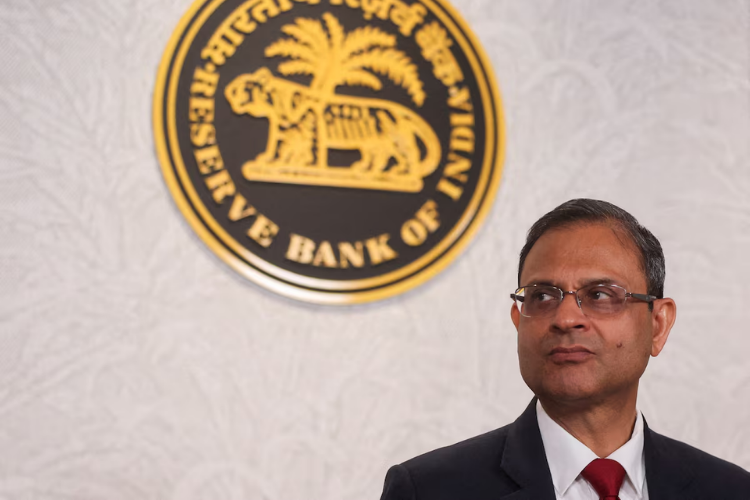
Members of the BRICS group of nations are discussing potential linkages between their respective fast payment systems and central ​bank digital currencies, Reserve Bank of India Governor Sanjay ‌Malhotra said at an event on Tuesday. The BRICS organisation includes Brazil, Russia, India, China and South Africa, among others. India is hosting the 2026 edition ​of the annual summit.

“Cross-border payments is an area of interest ​for all of us, including the BRICS, because we ⁠feel there is a lot of scope for reducing cost,” Malhotra ​said in Mumbai. “Various options are on the table, but it is ​still at discussion stage, including CBDCs (central bank digital currencies) and linkages of fast payment systems,” he added.

Reuters reported earlier this year that the RBI recommended to the government ​that a proposal to connect CBDCs be included in the agenda ​for the 2026 BRICS summit.

The central bank will also continue its efforts to ‌internationalize ⁠the rupee and promote the use of local currencies for cross-border payments and trade, Malhotra said.

RESPONSIBLE AI USE

The governor also said that the RBI sees artificial intelligence as a capability to be harnessed ​and not just ​a risk ⁠that needs to be contained. “Indian banks cannot afford to sit on the sidelines and watch,” he said, ​urging lenders to inventory all AI models in ​use and ⁠establish board-approved AI governance policies.

Central banks globally have been paying close attention to lenders’ usage of AI amid worries over cyberattacks alongside operational ⁠and ​governance risks. “Innovation and safety are not ​opposing goals, they are in fact complementary requirements of a durable financial system,” Malhotra said.

Midas signs preliminary cooperation agreement with Circle

Midas has announced that it has signed a preliminary cooperation agreement with Circle, one of the world’s leading digital finance infrastructure companies, to explore new areas that could contribute to the development of the digital asset ecosystem.

Under the agreement, Midas and Circle will jointly explore areas that could support the development of digital assets in Türkiye on a more trusted, transparent, and innovative foundation. The preliminary cooperation between the two companies lays the groundwork for long-term engagement and potential areas of collaboration.

In its statement, Midas expressed its excitement about being part of this collaboration, which begins with a shared focus on responsible innovation, transparency, and trust, noting that further updates on the partnership will be shared in the period ahead.

Yasemin Bedir becomes Mastercard’s EEMEA Region President

Mastercard has announced that Yasemin Bedir has been appointed President of the company’s Eastern Europe, Middle East and Africa (EEMEA) region. The appointment will take effect on September 1. In this UAE-based role, Bedir will oversee the strategy for all of Mastercard’s operations across the region.

Commenting on the appointment, Bedir said: “I’ve been inspired by the teams here at Mastercard. Their resilience, innovative spirit and relentless dedication to meet and exceed customer needs is what powers our impact every day. Together, we will build on the strong foundation the regional team has created over the past five years.”

Earlier in her career, Bedir worked at HSBC, Garanti Bank, and Yapı Kredi in Türkiye. She is among the founders of the Professional Women Network (PWN) and leads the organization.

Commerzbank CEO says takeover by UniCredit can create value

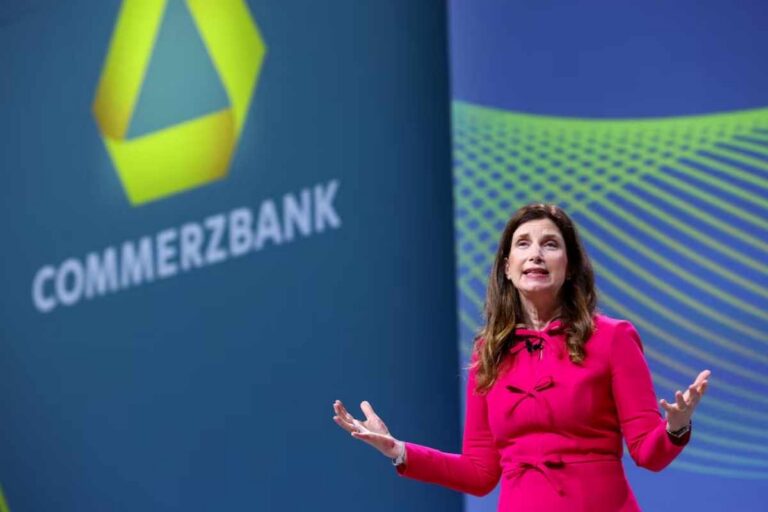
Commerzbank’s (CBKG.DE), opens new tab Chief Executive Bettina Orlopp said on ​Thursday a tie-up with UniCredit (CRDI.MI), opens new tab could create value for both sides, in a significant shift of tone as she looks to direct talks with her ‌counterpart Andrea Orcel.

Germany’s second-biggest bank has been a fierce opponent of UniCredit’s overtures, but after a nearly two-year battle to fend off the Milan-based lender it has given up the fight in recent weeks as UniCredit last month secured a 48% stake in Commerzbank, giving it effective control. Orlopp said on Thursday Commerzbank had begun talks with UniCredit and that she was “optimistic” both sides could find common ground.

However, Orcel, the architect ​of one of the most contentious European banking battles in decades, has said he wants to negotiate directly with the German government, which has criticised UniCredit’s aggressive ​attitude and owns around 12% of the bank, and with Commerzbank employees, bypassing management.

The format of the talks is not clear, but Orlopp’s conciliatory ⁠tone precedes months of likely negotiations as UniCredit waits for regulatory approvals to be declared in control of Commerzbank , and when and how it will try to buy the rest of the bank it ​does not own. Orlopp and Orcel met on the sidelines of a private event in July, a source close to UniCredit said. The two discussed accounting measures and other steps related to ​UniCredit’s taking control, the person said, adding it “was not the start of any negotiation.”

After seeing through a €45 billion ($52 billion) hostile takeover bid for Commerzbank helped by a skilful use of derivatives, UniCredit has outlined pre-merger plans it wants the Frankfurt-based lender to follow to boost profits.

‘DETERMINED TO CREATE VALUE’

“We have started talks on this, which is in the genuine interest of both UniCredit and Commerzbank, as we are both determined ​to create value for our shareholders, clients and employees,” Orlopp told analysts.

“I’m optimistic that, step by step, we can find common ground on governance and also on the business model.” Orlopp ​and her management team had long been opposed to a tie-up with UniCredit. There have been several rounds of talks but all have ended in disagreement.

Orcel said UniCredit has laid out a roadmap it ‌wants in place ⁠from January and is ready to call an extraordinary shareholder vote to appoint a new supervisory board at Commerzbank if necessary.

UniCredit and Commerzbank have been holding post-earnings investor meetings since the Milanese lender became a shareholder. Thursday also offered an opportunity for both management teams to exchange views in an investor call.

Orlopp said on Thursday it was in the best interest of both banks to move as quickly as possible and that they would try to identify possible cost savings and whether the banks could join forces on large investment programmes.

Crypto bill faces long odds after Senate punts vote to September

The chances that the U.S. crypto industry will win once-in-a-generation digital asset legislation are dimming, despite Senate Republicans promising to advance the bill when lawmakers return to Capitol Hill next month. In a blow for ​the crypto industry, the Senate left Washington on Saturday for the five-week August recess without a much-anticipated vote on the Clarity Act, which would create a regulatory framework for digital ‌assets.

The deep-pocketed industry has spent hundreds of millions of dollars campaigning to advance the bill which they say will put crypto companies on a solid legal footing, although Democrats, some Republicans and other critics say it lacks tough money laundering and ethics safeguards.

With the bill facing continued opposition from key Democrats needed to clinch 60 votes, and the Senate logjammed with other business, Senate Majority Leader John Thune, a Republican, on Saturday pushed a procedural vote that could kickstart the process of advancing the bill to the Senate floor to September.

But many analysts ​and lobbyists are skeptical that it has a future. That’s because the November elections, in which the House of Representatives and roughly a third of the Senate are up for reelection, will ​dominate lawmakers’ attention and truncate Senate sessions during another busy stretch, leaving little time for lawmakers to resolve ongoing differences. “I think it’s a long shot,” said ⁠Brian Gardner, chief Washington policy strategist at Stifel, adding lawmakers do not appear to be close to an agreement, particularly on contentious ethics provisions.

‘AS FATAL AS A BULLET’

The Senate returns on September 14 and is scheduled ​to be in session for just 14 days before the October election recess, and a further 22 days before year end.

Thune on Saturday filed for “cloture,” setting up a September 15 vote on whether to limit debate ​on the bill and advance it to a full floor vote. That requires 60 votes, and will be a key test of whether the bill has a future. A failed cloture vote could effectively kill the bill, lobbyists said.

If it succeeds, Senate rules could then require days of procedural steps before a final vote, including debate and consideration of further amendments. Finding that time will be challenging, as the chamber usually has to consider other essential defense and funding bills later in the year.

PayPal processes $486 billion in payment volume in the second quarter of 2026

PayPal reported second-quarter 2026 results showing a return to growth alongside continued pressure on profitability.

The company posted revenue of $8.7 billion, up 5 percent year-over-year, while total payment volume rose 10 percent to $486.4 billion. Payment transactions increased 8 percent to 6.8 billion, and active accounts grew just 0.3 percent to 439 million. Operating cash flow more than doubled to $2.0 billion, while free cash flow jumped 157 percent to $1.78 billion.

Despite the growth in volume, profitability declined. GAAP net income fell 12 percent to $1.10 billion, and operating margin slipped to 16.4 percent from 18.1 percent a year earlier.

The near-flat growth in active accounts points to a shift in strategy: rather than pursuing new user acquisition, PayPal is focused on driving higher transaction activity among its existing user base.

The company’s balance sheet showed continued strength, with $1.5 billion in share buybacks during the quarter and $15.3 billion in cash against $13.4 billion in debt. PayPal also raised its full-year non-GAAP EPS guidance to approximately $5.38.

The upward revision to guidance suggests management is confident about sustaining this momentum. The key question now is whether PayPal can convert this volume growth into stronger margins in the quarters ahead.

Logo Financial Technologies e-invoice integration comes to Akbank’s DijiOrtak

DijiOrtak, Akbank’s platform bringing together the commercial ecosystems of manufacturers, dealers, buyers, suppliers, and business partners under a single digital umbrella, has gained a new capability through an integration with Logo Financial Technologies. Through the partnership, Akbank customers using Logo e-Invoice can easily access payment, collection, and financing solutions directly through the system they use for their daily commercial operations. The new integration helps companies speed up their transactions without switching between different systems, manage cash flow more easily, and find financing solutions exactly when they need them.

Akbank has expanded the value-chain-focused digital solutions it offers to its corporate customers through a new integration with Logo Financial Technologies. Through the invoice integration launched under DijiOrtak — the platform that brings together the financial and operational processes of the commercial ecosystems formed by Akbank’s manufacturers, dealers, buyers, suppliers, and business partners under a single digital umbrella — companies can now easily access their financial transactions through the very system they use for their daily commercial operations.

Companies that are Akbank customers and use Logo e-Invoice can view their payable and receivable invoices directly through the system they already use. Through payable invoices, they can access the payment and financing solutions Akbank offers and evaluate the option best suited to their needs, while for receivable invoices they can benefit from solutions that speed up collection processes. This allows companies to manage their cash flow more effectively while accessing suitable solutions the moment they need financing, without disrupting their workflows.

DijiOrtak stands out as a digital platform that helps companies manage their commercial relationships within the value chain more effectively. Bringing together solutions such as relationship network management, limit viewing, limit transfer requests, and payment and collection assurance on a single platform, DijiOrtak also offers trade financing products such as Direct Debiting System (DBS), Supplier Financing, e-Discounting, and Check financing in an integrated structure. This allows companies to access financing solutions suited to their business models and commercial relationships from a single point, boosting their operational efficiency.

Alper Bektaş: “With DijiOrtak, we’re taking our integrated banking solutions even further into companies’ commercial flows”

Commenting on the matter, Akbank SME Banking Deputy General Manager Alper Bektaş said: “Today, companies’ competitiveness is shaped by how quickly, visibly, and seamlessly they can manage their commercial processes. For companies operating with extensive dealer, supplier, and customer networks in particular, tracking invoice, payment, collection, and financing processes across different systems creates a significant operational burden. As Akbank, through our Value Chain Management approach, we focus on reducing this burden and making our banking solutions a natural part of companies’ daily commercial flows.

DijiOrtak is the concrete embodiment of this vision. The invoice integration we’ve launched in partnership with Logo Financial Technologies is a step that strengthens our platform’s value proposition. Our customers can now view their invoices through the systems they already use and more easily access payment, collection, and financing solutions suited to the relevant invoice. Through this, we’re offering a structure that allows for a more holistic management of commercial relationships, cash flow, and financial decisions. Going forward, we will continue developing DijiOrtak into a powerful ecosystem platform that brings together the digital and financial solutions companies need throughout their value chain.”

Başak Kural: “We’re helping companies manage their e-invoice processes faster and more efficiently”

Commenting on the partnership, Logo Group Financial Technologies and Retail Solutions General Manager Başak Kural said: “At Logo Financial Technologies, we continue our efforts to make it easier for companies to access financial services. In this context, we’re pleased to launch a new partnership with Akbank in the area of e-invoice integrations with banks. Through this integration, companies can manage their e-invoice processes securely, quickly, and effectively. This accelerates digital finance processes while delivering significant operational efficiency.”