Home Blog Page 9

Papara Card is back: All services restored for users

Papara, one of Turkey’s leading fintech companies, announced that its card and payment services have been restored for users. According to the company’s statement, Papara Card is back in service. Bill payment and payment transactions have also become accessible again. 24/7 money transfers, precious metals, and investment transactions have continued without interruption.

Users can continue to manage their accounts and payments through the Papara app. They can deposit money into their accounts, make purchases with Papara Card, and benefit from the cashback opportunities offered by the company. Papara emphasized that all its products and services are now simultaneously available to users.

Papara CEO Tarık Dalmaz made the following statement on the matter: “At Papara, our services are once again available to our users. Papara cards, bill payments, and precious metals services are back in use. Money transfers had never stopped, and our Papara Invest investment services continued without interruption. Our products and services are now simultaneously accessible.

As the brand that introduced cashback to users, we have another piece of good news: your beloved cashbacks are back too! We will continue to bring users new cashback campaigns in the coming days that will take the familiar Papara experience to even higher levels.

I would like to thank all Paparalıs who continued to use Papara and empower it throughout this period, as well as all my colleagues who worked with great dedication, for their patience, trust, and effort.

Our priority at Papara has been to maintain and improve our users’ experience and trust. We will continue on this path with the same understanding going forward. As Papara and Paparalıs, we will continue to add value to Turkey’s financial technology ecosystem and develop innovative solutions.”

Bitrelic launches TruvaLI, an agentic AI-powered AML and Risk Intelligence Platform

Domestic technology startup Bitrelic has launched TruvaLI, an Agentic AI-powered AML and risk intelligence platform. The platform consolidates remote identity verification (KYC/KYB), anti-money laundering (AML), sanctions and adverse media screening, real-time transaction monitoring, anomaly and organized crime detection, fraud prevention, risk scoring, and case management under a single roof. The company aims to offer the platform at a more competitive cost compared to traditional products.

TruvaLI was developed for banks, fintech companies, payment institutions, insurance companies, crypto and digital asset platforms, e-commerce companies, and the gaming and legal betting ecosystem. From the moment of identity verification at customer onboarding, the platform continuously monitors sanctions, politically exposed person (PEP), and adverse media risks throughout the customer relationship, while simultaneously evaluating financial and non-financial behaviors across the portfolio in real time to detect anomalies and suspicious transaction patterns. The platform can halt transactions, generate alerts, or route cases to the review team based on risk level, and is described by the company not merely as an AML and sanctions screening tool, but as a fully functional “Fraud & Risk Intelligence” platform.

TruvaLI by the Numbers

According to data shared by the company, the platform delivers up to 80% time savings in operational processes, calculates real-time risk scores in under 200 milliseconds, scans more than 480 list sources across 257 countries and territories via OpenSanctions, and updates these lists every 15 minutes.

Proprietary AI Model, Rules Engine, and Network Analysis

The company states that the key differentiator setting TruvaLI apart from other solutions in the market is that artificial intelligence is not a bolt-on feature. The platform is said to be built not on a standard externally integrated language model, but on a proprietary self-training “Compliance AI.” The platform processes large volumes of data in real time using rule-based mechanisms, and is also stated to have been designed from the ground up around AI for functions that do not require immediate action, such as rule writing, report generation, case review, and organized crime detection.

The platform also aims to visualize relationships between signals such as customers, counterparties, accounts, devices, IPs, and transactions to uncover hidden connections and organized crime structures, while real-time adverse media screening is designed to enable early detection of risk signals such as investigations, arrests, or criminal charges.

Born from High-Volume System Experience

TruvaLI is said to draw on the hands-on experience of Bitrelic engineers who have developed infrastructure for Turkey’s highest-transaction-volume digital platforms. The company emphasizes that the platform was built by a team managing millions of transactions daily in environments where error tolerance is near zero, such as financial technology, payments, digital wallets, and regulated gaming platforms.

The platform operates on a zero-downtime architecture; every step is auditable through an immutable timestamped log (audit trail) structure, and an on-premise deployment option ensures that sensitive data does not leave the institution. On the enterprise security front, TruvaLI is said to hold ISO 27001, ISO 22301, ISO/IEC 20000-1, ISO 9001, ISO 37001, ISO 10002, and ISO 45001 certifications, as well as SOC 2 Type II assurance.

Cost Consolidation Goal

The company states that it aims to deliver time savings in operational processes by automating repetitive tasks such as rule writing, alert enrichment, case pre-review, and report drafting. Consolidating AML, sanctions screening, KYC/KYB, transaction monitoring, fraud detection, risk scoring, and reporting into a single platform is said to aim at reducing total cost of ownership by consolidating separate product and integration costs.

Commenting on the matter, Bitrelic Founder Emrah Ülker said: “We view regulations as the strongest foundation of trust, continuity, and transparency for institutions — yet today’s increasing transaction volumes are trapping compliance officers in a repetitive and exhausting cycle. When the human mind is exposed to this routine, the likelihood of making errors and overlooking critical details naturally increases. They need a reliable autonomous assistant to take on this heavy data burden. That is precisely why we placed Agentic AI architecture at the heart of TruvaLI. Our goal is not to remove humans from the equation, but to minimize human error at the speed of technology, eliminate repetitive drudgery, and give compliance professionals back their time and the power to make the best decisions.”

Onur Özkan steps down as TOM CEO

Onur Özkan, the Founding CEO of digital banking platform TOM (Technology of Money), is concluding his five-year tenure as CEO, transitioning to the company’s Board of Directors and gaining shareholder status. Industry sources suggest that Yiğit Çağlayan, the founding CEO of Getir Finans, will become the company’s new CEO.

Commenting on the leadership change, Özkan stated that he has completed his five-year founding CEO journey at TOM, which started with “one safe, one desk” and has since grown into a team of 2,000 people. Özkan shared the following about TOM’s progress during this period: “The company built a strong workplace culture, earning the Great Place To Work certification five consecutive years; it reached 4 million customers and a satisfaction score of 4.8 out of 5, becoming one of Turkey’s largest digital banks.”

Following a continuously declining negative profit-and-loss trend over the first eight months, the company is expected to achieve permanent profitability by the end of this year.

Amazon expands shoppable features on Prime Video

Amazon has introduced new shopping tools on Prime Video, expanding its X-Ray feature and adding a visual search function called ‘Shop the Scene’. According to the announcement, the changes build on the company’s existing X-Ray feature, which already provides real-time information such as actor biographies, character names, and soundtrack details, and extend the shopping experience introduced through last year’s ‘Shop the Show’ launch.

Viewers can access the new shopping options by launching X-Ray as usual, by pressing up on the Fire TV remote, and selecting a new Shop tab that displays products related to the content being viewed. To complete a purchase, users open the Amazon Shopping app, which recognises the title playing and shows a feed of related products synced to that moment in the programme.

The company has also simplified its second-screen shopping flow. Previously, viewers needed to type a ‘shop the show’ request into the Amazon Shopping app to reach related products. Under the update, opening the app while a title is playing takes users directly to that programme’s storefront, removing the need for a manual search.

Shop the Scene and visual search

A new feature, ‘Shop the Scene’, uses Amazon’s Lens visual search technology to identify products related to items appearing on screen, including clothing and home decor associated with characters. Amazon has noted that the tool will not always surface exact matches, since some items shown in productions are not sold by Amazon or its sellers, including pieces from high-end labels or custom-made costumes. Furthermore, the company positions the feature as a starting point for finding similar products rather than a guarantee of an exact match.

‘Shop the Scene’ is available on iOS and Android in the US and currently supports more than 600 titles. Meanwhile, the ‘Shop the Show’ feature is expanding from 1.300 to more than 8.000 titles in the US, covering Prime Originals, licensed content, and live sports.

TerraPay links Xend network with Alipay+ for cross-border QR payments

TerraPay has connected its Xend wallet interoperability network to Alipay+, enabling cross-border QR payments for digital wallet users. The partnership is aimed at extending frictionless cross-border payment functionality for digital wallet holders travelling or transacting outside their home markets, particularly across Latin America, the Middle East, and Africa.

From A2A to in-store acceptance

In the initial phase of the rollout, 15 digital wallets across Africa connected to Xend will allow their users to pay at more than 150 million merchants within Alipay+’s global merchant network. For TerraPay, the integration marks an expansion of its cross-border payment capabilities beyond A2A transfers into in-store, point-of-sale acceptance.

Through the connection, wallet users will be able to scan a QR code to pay directly at merchants accepting Alipay+, using the same wallet application they already use domestically, instead of relying on cash, currency exchange services, or card-based alternatives when transacting abroad.

Ambar Sur, Founder and CEO of TerraPay, said that Xend is to allow a wallet issued in one country to function as it would at home when used elsewhere. Sur is describing the Alipay+ partnership as a step toward making cross-border wallet payments comparable to domestic transactions.

Addressing a gap in wallet interoperability

Digital wallet providers have typically built substantial domestic user bases and payment rail infrastructure, but cross-border functionality has remained limited, restricting wallet use for international travel and commerce.

Xend addresses this gap by connecting wallet providers to Alipay+’s network through a single integration. Alipay+ connects more than 50 international payment partners to over 150 million merchants across 220 destination markets, including through more than ten national payment systems.

Grab reportedly in talks to acquire Atome Financial stake

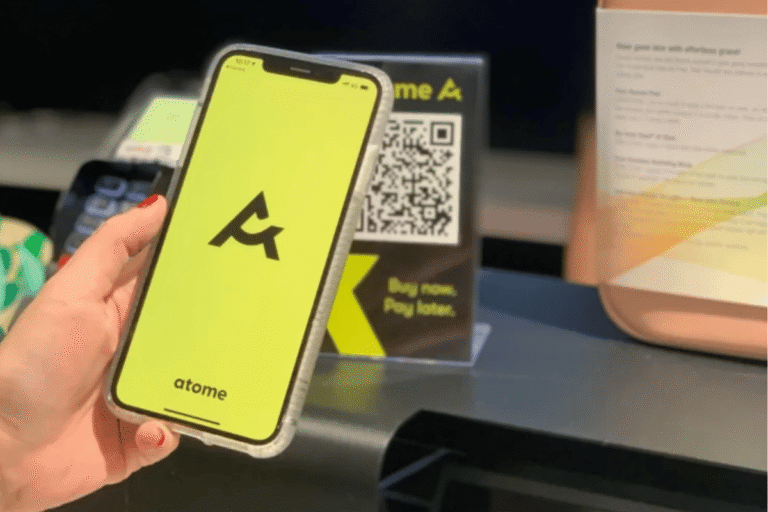
Grab has reportedly entered talks to acquire a majority stake in Singapore-based Atome Financial, a unit of Advance Intelligence Group. Bloomberg reported that deliberations are ongoing and that no final decision has been made.

According to the people cited in the report, the transaction could value Atome Financial at more than USD 2 billion. Representatives for Grab, Atome Financial, and Advance Intelligence Group declined to comment when contacted for the report. Atome Financial operates as a unit of Advance Intelligence Group, a Singapore-based technology company whose backers include SoftBank Vision Fund 2 and Warburg Pincus, the report noted.

Atome provides BNPL and other payment solutions to consumers at online and offline merchants. In addition, the platform serves merchants across categories, including fashion, beauty, lifestyle, travel, fitness, and homeware.

Grab’s recent acquisition activity

Grab, which is listed in the US, has pursued growth in 2026 through a combination of acquisitions and expansion of its core mobility and delivery businesses, the report said. Earlier this year, the company acquired US-based Stash Financial Inc at an enterprise value of USD 425 million. Grab also acquired Foodpanda’s Taiwan operations from Germany-based Delivery Hero SE for USD 600 million.

Should the Atome Financial deal proceed, it would extend Grab’s push into financial services beyond the payments and lending products it already offers through its super-app ecosystem, which spans transport, food delivery, and digital financial services across Southeast Asia. A majority stake in a BNPL platform with an established merchant network would give Grab additional exposure to instalment-based consumer credit, a segment that has continued to expand across Southeast Asian markets alongside e-commerce volumes.

MoneyGram launches stablecoin-backed card with Visa network

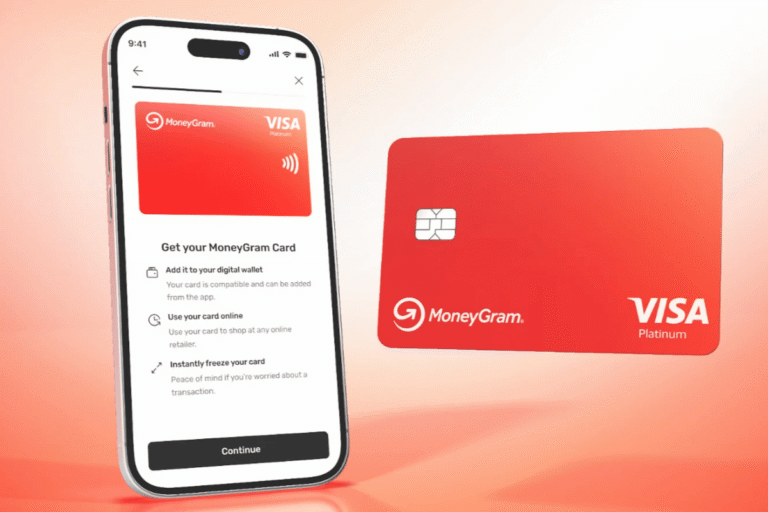
MoneyGram has collaborated with Rain, Crossmint, and Stellar to launch a stablecoin-backed card that can be used wherever Visa is accepted.

The card allows users to hold a stable-dollar balance, withdraw cash, and spend at merchants across borders, both online and in physical stores.

Integration with the existing MoneyGram experience

The card is designed as an extension of MoneyGram’s existing money transfer services rather than a standalone product. Customers can sign up for the card within the MoneyGram app and manage their balance and spending activity in the same interface used for transfers. The company has stated that the aim is to connect the process of receiving money with the ability to manage and spend it, without users needing to leave the MoneyGram ecosystem.

The card can be added to Apple Wallet or Google Wallet, enabling contactless payments and online checkout. Additionally, customers can transfer funds from their MoneyGram balance and collect local currency in cash at MoneyGram retail locations.

Development partners and infrastructure

The MoneyGram Card has been developed in partnership with Rain, a provider of infrastructure for stablecoin-powered card payments. According to MoneyGram, the card combines Rain’s card foundation with wallet capabilities from Crossmint and settlement via the Stellar network, intended to support fast and immediate access to funds.

MoneyGram states that the launch builds on the scale of its existing network. The company operates in more than 200 countries and territories, supported by close to 500,000 retail locations and a digital network the company describes as reaching billions of endpoints.

Nasdaq Ventures invests USD 100 million in Kraken parent Payward

Nasdaq Ventures has agreed to invest USD 100 million in Payward, as the two firms deepen their collaboration on tokenised equities infrastructure. The investment forms part of a broader expansion of the relationship between Nasdaq and Payward, which also includes continued work on the Nasdaq Equity Token (NET) framework and a new market surveillance agreement. Nasdaq Ventures, the exchange operator’s investment arm, backs technologies and market infrastructure intended to support the longer-term development of global capital markets, and the company has described the Payward investment as reflecting the strategic scope of the two organisations’ joint work.

Advancing the Nasdaq Equity Token framework

Within Nasdaq, the collaboration is being led by Digital Liquidity Networks (DLN), the business unit focused on building market infrastructure designed to operate on a continuous, always-on basis. Nasdaq and Payward plan to continue developing the operational and commercial infrastructure supporting NETs, with the two companies targeting a launch in the second quarter of 2027.

Nasdaq first announced its plans to develop NETs earlier in 2026, alongside a framework intended to connect the tokens with Payward’s xStocks ecosystem. That earlier announcement set out an approach for how tokenised equities could move across different market environments while preserving the rights and protections associated with traditional issuance and ownership. The next phase of the partnership is intended to build out the global distribution, trading, and post-trade capabilities required to support wider adoption of tokenised equities.

According to Tal Cohen, President, Nasdaq, the next phase of market development will depend on how efficiently capital and assets can move across the financial system while maintaining durable, high-integrity liquidity, and the expanded relationship with Payward is intended to support that evolution while preserving trust and transparency in capital formation.

Arjun Sethi, Co-CEO of Payward, noted that more than USD 2 trillion of stock trades pass through the US clearing system each day, with buy and sell positions netting down by around 98% before settlement. The clearing house holds between USD 10 billion and USD 20 billion in collateral against the remaining exposure while settlement is completed. Reducing the settlement cycle from two days to one in 2024 freed up USD 3 billion in collateral, and the next phase of the Nasdaq-Payward collaboration is intended to move NETs onto continuously operating infrastructure, without a settlement delay, while keeping shareholder rights intact.

U.S. Bank completes cross-border stablecoin pilot

U.S. Bank has completed a cross-border stablecoin pilot on the Stellar network, built with the Stellar Development Foundation. The transaction, executed in September 2026, was carried out on the Stellar blockchain and is described by the bank as one of the first instances of a bank-issued stablecoin deployed on a public blockchain network.

Pilot scope and platform capabilities

The pilot tested several core stablecoin functions, including minting, payment redemption, freezing, and clawback. According to U.S. Bank, the transaction demonstrated the ability to transfer value on-chain while keeping the process integrated with the bank’s existing finance, risk, compliance, and operations infrastructure.

The pilot also served to validate U.S. Bank’s internally developed Digital Asset Platform, which the bank positions as the technical foundation for issuing, managing, and moving tokenised assets. The platform is designed to connect traditional banking infrastructure with blockchain networks, allowing transactions to move on-chain without bypassing existing risk and compliance controls. U.S. Bank has framed the milestone as part of a broader strategy to expand its digital asset and money movement capabilities, with round-the-clock transaction capability cited as a potential benefit of the underlying technology for cross-border payments.

Stellar partnership and future applications

The pilot builds on an existing relationship between U.S. Bank and the Stellar Development Foundation. Stellar is described as a network used for regulated financial services, offering near-instant settlement and sub-cent transaction costs. The two organisations have indicated they will continue to assess further use cases combining Stellar’s network with U.S. Bank’s payments, treasury, and banking services.

Areas under exploration include liquidity management, collateral mobility, cross-border treasury operations, and other institutional applications where blockchain-based settlement could affect transaction efficiency, transparency, and speed. Jamie Walker, Head of Digital Assets and Money Movement at U.S. Bank, said the pilot represents a further step in the bank’s digital asset strategy, with a continued focus on addressing client requirements while maintaining existing standards of safety, security, and reliability.

Solidgate partners with Klarna to expand checkout options

Solidgate has partnered with Klarna to integrate flexible payment options into its checkout infrastructure for merchants. Under the agreement, businesses using Solidgate’s payment infrastructure will be able to offer Klarna’s payment methods, including pay-in-full, interest-free instalments, and longer-term financing. The companies state that merchants already set up on Solidgate’s platform will not need to complete a separate integration process to add these options.

The partnership gives Solidgate’s merchant base access to Klarna’s shopper network, which exceeds 120 million users globally, across the European markets in which Solidgate currently operates. For Klarna, the agreement provides a route into Solidgate’s existing merchant portfolio, which includes more than 500 businesses operating in sectors such as software-as-a-service (SaaS), ecommerce, education technology (EdTech), and mobility.

Integration and positioning

Solidgate operates as a payment orchestration platform with stated expertise in subscription billing. Under the collaboration, Klarna’s payment methods will be embedded within merchants’ existing Solidgate configuration rather than requiring a standalone connection to Klarna.

Daisy Anderson, Head of Strategic EU Partnerships, Klarna, said the agreement provides a route into subscription-driven and cross-border merchants in Central and Eastern Europe, and is intended to extend access to Klarna’s payment methods to a wider set of TerraPay’s Xend network with Alipay+, allowing digital wallet users to perform cross-border QR payments.

BNPL growth as an integration background

BNPL services have gained significant attention across consumer credit markets in recent years. According to a Federal Reserve note published in June 2026, BNPL providers issued close to USD 160 billion in consumer credit products in the US in 2025, with ‘pay in 4’ plans accounting for roughly half of that volume. The Federal Reserve data cover six major providers, Klarna being among them. The Economic Well-Being of U.S. Households in 2025 survey shows a wider shift in instalment-based options at checkout, with 16% of US adults choosing BNPL in 2025.