Home Blog Page 28

What is BKM (Bankalararası Kart Merkezi) and What Does It Do?

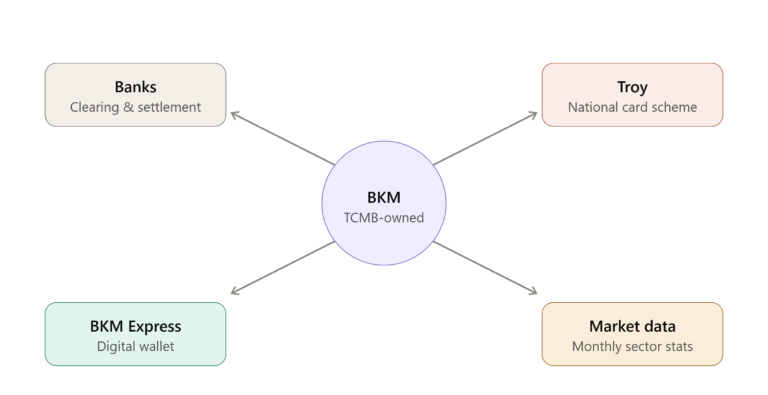
BKM (Bankalararası Kart Merkezi, “Interbank Card Center”) is the non-profit institution that builds, operates, and develops the shared infrastructure behind card and cashless payments in Turkey. Founded in 1990 by 13 public and private Turkish banks, BKM has since 30 April 2020 been majority-owned by the Central Bank of the Republic of Turkey (TCMB), giving it a hybrid identity: an industry-founded utility now under central bank control. It is best known internationally for developing Troy, Turkey’s national card scheme, and for publishing the country’s most closely watched monthly card payment statistics.

What BKM Actually Does

BKM’s mandate is broad: build and run any system, platform, or infrastructure needed to enable cashless payments and transfers in Turkey without requiring cash. In practice, this breaks down into a few core functions:

  • Interbank clearing and settlement: BKM operates the Domestic Clearing and Settlement System (Yurtiçi Takas ve Hesaplaşma Sistemi, YTHS), which processes the payments due between banks and other card-issuing institutions resulting from credit card, debit card, and prepaid card transactions.
  • Standard-setting: BKM develops shared rules and technical standards that participating banks follow for card transactions, reducing fragmentation across the Turkish card payments ecosystem.
  • Sector statistics: BKM compiles and publishes Turkey’s most-cited monthly card payment data — POS transaction volumes, credit and debit card usage statistics, and e-commerce payment figures — available publicly via bkm.com.tr.
  • R&D and innovation: BKM runs research and development work aimed at automating processes, reducing operational overhead, and building new payment infrastructure, often in partnership with TCMB on projects framed as “innovative infrastructure and platform services.”

Troy: Turkey’s National Card Scheme

BKM’s best-known product is Troy, Turkey’s homegrown card scheme, developed in 2016 as a domestic alternative to Visa and Mastercard. Troy cards work at every ATM and POS terminal within Turkey, and select Troy cards carry a co-badge with Visa or Mastercard to extend acceptance internationally. A key commercial advantage of Troy is that purely domestic transactions are not subject to the international network fees charged by global card schemes. In 2021, Troy was spun off from BKM into an independent company, though it remains closely tied to BKM’s broader payments infrastructure.

BKM Express: Turkey’s First Digital Wallet

Launched in 2012, BKM Express was Turkey’s first digital wallet, built jointly with banks and major e-commerce companies. It lets users check out online without re-entering card details each time — authenticating instead with just a Turkish ID number or phone number — and supports in-store QR code payments at partner merchants. Because no card number or cash changes hands directly during a transaction, BKM Express was designed with reduced exposure to card-data theft as a core security advantage.

TR Karekod: The National QR Payment Standard

BKM is also responsible for defining Turkey’s standardized QR code payment format, TR Karekod, which allows different banks’ and providers’ QR-based payment apps to interoperate at the same point-of-sale terminal rather than requiring merchants to support a separate QR standard for each provider.

Why BKM’s Central Bank Ownership Matters

TCMB becoming BKM’s controlling shareholder in 2020 shifted BKM’s positioning from a purely industry-owned utility to an institution more directly integrated with Turkey’s monetary and payments authority. This ownership structure is part of why BKM’s infrastructure projects are frequently developed in direct coordination with TCMB — supporting the broader goal of building a competitive, innovative payments ecosystem while managing systemic risk across Turkey’s card payment networks.

BKM’s Data as a Fintech Industry Benchmark

For anyone tracking Turkey’s payments sector — investors, journalists, or fintech founders — BKM’s monthly statistics function as the closest thing Turkey has to an official card payments benchmark. Contactless payment adoption rates, e-commerce transaction growth, and overall card usage trends are all regularly reported through BKM’s published data, making it a recurring primary source for coverage of Turkey’s payments landscape.

Frequently Asked Questions

What does BKM stand for? Bankalararası Kart Merkezi, which translates to Interbank Card Center.

Who owns BKM? BKM was founded in 1990 by 13 Turkish banks. Since 30 April 2020, the Central Bank of the Republic of Turkey (TCMB) has held a controlling ownership stake.

Is Troy the same company as BKM? No, not anymore. Troy was developed by BKM in 2016 but was spun off into an independent company in 2021, though the two remain closely linked in Turkey’s card payments ecosystem.

What is BKM Express used for? BKM Express is Turkey’s first digital wallet, launched in 2012, allowing online checkout without re-entering card details and supporting in-store QR code payments.

Where can I find BKM’s payment statistics? BKM publishes monthly card payment data, including POS transaction volumes and e-commerce statistics, on bkm.com.tr.


This article is part of Fintech in Türkiye’s ongoing coverage of Turkey’s payments infrastructure. For more on Turkey’s card and digital payment landscape, explore our Payments section.
What is KVMKS (Kripto Varlık Merkezi Kayıt Sistemi)?

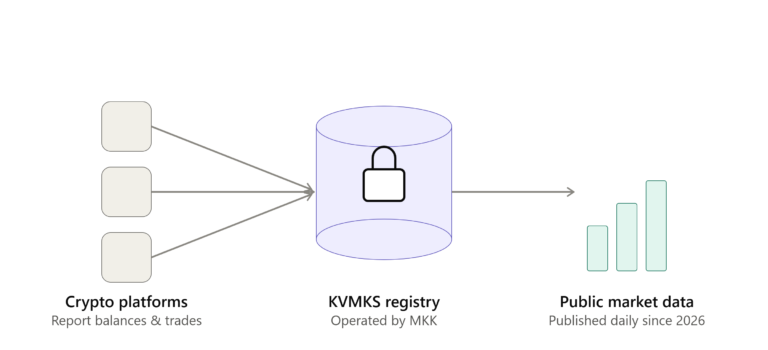
KVMKS (Kripto Varlık Merkezi Kayıt Sistemi, “Crypto Asset Central Registry System”) is Turkey’s official central registry for crypto asset transactions and balances, developed and operated by MKK (Merkezi Kayıt Kuruluşu — the Central Securities Depository of Türkiye) under regulations set by the Capital Markets Board (SPK/CMB). It records the transaction and balance data reported by licensed Crypto Asset Service Providers (KVHS), enabling official oversight, cross-platform reconciliation, and — since July 2026 — publicly available aggregate market statistics.

Why Turkey Built a Central Crypto Registry

Before KVMKS, crypto asset holdings and transactions in Turkey existed only inside the internal systems of individual exchanges and custody providers, with no unified, regulator-accessible record. This created two practical problems: regulators had no consolidated view of the crypto market’s size or risk profile, and there was no standardized mechanism for reconciling balances between platforms and custodians. KVMKS was built to close that gap — giving Turkey what MKK has described as a pioneering official tracking mechanism for crypto markets.

The Regulatory Basis

KVMKS operates under a specific legal framework established by the Capital Markets Board:

  • Communiqué on the Establishment and Operating Principles of Crypto Asset Service Providers
  • Communiqué on the Operating Procedures, Principles, and Capital Adequacy of Crypto Asset Service Providers

Both communiqués were published in the Official Gazette on 13 March 2025, formally defining MKK’s role in integrating Crypto Asset Service Providers (Kripto Varlık Hizmet Sağlayıcıları, KVHS) into a centralized registry system. This built on the broader legal foundation created by Law No. 7518 (2024), which first gave crypto assets formal recognition under Turkish capital markets law.

What Data KVMKS Records

Licensed platforms and custody providers report several categories of data to KVMKS:

  • Customer balances: how much of each crypto asset each investor holds
  • Buy and sell transactions
  • Transfers between accounts or platforms
  • Deposits and withdrawals, and the custody data these require

This data is recorded under MKK’s institutional guarantee, creating a system where balances can be reconciled across different platforms and custodians rather than existing only within each provider’s isolated internal records.

Who Has to Report to KVMKS

Integration with KVMKS is mandatory for Crypto Asset Service Providers (KVHS) licensed by the SPK. As of mid-2026, 53 KVHS entities had completed integration — made up of 7 custody institutions and 46 trading platforms. This covers effectively the entire licensed Turkish crypto exchange and custody industry, since operating without SPK licensing (and by extension, without KVMKS integration) is not a legal option under Turkey’s post-2024 crypto framework.

Public Market Data: What Changed in July 2026

For its first year of operation, KVMKS data was used primarily for regulatory oversight and internal reconciliation. That changed on 16 July 2026, when MKK began publishing daily, aggregated crypto market statistics publicly through its “MKK Piyasa Verileri” (MKK Market Data) page. The published indicators include:

  • Total market value of crypto assets held on Turkish platforms
  • Number of investors with active balances
  • Number of distinct crypto assets held across investor balances
  • Number of MKK-affiliated crypto trading platforms

According to the data published as of 15 July 2026, approximately 5.6 million investors have transacted on Turkish crypto platforms at some point, with around 3.2 million holding active balances across roughly 1,500 different crypto assets. This represents one of the first instances globally of a capital markets registry authority publishing standardized, official crypto market statistics on a recurring public basis.

How Investors Interact With KVMKS

Individual investors do not report to KVMKS directly — that obligation sits with licensed platforms and custodians. However, investors can monitor their own crypto asset holdings through MKK’s e-YATIRIMCI application, which draws on the same underlying registry data, giving retail users an official, regulator-backed way to verify their holdings independent of any single exchange’s internal reporting.

Why KVMKS Matters for Turkey’s Fintech Ecosystem

For foreign investors and analysts assessing Turkey’s crypto market, KVMKS offers something rare: an official, regulator-published, standardized dataset rather than estimates pieced together from individual exchange disclosures. For the domestic industry, it signals that Turkey’s crypto regulatory framework has moved from initial licensing (2024) into an operational oversight phase with real reconciliation and reporting infrastructure (2025–2026) — a maturity marker that distinguishes Turkey’s approach from jurisdictions where crypto remains regulated only at the point of licensing, without an ongoing centralized registry layer.

Frequently Asked Questions

What does KVMKS stand for? Kripto Varlık Merkezi Kayıt Sistemi, which translates to Crypto Asset Central Registry System.

Who operates KVMKS? MKK (Merkezi Kayıt Kuruluşu), Turkey’s Central Securities Depository, under regulations set by the Capital Markets Board (SPK).

Do individual crypto investors need to register with KVMKS themselves? No. Reporting obligations fall on licensed Crypto Asset Service Providers (exchanges and custody institutions), not individual investors. Investors can view their own holdings via MKK’s e-YATIRIMCI app.

Is KVMKS data publicly available? Yes, as of 16 July 2026. MKK publishes daily aggregate statistics — including total market value, active investor counts, and the number of distinct crypto assets held — through its MKK Piyasa Verileri page.

How many platforms are integrated with KVMKS? As of mid-2026, 53 licensed Crypto Asset Service Providers were integrated, comprising 7 custody institutions and 46 trading platforms.


This article is part of Fintech in Türkiye’s ongoing coverage of Turkey’s crypto regulatory infrastructure. For more on Turkey’s digital asset market, explore our Blockchain & Crypto section.

Is Cryptocurrency Legal in Turkey?

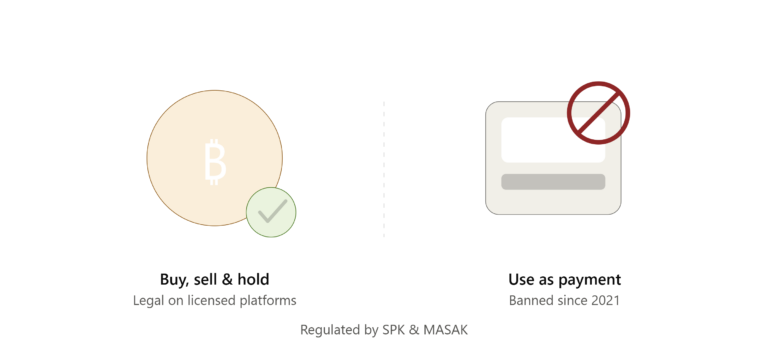
Yes, buying, selling, and holding cryptocurrency as an investment is legal in Turkey. What is not legal is using cryptocurrency as a means of payment for goods and services — a distinction that trips up many newcomers to the Turkish market. Trading and custody of crypto assets are regulated primarily by the Capital Markets Board (SPK/CMB) and the Financial Crimes Investigation Board (MASAK), while a specific tax framework for crypto gains is still under legislative discussion.

The Core Legal Distinction: Investment vs. Payment

Turkey’s regulatory approach to crypto rests on a clear split between two separate activities:

  • Trading, holding, and investing in crypto assets: legal. Individuals and institutions can freely buy, sell, and hold cryptocurrencies through licensed platforms.
  • Using crypto as a payment method: banned. Since a TCMB regulation published in the Official Gazette on 16 April 2021 (“Regulation on the Non-Use of Crypto Assets in Payments”), it has been explicitly prohibited to pay for goods or services directly with cryptocurrency, and payment service providers are barred from facilitating such payments. You cannot, for example, pay for a coffee or a subscription directly in Bitcoin — but you can buy, sell, and hold Bitcoin as an investment without restriction.

The Regulatory Framework

Turkey’s crypto regulation developed through several distinct legal instruments rather than a single comprehensive crypto law:

  • Law No. 7518 (27 June 2024): This amendment to the Capital Markets Law (Law No. 6362) gave crypto assets their first formal legal definition in Turkish law, and created the legal status of “Crypto Asset Service Provider” (Kripto Varlık Hizmet Sağlayıcısı, KVHS) — covering exchanges, custody providers, and other platforms facilitating crypto transactions.
  • SPK licensing requirement: Following Law No. 7518, crypto asset platforms operating in Turkey must obtain a license from the Capital Markets Board. Licensed platforms must also meet technical infrastructure standards reviewed by TÜBİTAK (Turkey’s national scientific research institution).
  • MASAK oversight: Crypto Asset Service Providers are treated as obligated parties under Turkey’s anti-money-laundering framework (Law No. 5549). This means mandatory customer identification (KYC), suspicious transaction reporting, and — as of 2025 — compliance with the international Travel Rule for cross-border crypto transfers.
  • TCMB payment ban (April 2021): As noted above, this regulation bans the use of crypto assets as a means of payment, though it does not restrict investment activity. The regulation has faced legal challenges at the Council of State (Danıştay), though it remains in force.

Taxation: Still an Open Question

As of 2026, Turkey does not have a dedicated tax law specifically governing gains from cryptocurrency trading. A comprehensive tax bill covering crypto assets was submitted to the Turkish Grand National Assembly in March 2026, but the crypto-specific provisions were removed from the bill during general session deliberations later that month. This means the tax treatment of crypto gains remains a legislative gray area rather than a settled framework — a point that foreign investors and Turkish crypto users alike should watch closely, since new legislation could be reintroduced at any time.

Who Regulates What

RegulatorRole in Crypto
SPK (Capital Markets Board)Licenses Crypto Asset Service Providers, sets operating standards and capital requirements
MASAKAML/KYC compliance, suspicious transaction monitoring, Travel Rule enforcement
TCMB (Central Bank)Enforces the ban on crypto as a payment method
TÜBİTAKReviews and certifies the technical infrastructure of licensed platforms
MKK (Central Securities Depository)Operates KVMKS, Turkey’s Crypto Asset Central Registry System, publishing baseline market data

What This Means in Practice

For a retail user in Turkey, the practical effect of this framework is straightforward: you can open an account on an SPK-licensed exchange, complete KYC verification, and buy, sell, or hold crypto assets freely. What you cannot do is spend that crypto directly at a merchant, or use a payment service provider to route a crypto payment on your behalf. For businesses and fintech platforms, this means crypto-native payment products must structure themselves as investment or custody services rather than payment rails — a distinction that shapes product design across the Turkish crypto industry.

Frequently Asked Questions

Can I legally buy Bitcoin in Turkey? Yes. Buying, selling, and holding Bitcoin and other cryptocurrencies through a licensed platform is legal in Turkey.

Can I pay for goods or services with cryptocurrency in Turkey? No. Since April 2021, TCMB regulation has explicitly banned using crypto assets as a means of payment.

Do I need a license to operate a crypto exchange in Turkey? Yes. Since Law No. 7518 (2024), Crypto Asset Service Providers must obtain a license from the Capital Markets Board (SPK) and meet technical infrastructure standards.

Is there a specific tax on crypto gains in Turkey? Not yet, as of 2026. A proposed tax framework was removed from a legislative bill in March 2026, leaving the taxation of crypto gains without a dedicated law.

Which regulator handles anti-money-laundering compliance for crypto in Turkey? MASAK (the Financial Crimes Investigation Board), which requires licensed crypto platforms to perform KYC checks and report suspicious transactions.


This article reflects Turkey’s crypto regulatory framework as of 2026 and is provided for informational purposes; it is not legal or tax advice. For more on Turkey’s digital asset landscape, explore our Blockchain & Crypto and Regtech & Compliance sections.

What is FAST (Fonların Anlık ve Sürekli Transferi)? How Turkey’s Instant Payment System Works

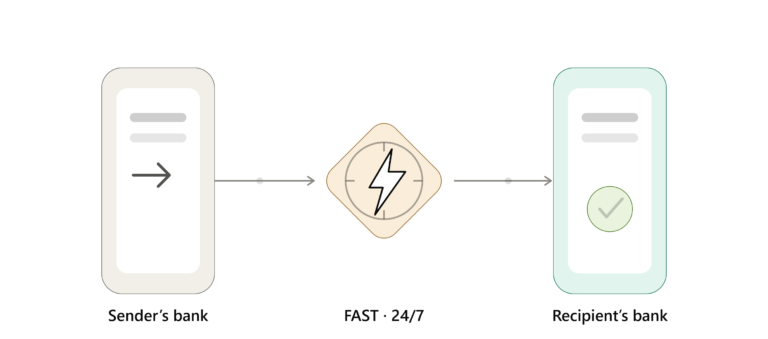
FAST (Fonların Anlık ve Sürekli Transferi, “Instant and Continuous Transfer of Funds”) is Turkey’s real-time interbank payment system, developed and operated by the Central Bank of the Republic of Turkey (TCMB). It allows customers to transfer money between different banks 24 hours a day, 7 days a week, with funds arriving in the recipient’s account within seconds — including nights, weekends, and public holidays.

FAST launched in a bank-employee-only pilot phase on 18 December 2020 and opened to the general public on 8 January 2021. It now operates as an independent system alongside Turkey’s older Electronic Fund Transfer (EFT) system, rather than replacing it.

How FAST Works

When a customer initiates a FAST transfer through their bank’s mobile app or internet banking, the request is routed through TCMB’s FAST infrastructure rather than the traditional EFT clearing system. The key operational differences are:

  • Settlement in seconds: Funds become available in the recipient’s account almost immediately, rather than the batch-processing delays associated with EFT.
  • True 24/7 availability: EFT transfers submitted outside business hours wait in a queue until the next business day. FAST has no such window — a transfer sent at 2 a.m. on a Sunday settles just as fast as one sent at noon on a Tuesday.
  • Bank-independent infrastructure: FAST runs on infrastructure built and operated directly by TCMB, separate from the EFT system, which allows it to guarantee near-instant settlement regardless of which banks are involved.

Transaction Limits

As of the most recent TCMB update, FAST transaction limits are:

  • 100,000 TL per transaction for standard peer-to-peer and account-to-account transfers
  • 250,000 TL per transaction for merchant payments made via FAST-TR Karekod (Turkey’s standardized QR code payment method)

These limits are set at the system level by TCMB and cannot be raised on a per-customer basis. Individual banks can, however, set their own daily cumulative limits below the TCMB ceiling for risk management purposes — so a customer’s practical daily limit depends on both the TCMB maximum per transaction and their own bank’s policies.

Fees: FAST vs. EFT vs. Havale

Understanding FAST costs requires distinguishing between three types of transfer common in Turkish banking:

  • Havale: a transfer between accounts at the same bank — typically free or low-cost.
  • EFT: a transfer between different banks, processed only during business hours, priced on a tiered scale based on transaction size.
  • FAST: a transfer between different banks, available 24/7. During normal business hours, FAST fees are generally aligned with EFT fees. Outside business hours — a window known as the “Late Liquidity Window” (Geç Likidite Penceresi) — banks are permitted to charge up to 50% more for FAST transfers, which is why sending a large FAST transfer late at night or on a weekend can cost more than the same transfer during the day.

Layered Services Built on FAST

Beyond simple transfers, TCMB has progressively added “layered services” (katman servisleri) on top of the core FAST infrastructure:

  • FAST Request-to-Pay (Ödeme İste): allows a payee to initiate a request for payment from a payer, who then confirms and authorizes the transfer — reversing the traditional flow where only the payer can initiate a transaction. This service was first rolled out for person-to-person payments, with e-commerce, e-instruction, and corporate billing use cases planned for later phases.
  • FAST-TR Karekod: a standardized QR code format that lets merchants accept FAST payments at the point of sale, positioning FAST as a genuine alternative to card networks for in-person retail payments.

FAST’s Role in Turkey’s Fintech Ecosystem

FAST’s participant base has expanded well beyond traditional banks. By 2023, the number of participants reached 36, following the addition of 10 licensed Payment and Electronic Money Institutions — meaning FAST is no longer purely a bank-to-bank rail, but an interbank settlement layer that licensed fintechs can plug into directly.

This matters for the broader ecosystem in a few ways:

  • Merchant payments: FAST-TR Karekod gives merchants and e-commerce platforms a lower-cost alternative to card acceptance, since instant bank transfers avoid card network interchange fees.
  • Open banking synergy: Payment initiation services built on open banking APIs frequently route the underlying transfer through FAST, since it offers the fastest settlement available in the Turkish system.
  • Cash displacement: With near-universal 24/7 availability, FAST has become one of the primary tools driving the shift away from cash in both retail and person-to-person payments in Turkey.

Frequently Asked Questions

Is FAST available on weekends and holidays? Yes. FAST operates 24 hours a day, 7 days a week, including weekends and public holidays, with no processing delays.

What is the maximum amount I can send via FAST? The TCMB-set limit is 100,000 TL per transaction for standard transfers, and up to 250,000 TL for merchant payments made via FAST-TR Karekod. Your bank may set a lower daily limit for your account.

Is FAST free to use? Fees vary by bank. During normal business hours, FAST fees are typically comparable to EFT fees. Outside business hours, banks can charge up to 50% more under the Late Liquidity Window policy.

How is FAST different from EFT? EFT only processes during business hours and can take longer to settle, especially for transfers submitted late in the day or on non-business days. FAST settles in seconds, 24/7, using infrastructure operated independently by TCMB.

Can fintech companies use FAST directly, or only banks? Licensed Payment Institutions and Electronic Money Institutions can participate directly in FAST, not just traditional banks. Participation requires the relevant BDDK license.

What is Open Banking in Turkey?

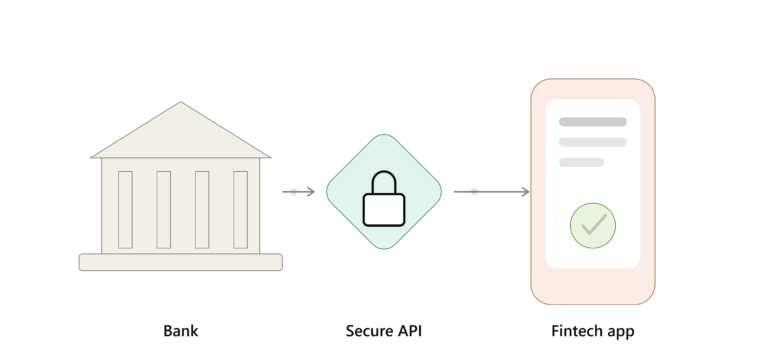
Open banking in Turkey is a regulatory and technical framework that allows banks and licensed payment institutions to share customer financial data — with explicit customer consent — through secure APIs with authorized third-party providers. It enables services such as multi-bank account aggregation, initiated payments from third-party apps, and faster credit and lending decisions, all without customers needing to log into each bank separately.

Open banking is legal and actively regulated in Turkey. It falls primarily under the Banking Regulation and Supervision Agency (BDDK) and the Central Bank of the Republic of Turkey (TCMB), building on the Payment Services Regulation that first came into force in 2019.

How Open Banking Works in Turkey

At its core, open banking replaces manual or screen-scraping methods of data sharing with standardized, secure Application Programming Interfaces (APIs). When a customer gives explicit consent, a licensed third-party provider (TPP) — such as a personal finance app, an accounting platform, or a lending service — can:

  • Retrieve account information: balances, transaction history, and account details across multiple banks (Account Information Services, AIS)
  • Initiate payments: trigger a payment directly from the customer’s bank account without routing through a card network (Payment Initiation Services, PIS)

This is different from traditional banking APIs, which banks historically built for internal or partner use only. Open banking standardizes and regulates this access so that any authorized provider — not just the bank’s chosen partners — can build on top of it.

The Regulatory Framework

Turkey’s approach to open banking developed gradually rather than through a single landmark law, layering several regulations over time:

  • Payment Services Regulation (2019): Established the licensing regime for payment institutions and e-money institutions and introduced the obligation for API-based integration between banks and licensed third parties.
  • BDDK oversight: As Turkey’s banking regulator, BDDK sets the rules banks must follow when exposing account data and payment initiation capabilities to licensed providers.
  • TCMB’s Instant Payment System (FAST): While not open banking regulation itself, FAST’s infrastructure has become tightly integrated with open banking use cases, particularly for instant payment initiation.
  • TROY integration: Turkey’s national card scheme has also aligned with open banking infrastructure, supporting broader interoperability across payment rails.

Unlike the EU’s PSD2, which created a single unified open banking mandate across member states, Turkey’s framework is administered primarily through BDDK’s payment services rules, with the Central Bank’s payment infrastructure (FAST) playing a complementary role.

Who Can Access Open Banking Data in Turkey

Access is restricted to licensed entities. To participate as a third-party provider, a company generally needs one of the following:

  • A Payment Institution license issued by BDDK
  • An Electronic Money Institution (e-money) license
  • Status as a licensed bank

This licensing requirement is a key safeguard: it means only vetted, regulated companies can request access to customer financial data, and only with the customer’s explicit, revocable consent.

Why Open Banking Matters for Turkey’s Fintech Sector

Open banking underpins several fast-growing categories in the Turkish fintech ecosystem:

  • Personal finance management apps that let users see all their bank accounts in one dashboard
  • SME accounting and ERP tools that automatically reconcile bank transactions
  • Alternative lending platforms that use real-time transaction data (rather than only credit bureau scores) to assess creditworthiness
  • Payment initiation services that let merchants accept direct bank transfers instead of relying solely on card networks

For foreign investors and fintech founders evaluating Turkey, open banking is one of the clearest signals of how far the regulatory environment has matured: a licensed, API-first data-sharing framework instead of ad hoc bilateral agreements between banks and select partners.

Challenges and Limitations

Open banking adoption in Turkey still faces some practical hurdles:

  • Fragmented API standards: Unlike the EU, which pushed toward standardized API specifications, individual banks in Turkey have historically implemented APIs with some variation, which can complicate integration for smaller fintechs.
  • Licensing costs and timelines: Obtaining a Payment Institution or e-money license from BDDK involves capital requirements and compliance processes that can be a barrier for early-stage startups.
  • Consumer awareness: Many retail customers are still unfamiliar with the concept, which slows adoption of consent-based data sharing compared to card payments or direct bank transfers they’re already used to.

Frequently Asked Questions

Is open banking legal in Turkey? Yes. It operates under BDDK’s Payment Services Regulation, which requires licensed banks and payment institutions to support API-based data sharing with customer consent.

Is open banking safe? Data can only be shared with the customer’s explicit, revocable consent, and only with entities that hold a valid BDDK license. Licensed providers are required to meet security standards for handling financial data.

Which regulator oversees open banking in Turkey? Primarily the Banking Regulation and Supervision Agency (BDDK), with the Central Bank of the Republic of Turkey (TCMB) playing a supporting role through payment infrastructure like FAST.

Do I need a license to build an open banking product in Turkey? Yes. Companies that want to access customer account data or initiate payments on a customer’s behalf generally need a Payment Institution license, an Electronic Money Institution license, or bank status from BDDK.

How is Turkey’s open banking model different from the EU’s PSD2? The EU mandates a single, harmonized open banking framework across all member states under PSD2. Turkey’s model instead layers open banking obligations into its existing Payment Services Regulation and licensing regime, administered by BDDK, without a single unified “Turkish PSD2” law.

Crypto-based Polymarket blocked in Türkiye too, over “illegal gambling”

Polymarket, one of the best-known prediction market platforms and a major beneficiary of the surge in attention around the 2024 US election, has been blocked in Türkiye. Access to the platform — already banned in numerous other countries around the world — was cut off, with authorities citing “illegal gambling” as the reason.

Türkiye has joined the list of countries blocking Polymarket, a platform that had drawn particularly strong interest around the World Cup. According to a report by EngelliWeb, the Directorate General of National Lottery Administration blocked access to the platform on grounds of illegal gambling, under a decision dated July 16, 2026 and numbered 2026/10.

A breakout year in 2024

Founded in 2020 and built around crypto-based transactions, the company was known for a time only within crypto circles. However, the 2024 US presidential election marked a turning point for the platform, as millions of dollars poured into Polymarket. Betting activity expanded well beyond the presidential race to cover everything from sports events to a wide range of other topics.

Major US media outlets — from CNN to Bloomberg, and from CNBC to the Wall Street Journal — began featuring Polymarket’s odds alongside traditional polling in their coverage.

The trend subsequently spread first to Europe and then to Asia. Over time, however, governments grew uneasy with the platform’s popularity and began imposing restrictions.

France also cited “illegal gambling”

Most recently, France blocked the platform two days ago — just 24 hours before the World Cup final. The country’s gambling regulator, ANJ, stated that it considers the platform a gambling site rather than a prediction market.

Besides France, access to the platform is also restricted in a number of other countries, including Germany, Portugal, Czechia, Thailand, Singapore, Russia, and Brazil.

Alongside Polymarket, another platform called Kalshi has likewise been drawing significant global attention. That platform could also potentially face a ban in Türkiye in the near future. Transactions on Polymarket are conducted through USDC.

ServiceNow invests $40m into BusinessNext at $700m valuation

Digital workflow automation company ServiceNow has invested $40 million into BusinessNext, an India-based autonomous operating platform for banking and financial services.

The Series C round values the banking technology provider at $700 million. The investment was made through ServiceNow Ventures, which according to Reuters, has picked up a stake of approximately 5% in BusinessNext through the deal.

Through the deal, the two companies have entered into a partnership that will focus on combining their respective technologies to develop “a unified autonomous operating fabric for financial services enterprises”, a joint statement confirms.

ServiceNow will use its Financial Services Operations (FSO) platform to manage middle and back-office functions, including case management, complaints handling, and AI workflows, while BusinessNext will handle customer-facing acquisition, engagement, and real-time customer signals.

The two will be brought together via ServiceNow’s AI Control Tower, which supports integrations with AWS, Microsoft, and Nvidia, with the resulting product to target financial services enterprises in the Asia-Pacific (APAC) region specifically.

Nishant Singh, CEO and co-founder of BusinessNext, describes the market opportunity in this region as “enormous”, and confirms that the investment will be used to fund go-to market efforts and further development of AI solutions.

BusinessNext, formerly CRMNext, says it currently services around one billion end customers and one million bankers globally through its platform, which combines customer relationship management, digital lending, and workflow automation tools.

The company previously bagged a $7 million Series A investment from Norwest Venture Partners in May 2014, followed by a $16 million Series B funding round co-led by Avataar Ventures and Ascent Capital in July 2021.

HSBC sells Singapore insurance arm to Allianz in £1.6bn deal

FTSE 100 HSBC has agreed to sell its health and life insurance business to German insurance giant Allianz for $2.1bn (£1.6bn) as it refocuses its strategy on Singapore’s wealth management.

The banking giant agreed to sell its Singapore business to Allianz in a transaction that is expected to be completed in the first half of 2027, subject to regulatory approval.

HSBC and the German insurance group will enter a 15-year partnership upon the deal’s completion, which will see the London-listed bank continue to sell insurance to its retail banking and wealth clients in Singapore, but it will be owned and underwritten by Allianz.

The deal is expected to generate a pre-tax gain of £1.4bn for HSBC, while the bank will also receive an additional £150.1m upfront payment. The sale follows HSBC’s strategic review, which determined this deal would be the “best outcome” as part of the bank’s ongoing “simplification” of its group business.

HSBC focus on trimming its business

Chief executive Georges Elhedery, who took charge of the bank in 2024, has moved swiftly to overhaul its operations upon launching a major restructuring plan in October 2024. The bank had aimed to achieve £1.1bn in annual cost reductions by the end of 2026, but accomplished this ahead of schedule in June.

Wise denied US banking licence in blow to expansion plans

Shares in Wise plunged on Friday after the firm was denied a US banking licence by regulators, setting back the payments giant in its biggest growth market just months after it switched its primary stock market listing to New York.

The London-founded fintech said the US Office of the Comptroller of the Currency (OCC) had rejected its application for a national trust bank licence.

Wise said the decision would not affect its existing US business and that it plans to submit a new application. Shares in the company tumbled more than seven per cent in early trading in London.

The regulator’s decision related to its original application which was submitted more than a year ago, Wise said. It pointed to changes it has since made to its compliance systems, customer checks and financial crime controls.

“We have invested significantly in enhancing our processes and controls globally and in the U.S. since the original application for the trust charter was prepared, including those to prevent financial crime alongside other forms of risk,” the company said, adding that changes to US payment rules meant the original application was no longer the right route to securing a licence.

Garanti BBVA launches digital applications for KGF and İGE backed loans

Garanti BBVA has moved its Credit Guarantee Fund (KGF) and Export Development Inc. (İGE) guaranteed loan processes onto digital channels. SMEs and businesses will now be able to submit applications without visiting a branch, track their processes end to end, and monitor evaluation stages in real time.

Garanti BBVA has launched a new application that moves its KGF- and İGE-guaranteed loan processes to digital channels, making it easier for businesses to access financing. Through the new development, both SMEs and non-SME businesses will be able to create loan applications via Garanti BBVA Mobile and Internet Banking and track every stage of their applications in real time.

Under the new application, customers can select the KGF- or İGE-guaranteed loan program that suits their needs and submit their application digitally. Thanks to integration with Türkiye’s Revenue Administration (GİB), balance sheet and income statement data is shared securely, significantly speeding up the evaluation process.

Commenting on the new application, Garanti BBVA Deputy General Manager Sibel Kaya said: “Fast and easy access to financing stands out as one of the most important factors in the sustainable growth of SMEs and businesses. That’s why we continuously improve our processes and support them with digital solutions, so our customers can access the financing they need in the most practical way. By moving KGF- and İGE-guaranteed loan applications to our digital channels, we’re enabling our customers to easily apply from wherever they are and track the process from end to end. In doing so, we’re both simplifying the application experience and making the evaluation process faster and more transparent. As Garanti BBVA, we will continue standing by our businesses and developing innovative solutions that support their growth.”

Speed and transparency in the application process

With the new application, businesses can track in real time which stage their loan application has reached once the process begins. Applications can be monitored through digital screens across every stage — bank evaluation, branch processing, KGF/İGE checks, loan disbursement, and guarantee approval. Customers are also kept regularly informed about the process through SMS, email, and mobile notifications.